

Hey there! As a supplier of Small NEMA Motors, I've been getting a lot of questions lately about whether these motors are suitable for intermittent operation. So, I thought I'd sit down and share my thoughts on this topic.
First off, let's quickly go over what Small NEMA Motors are. NEMA, which stands for the National Electrical Manufacturers Association, has set standards for motor dimensions, performance, and safety. Small NEMA Motors are those that adhere to these standards and are on the smaller side in terms of size and power. You can check out some of our offerings, like the NEMA 56C Motor and NEMA AC Motor on our website. And of course, for a broader look at Small NEMA Motors, head over to Small NEMA Motor.
Now, let's dig into the question of intermittent operation. Intermittent operation means that the motor doesn't run continuously but instead starts and stops at regular or irregular intervals. This type of operation is common in many applications, such as conveyor systems that only run when there's a load to move, or in some types of machinery that are used in short bursts.
One of the key factors to consider when determining if a Small NEMA Motor is suitable for intermittent operation is its thermal capacity. Motors generate heat when they're running, and if they can't dissipate this heat effectively, it can lead to overheating and damage. Small NEMA Motors are generally designed to handle a certain amount of heat. For intermittent operation, this can be an advantage because the motor has time to cool down between runs.
Let's say you have a conveyor system that runs for 10 minutes and then stops for 20 minutes. During the 20 - minute break, the motor has a chance to shed the heat it generated during the 10 - minute run. As long as the motor's thermal capacity is sufficient to handle the heat generated during the short running periods, it should be able to operate without any major issues.
Another aspect to think about is the motor's starting torque. When a motor starts, it requires a higher amount of torque compared to when it's running at a steady - state. Small NEMA Motors are engineered to provide adequate starting torque for their size. In intermittent operation, the motor has to start up multiple times. If the starting torque is too low, the motor might struggle to start, or it could draw excessive current, which can trip circuit breakers or cause other electrical problems. Most Small NEMA Motors are designed to handle these start - stop cycles well, but it's important to choose the right motor for the specific application.
The duty cycle is also crucial. The duty cycle is defined as the ratio of the time the motor is running to the total time of a cycle (running time + rest time). For example, if a motor runs for 5 minutes and then rests for 5 minutes, the duty cycle is 50%. Different Small NEMA Motors are rated for different duty cycles. Some are designed for continuous operation (100% duty cycle), while others can handle lower duty cycles for intermittent operation. It's essential to match the motor's duty cycle rating with the actual duty cycle of your application.
In some cases, the mechanical stress on the motor can be a concern. Every time a motor starts and stops, there's a mechanical shock to its components. Over time, this can cause wear and tear on the bearings, shafts, and other moving parts. However, Small NEMA Motors are built with quality materials and robust construction to withstand these stresses. The manufacturers have taken into account the potential for intermittent operation and have designed the motors to be durable.

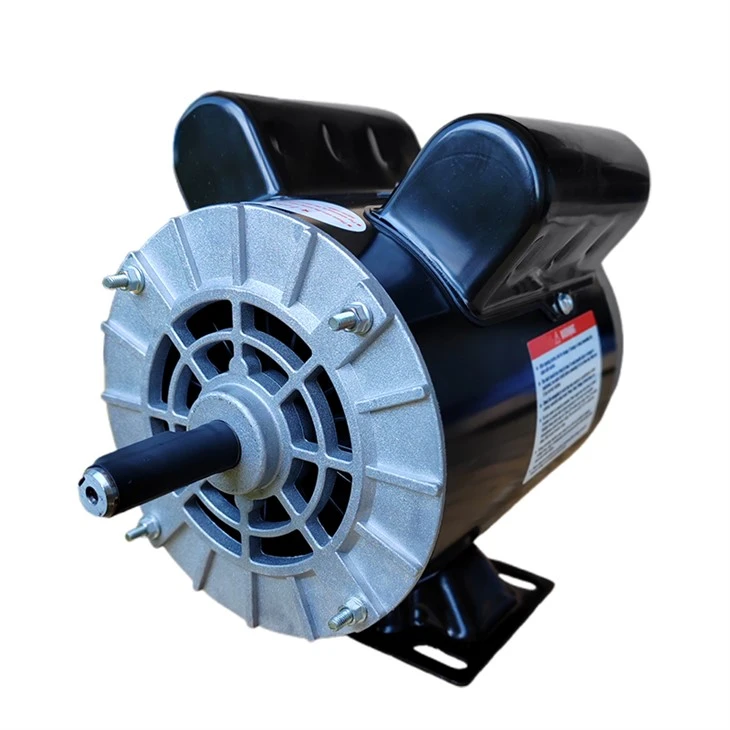
Let's take a look at some real - world examples. In a small manufacturing plant, there's a machine that stamps out small metal parts. The stamping machine is powered by a Small NEMA Motor. The motor runs only when a part is being stamped, which might be for a few seconds at a time, followed by a few seconds of rest. In this case, the motor's ability to handle the short - burst operation is crucial. The thermal capacity of the motor allows it to cool down between stamps, and its starting torque is sufficient to quickly get the stamping mechanism moving.
On the other hand, if you have an application where the start - stop intervals are extremely short and frequent, you might need to be more cautious. For instance, in a high - speed packaging line where the motor has to start and stop several times per second, the motor might experience more stress. In such cases, you may need to choose a Small NEMA Motor with a higher power rating or a more specialized design to handle the rapid cycling.
Cost is also a factor. Small NEMA Motors are generally more cost - effective compared to larger motors. For intermittent operation, this can be a great advantage. Since you don't need a large, high - power motor for applications that only require short - term operation, you can save money by choosing a Small NEMA Motor. You're getting a motor that can do the job without overspending on unnecessary power.
However, it's not all rosy. There are some limitations. If the intermittent operation involves very high - speed starts and stops, or if the motor has to carry a heavy load during the short running periods, the Small NEMA Motor might not be the best choice. In such cases, you may need to look into more powerful or specialized motors.
In conclusion, Small NEMA Motors can be very suitable for intermittent operation in many applications. Their thermal capacity, starting torque, and duty cycle ratings make them a good fit for systems that don't require continuous running. But it's important to carefully assess the specific requirements of your application, such as the running time, rest time, load, and the frequency of starts and stops.
If you're considering using a Small NEMA Motor for your intermittent - operation application, I'd be more than happy to help you choose the right motor. We have a wide range of Small NEMA Motors available, and we can work with you to find the perfect match for your needs. Just reach out to us, and we can start the conversation about your project.
References
- General knowledge of Small NEMA Motors from industry experience
- Technical specifications provided by motor manufacturers


