Can AC Motori motors be used in textile industries?
As a reliable supplier of AC Motori motors, I am often asked about the suitability of our products in various industrial sectors, especially the textile industry. In this blog, I will explore in detail whether AC Motori motors can indeed be used in textile industries and what advantages they bring to this specific field.
Characteristics of the Textile Industry's Motor Requirements
The textile industry has unique requirements for motors. First and foremost, it demands a high - level of speed control. Throughout the textile manufacturing process, from spinning to weaving, the speed of machines can significantly affect the quality and efficiency of production. For example, in spinning, precise speed control helps to ensure the evenness of yarn. Uneven yarn can lead to defects in the final fabric product.
Secondly, textile machinery usually operates continuously for long periods. Hence, the motors need to have high reliability and durability. A motor failure can cause production line stoppages, resulting in significant economic losses. Additionally, the textile factory environment may contain a certain amount of dust and lint, so the motors should possess good dust - resistance and protection levels.
How AC Motori Motors Meet These Requirements
1. Precise Speed Control
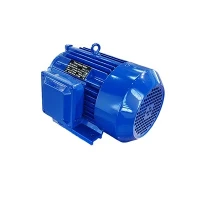
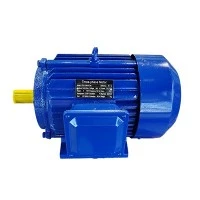
AC Motori motors offer excellent speed control capabilities. The company's 3 Phase AC Electric Motor is designed with advanced variable - frequency drive technology. This technology allows for precise adjustment of the motor's speed according to different production needs. Whether it is the slow and steady operation required in some delicate knitting processes or the high - speed operation in large - scale weaving machines, these motors can be adjusted accurately.
The control system of AC Motori motors also enables seamless speed transitions. In a textile production line, as the process moves from one stage to another, the motor can smoothly change its speed, preventing sudden jolts that could damage the textile materials or the machinery itself.
2. High Reliability and Durability
AC Motori places a strong emphasis on the quality and reliability of its motors. The Three Phase AC Motor is built with high - quality materials and advanced manufacturing processes. The stator and rotor are designed to withstand high - temperature and high - stress environments, ensuring long - term stable operation.
The bearings used in these motors are of high - precision grade, which can reduce friction and wear, thereby extending the motor's service life. In addition, the motor's cooling system is carefully designed to maintain a proper operating temperature, even during continuous long - term operation. This is crucial for the textile industry, where machinery often runs 24/7.
3. Dust and Lint Resistance
Given the presence of dust and lint in textile factories, the protection level of motors is of great importance. AC Motori offers the Waterproof AC Motor, which also has good dust - proof characteristics. These motors are usually equipped with enclosures that can effectively prevent dust and lint from entering the internal components of the motor.
The motors are designed to meet international protection standards, such as IP ratings. A high - IP - rated motor can operate stably in a dusty environment, reducing the risk of short - circuits and malfunctions caused by dust accumulation.


Case Studies: Successful Applications in the Textile Industry
Many textile manufacturers around the world have successfully adopted AC Motori motors in their production lines. One well - known textile company in Asia was facing problems with frequent motor breakdowns in their spinning machines. After switching to AC Motori's 3 Phase AC Electric Motor, they noticed a significant improvement in production efficiency.
The precise speed control of the new motors allowed them to produce high - quality yarns consistently. The reliability of the motors also reduced unscheduled maintenance downtime, which in turn increased the overall production output. Moreover, the dust - resistance of the motors ensured that they could operate smoothly in the factory's dusty environment.
In another case, a European weaving mill replaced its old motors with AC Motori's Three Phase AC Motors. The smooth speed transitions of the new motors helped to eliminate fabric defects caused by sudden speed changes. The factory's energy consumption also decreased due to the high efficiency of the AC Motori motors, resulting in cost savings.
Cost - Effectiveness
In addition to performance, cost - effectiveness is also an important factor for textile manufacturers. AC Motori motors offer a good balance between price and performance. Although the initial investment may be slightly higher compared to some low - end motors, the long - term benefits are significant.
The high reliability and durability of AC Motori motors mean fewer replacement costs. The energy - efficient design also helps to reduce electricity bills. Over the life cycle of the motor, the total cost of ownership is much lower compared to other inferior motors.
Conclusion
In conclusion, AC Motori motors are highly suitable for use in the textile industry. Their excellent speed control, high reliability, dust - resistance, and cost - effectiveness make them a top choice for textile machinery. Whether it is for small - scale workshops or large - scale textile factories, AC Motori motors can meet the diverse needs of the textile production process.
If you are in the textile industry and are looking for high - quality motors for your machinery, I strongly encourage you to consider AC Motori motors. We are committed to providing the best products and services. For more detailed information or to start a purchase negotiation, please feel free to reach out.
References:
- Industry reports on textile manufacturing technology
- Technical documentation of AC Motori motors