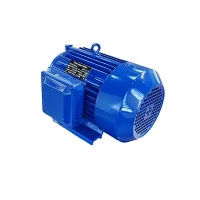
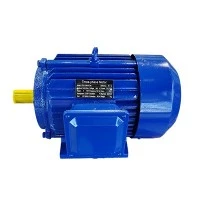
As a well - established supplier of AC series motors, I often encounter various technical inquiries from customers. One of the most frequently asked questions is whether an AC series motor can be reversed. In this blog, I'll delve into this topic in detail, exploring the principles, methods, and practical applications related to reversing AC series motors.
Understanding the Basics of AC Series Motors
Before discussing the reversal of AC series motors, it's essential to understand their fundamental operation. An AC series motor is a type of electric motor that has its field winding connected in series with the armature winding. This configuration allows the motor to operate on either AC or DC power sources, giving it a unique set of characteristics.
The operation of an AC series motor is based on the interaction between the magnetic fields produced by the field winding and the armature winding. When an electric current flows through the windings, a magnetic field is generated. The interaction between these magnetic fields creates a torque that causes the motor shaft to rotate.
Can an AC Series Motor be Reversed?
The short answer is yes, an AC series motor can be reversed. The direction of rotation of an AC series motor depends on the direction of the current flow through the armature and field windings. By changing the direction of the current in either the armature or the field winding, we can reverse the direction of the motor's rotation.
There are two main methods to reverse the rotation of an AC series motor:
1. Reversing the Armature Connections
One way to reverse the motor's rotation is to reverse the connections of the armature winding. The armature is the rotating part of the motor, and by changing the direction of the current flowing through it, we can reverse the magnetic field produced by the armature. This change in the armature's magnetic field, in turn, reverses the direction of the torque acting on the motor shaft, causing the motor to rotate in the opposite direction.
To reverse the armature connections, we need to swap the two leads of the armature winding. This can be done by physically disconnecting the wires from the armature terminals and reconnecting them in the opposite order. However, it's important to note that this method should be carried out with caution, as improper connections can lead to short - circuits or damage to the motor.
2. Reversing the Field Connections
Another method to reverse the rotation of an AC series motor is to reverse the connections of the field winding. The field winding is responsible for creating the stationary magnetic field in the motor. By changing the direction of the current flowing through the field winding, we can reverse the polarity of the magnetic field. This change in the field's magnetic field will also reverse the direction of the torque acting on the motor shaft, resulting in a reversal of the motor's rotation.
Similar to reversing the armature connections, reversing the field connections involves swapping the two leads of the field winding. Again, proper safety precautions should be taken during this process to avoid any electrical hazards.
Practical Applications of Reversing AC Series Motors
The ability to reverse the rotation of an AC series motor has numerous practical applications in various industries.
In the manufacturing industry, AC series motors are commonly used in conveyor systems. By reversing the motor's rotation, the conveyor can move materials in the opposite direction, which is useful for tasks such as sorting, re - routing, or returning products.
In the automotive industry, AC series motors are used in power windows and windshield wipers. The ability to reverse the motor's rotation allows the windows to be opened and closed, and the wipers to move back and forth.
In the home appliance sector, many appliances such as mixers and blenders use AC series motors. Reversing the motor's rotation can provide different mixing or blending effects, enhancing the functionality of these appliances.
Considerations When Reversing AC Series Motors
While reversing an AC series motor is technically possible, there are several considerations that need to be taken into account.
1. Electrical Safety
As mentioned earlier, reversing the connections of the armature or field winding involves working with live electrical components. It's crucial to follow all safety procedures, such as wearing appropriate personal protective equipment, disconnecting the power supply before making any changes, and using insulated tools.


2. Motor Design and Ratings
Not all AC series motors are designed to be easily reversible. Some motors may have specific internal configurations or limitations that make it difficult or even impossible to reverse their rotation. It's important to consult the motor's manufacturer specifications or technical documentation before attempting to reverse the motor.
3. Control Circuitry
In some applications, a control circuit may be required to reverse the motor's rotation. This control circuit can be used to automatically switch the connections of the armature or field winding based on the desired direction of rotation. The design and implementation of the control circuit should be carefully planned to ensure reliable and safe operation of the motor.
Our Product Offerings
As an AC series motor supplier, we offer a wide range of high - quality motors that are suitable for various applications. In addition to our standard AC series motors, we also provide specialized motors such as Waterproof AC Motor, AC Three Phase Induction Motor, and Dual Shaft AC Motor.
Our motors are designed with the latest technology and manufacturing processes to ensure high efficiency, reliability, and performance. We also provide comprehensive technical support to our customers, including assistance with motor selection, installation, and troubleshooting.
Contact Us for Purchase and Consultation
If you have any questions about AC series motors, including their reversal, or if you are interested in purchasing our products, we encourage you to contact us. Our team of experts is ready to assist you with all your motor - related needs. Whether you need a standard motor or a customized solution, we can provide you with the best products and services.
References
- Fitzgerald, A. E., Kingsley, C., & Umans, S. D. (2003). Electric Machinery. McGraw - Hill.
- Chapman, S. J. (2012). Electric Machinery Fundamentals. McGraw - Hill.
- Del Toro, V. (1990). Electric Machines and Power Systems. Prentice Hall.