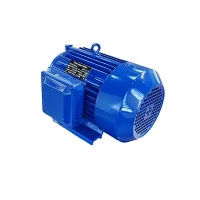
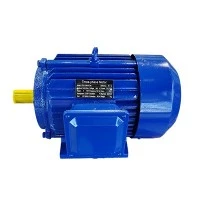
When it comes to industrial and commercial applications, the NEMA 56C motor is a well - known and widely used component. As a supplier of NEMA 56C Motors, I often receive inquiries about whether this type of motor comes with a capacitor. In this blog post, I'll delve into this question, exploring the technical aspects, the role of capacitors in motors, and the specific case of NEMA 56C motors.
Understanding Capacitors in Motors
Before we discuss whether a NEMA 56C motor comes with a capacitor, it's essential to understand the role of capacitors in electric motors. Capacitors are electrical components that store and release electrical energy. In the context of motors, they serve two primary functions: starting and running.
Starting Capacitors
Starting capacitors are used to provide an extra boost of torque during the motor's startup phase. When a motor starts, it requires a higher amount of torque to overcome the inertia of the load. A starting capacitor creates a phase shift in the motor's windings, which generates this additional torque. Once the motor reaches a certain speed, the starting capacitor is typically disconnected from the circuit.
Running Capacitors
Running capacitors, on the other hand, remain in the circuit while the motor is running. They help to improve the motor's power factor, efficiency, and performance. By maintaining a proper phase relationship between the current and voltage in the motor's windings, running capacitors reduce the amount of reactive power drawn from the electrical supply, which in turn can lead to lower energy consumption and less wear on the motor.
NEMA Standards and Motor Design
The National Electrical Manufacturers Association (NEMA) has established a set of standards for electric motors in North America. These standards cover various aspects of motor design, including dimensions, performance, and electrical characteristics. The NEMA 56C motor is a specific type of motor that adheres to these standards.
The "56C" in the motor's designation refers to a particular frame size and mounting configuration. NEMA 56C motors are commonly used in a variety of applications, such as pumps, fans, and conveyors. However, the NEMA standards do not explicitly dictate whether a motor should come with a capacitor or not. The presence of a capacitor in a NEMA 56C motor depends on several factors, including the motor's design, the type of load it is intended to drive, and the specific requirements of the application.
Factors Determining the Presence of a Capacitor in a NEMA 56C Motor
Motor Type
There are different types of NEMA 56C motors, such as single - phase and three - phase motors. Single - phase motors often require a capacitor to start and run efficiently. Since single - phase power supplies provide a single alternating current waveform, it can be challenging for the motor to generate the necessary rotating magnetic field on its own. A capacitor helps to create a phase difference in the motor's windings, enabling the motor to start and run smoothly.


Three - phase motors, on the other hand, typically do not require a capacitor for starting or running. Three - phase power supplies provide three alternating current waveforms that are 120 degrees out of phase with each other. This natural phase difference creates a rotating magnetic field in the motor, allowing it to start and run without the need for additional phase - shifting components.
Load Requirements
The type of load that the NEMA 56C motor is driving also plays a crucial role in determining whether a capacitor is needed. Motors that drive high - inertia loads, such as large fans or pumps, may require a starting capacitor to provide the extra torque needed to overcome the initial resistance. Similarly, if the load requires a high level of efficiency and power factor correction, a running capacitor may be included in the motor's design.
Application - Specific Requirements
Some applications may have specific electrical or performance requirements that necessitate the use of a capacitor. For example, in applications where power quality is a concern, a running capacitor can help to reduce harmonic distortion and improve the overall electrical system performance. Additionally, in applications where space is limited, motors with built - in capacitors may be preferred to simplify the installation process.
Capacitor - Equipped vs. Non - Capacitor NEMA 56C Motors
As a supplier of NEMA 56C Motor, I offer both capacitor - equipped and non - capacitor options to meet the diverse needs of our customers.
Capacitor - Equipped NEMA 56C Motors
Our capacitor - equipped NEMA 56C motors are designed for applications that require high starting torque and improved power factor. These motors typically come with either a starting capacitor, a running capacitor, or both, depending on the specific requirements. They are ideal for single - phase applications where the motor needs to start under heavy loads or operate with high efficiency.
Non - Capacitor NEMA 56C Motors
Non - capacitor NEMA 56C motors, on the other hand, are suitable for applications where the load is relatively light and the power supply is three - phase. These motors are often more straightforward in design and may be more cost - effective for certain applications. They are commonly used in industrial settings where three - phase power is readily available.
How to Choose the Right NEMA 56C Motor
When selecting a NEMA 56C motor for your application, it's important to consider several factors to determine whether a capacitor is necessary.
Evaluate the Load
First, assess the type of load that the motor will be driving. If the load has a high inertia or requires a high starting torque, a capacitor - equipped motor may be the best choice. On the other hand, if the load is light and the power supply is three - phase, a non - capacitor motor may be sufficient.
Consider the Power Supply
The type of power supply available at your facility is also a critical factor. Single - phase power supplies generally require a capacitor to help the motor start and run, while three - phase power supplies do not. Make sure to choose a motor that is compatible with your power supply.
Review the Application Requirements
Consider any specific requirements of your application, such as power quality, efficiency, and space constraints. If power factor correction or harmonic reduction is important, a motor with a running capacitor may be beneficial. If space is limited, look for motors with built - in capacitors to simplify the installation.
Conclusion
In conclusion, whether a NEMA 56C motor comes with a capacitor depends on several factors, including the motor type, load requirements, and application - specific needs. As a supplier of NEMA 56C Motor, I understand the importance of providing the right motor for each customer's unique situation. We offer a wide range of Small NEMA Motor and NEMA Rated Motor options, including both capacitor - equipped and non - capacitor NEMA 56C motors.
If you're in the market for a NEMA 56C motor and need assistance in choosing the right one for your application, please don't hesitate to contact us. Our team of experts is ready to help you make an informed decision and ensure that you get the best motor for your needs.
References
- National Electrical Manufacturers Association (NEMA) Standards Publication
- Electric Motor Handbook: A Practical Guide to Selection, Application, and Maintenance