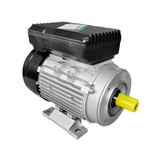
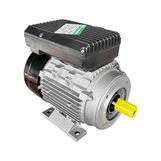
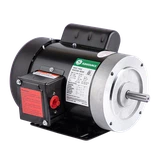
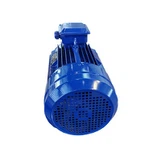
Hey there! As a supplier of NEMA AC Motors, I've been getting a lot of questions lately about how to select the right capacitor for these motors. It's a crucial topic because the right capacitor can significantly impact the performance and lifespan of your NEMA AC motor. So, let's dive right in and break it down.
First off, let's understand why capacitors are so important for NEMA AC motors. Capacitors play a vital role in starting and running the motor. They help create a phase shift in the electrical current, which is necessary to generate the rotating magnetic field that makes the motor spin. Without the right capacitor, your motor might not start at all, or it could run inefficiently, leading to increased energy consumption and premature wear and tear.
Now, when it comes to selecting the right capacitor for your NEMA AC motor, there are a few key factors you need to consider.
Capacitance Rating
The capacitance rating, measured in microfarads (μF), is one of the most important specifications to look at. It determines the amount of electrical charge the capacitor can store and release. Using a capacitor with the wrong capacitance rating can cause all sorts of problems. If the capacitance is too low, the motor might not have enough torque to start or run smoothly. On the other hand, if it's too high, it can overheat the motor and damage the windings.
To find the correct capacitance rating for your motor, you can usually refer to the motor's nameplate. Most NEMA AC motors will have the recommended capacitance value printed right on it. If you can't find the information on the nameplate, you can also check the motor's documentation or contact the manufacturer.
Voltage Rating
Another critical factor is the voltage rating of the capacitor. This indicates the maximum voltage the capacitor can handle without breaking down. It's essential to choose a capacitor with a voltage rating that's equal to or higher than the voltage supplied to the motor. Using a capacitor with a lower voltage rating can cause it to fail prematurely, leading to motor damage.
When selecting the voltage rating, it's also a good idea to consider any voltage fluctuations that might occur in your electrical system. If you expect to have voltage spikes or drops, it's better to choose a capacitor with a slightly higher voltage rating to provide some margin of safety.


Type of Capacitor
There are several types of capacitors available for NEMA AC motors, each with its own characteristics and applications. The two most common types are start capacitors and run capacitors.
- Start Capacitors: These are used to provide the extra torque needed to start the motor. They are typically designed to be used for a short period, usually just a few seconds, during the motor's startup phase. Once the motor reaches a certain speed, the start capacitor is disconnected from the circuit. Start capacitors usually have a higher capacitance rating than run capacitors.
- Run Capacitors: These are used to improve the motor's efficiency and power factor during normal operation. They remain connected to the motor circuit at all times. Run capacitors have a lower capacitance rating than start capacitors but are designed to handle continuous operation.
The type of capacitor you need will depend on the specific requirements of your motor. Some motors require both a start capacitor and a run capacitor, while others only need a run capacitor. Again, you can refer to the motor's nameplate or documentation to determine which type of capacitor is needed.
Temperature Rating
The temperature rating of the capacitor is also an important consideration. Capacitors can generate heat during operation, and if they get too hot, their performance can degrade, and they can even fail. It's important to choose a capacitor with a temperature rating that's suitable for the operating environment of your motor.
If your motor is going to be used in a high-temperature environment, such as in an industrial setting or outdoors in hot weather, you'll need to choose a capacitor with a higher temperature rating. On the other hand, if the motor is used in a cooler environment, a capacitor with a lower temperature rating might be sufficient.
Physical Size and Mounting
Finally, you need to consider the physical size and mounting requirements of the capacitor. Make sure the capacitor you choose will fit in the available space in your motor's enclosure. You also need to ensure that it can be easily mounted and connected to the motor's electrical system.
Some capacitors come with specific mounting brackets or terminals that make installation easier. Others might require additional hardware or wiring modifications. Before purchasing a capacitor, check the motor's documentation or consult with a professional to ensure that the capacitor you choose is compatible with your motor's physical and electrical requirements.
Now that you know the key factors to consider when selecting a capacitor for your NEMA AC motor, let's take a look at some specific examples.
Let's say you have a NEMA 56 Motor. This type of motor is commonly used in small appliances and light industrial applications. To select the right capacitor for this motor, you would first check the motor's nameplate for the recommended capacitance and voltage ratings. Let's assume the nameplate specifies a capacitance of 50 μF and a voltage rating of 370V.
Based on this information, you would look for a capacitor with a capacitance of 50 μF and a voltage rating of at least 370V. You would also need to determine whether the motor requires a start capacitor, a run capacitor, or both. If the motor has a starting torque requirement, it's likely that it will need a start capacitor in addition to a run capacitor.
Another example is a NEMA Premium 3 Phase Motor. These motors are designed for high-efficiency operation and are commonly used in industrial applications. The capacitor selection process for a 3-phase motor is similar to that of a single-phase motor, but there are some additional considerations.
In a 3-phase motor, the capacitors are usually used to balance the electrical current between the phases and improve the motor's power factor. The capacitance and voltage ratings will depend on the specific requirements of the motor, which can vary depending on the size, horsepower, and operating conditions. As always, it's important to refer to the motor's documentation or consult with the manufacturer to determine the correct capacitor specifications.
If you're looking for a NEMA Premium Efficient Motor, selecting the right capacitor is even more critical. These motors are designed to operate at a higher efficiency, and using the wrong capacitor can reduce their performance and energy savings. Make sure to follow the manufacturer's recommendations carefully when choosing a capacitor for a NEMA Premium Efficient Motor.
In conclusion, selecting the right capacitor for your NEMA AC motor is essential for ensuring its proper operation, efficiency, and longevity. By considering the capacitance rating, voltage rating, type of capacitor, temperature rating, and physical size and mounting requirements, you can make an informed decision and choose the capacitor that's best suited for your motor.
If you have any questions or need further assistance with capacitor selection for your NEMA AC motor, don't hesitate to reach out. We're here to help you find the right solutions for your motor needs. Whether you're a small business owner, an industrial engineer, or a DIY enthusiast, we can provide you with the expert advice and high-quality products you need to keep your motors running smoothly. Contact us today to start the conversation and explore your options for purchasing the right capacitor for your NEMA AC motor.
References
- "Electric Motors and Control Systems" by Stephen L. Herman
- NEMA Standards Publications related to AC motors and capacitors