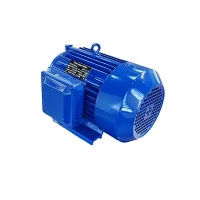
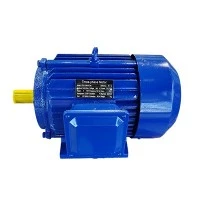
As a supplier of AC Capacitor Motors, I've had the privilege of witnessing the diverse applications and remarkable performance of these motors in various industries. One of the most crucial aspects that determine their functionality and suitability for different tasks is the torque - speed characteristic. In this blog, I'll delve into what the torque - speed characteristic of an AC Capacitor Motor is, why it matters, and how it can influence your motor selection.
Understanding the Basics of an AC Capacitor Motor
Before we dive into the torque - speed characteristic, let's briefly understand what an AC Capacitor Motor is. An AC Capacitor Motor is a type of single - phase induction motor. It uses a capacitor to create a phase shift in the current, which helps in generating a rotating magnetic field. This rotating magnetic field is essential for the motor to start and run. These motors are widely used in household appliances, small industrial equipment, and other applications where a relatively small amount of power is required.
The Torque - Speed Characteristic Curve
The torque - speed characteristic of an AC Capacitor Motor is typically represented by a curve that shows the relationship between the motor's torque output and its speed. This curve is a graphical representation of how the motor behaves under different operating conditions.


Starting Torque
At the start, when the motor is at rest (speed = 0), it needs to overcome the inertia of the load and start rotating. The torque available at this point is called the starting torque. In an AC Capacitor Motor, the starting torque is relatively high compared to some other single - phase motors. This is due to the phase - shifting action of the capacitor, which creates a more effective rotating magnetic field at startup. The high starting torque allows the motor to quickly accelerate the load and reach its operating speed.
Pull - Up Torque
As the motor starts to accelerate, the torque decreases slightly until it reaches a minimum value known as the pull - up torque. This is the minimum torque that the motor can produce while accelerating the load. If the load torque exceeds the pull - up torque during acceleration, the motor may stall and fail to reach its operating speed.
Maximum Torque
After the pull - up torque, the torque starts to increase again until it reaches the maximum torque. The maximum torque is the highest torque that the motor can produce under normal operating conditions. It occurs at a certain speed, usually before the motor reaches its rated speed. The maximum torque is an important parameter as it determines the motor's ability to handle sudden increases in load without stalling.
Rated Torque and Speed
The rated torque and speed are the values at which the motor is designed to operate continuously. The rated speed is usually close to the synchronous speed of the motor, which is determined by the frequency of the AC power supply and the number of poles in the motor. The rated torque is the torque required to drive the load at the rated speed. Operating the motor at its rated torque and speed ensures optimal efficiency and reliability.
Running Torque
Once the motor reaches its operating speed, the torque required to keep the load running at a constant speed is called the running torque. The running torque is usually lower than the maximum torque and is determined by the load characteristics.
Factors Affecting the Torque - Speed Characteristic
Several factors can affect the torque - speed characteristic of an AC Capacitor Motor.
Capacitor Size
The size of the capacitor used in the motor has a significant impact on the starting and running torque. A larger capacitor can increase the starting torque but may also cause the motor to draw more current during startup. On the other hand, a smaller capacitor may result in lower starting torque but better running efficiency.
Load Characteristics
The type of load that the motor is driving also affects its torque - speed characteristic. For example, a constant - torque load, such as a conveyor belt, requires a relatively constant torque throughout the operating speed range. In contrast, a variable - torque load, such as a fan or a pump, requires less torque at lower speeds and more torque at higher speeds. The motor's torque - speed characteristic should be matched to the load characteristics to ensure efficient operation.
Supply Voltage
The supply voltage also plays a crucial role in the motor's performance. A decrease in supply voltage can reduce the motor's torque output, especially the starting and maximum torque. This can lead to slower acceleration, reduced operating speed, and even stalling under heavy loads. Conversely, an increase in supply voltage can increase the torque output but may also cause the motor to overheat and reduce its lifespan.
Importance of the Torque - Speed Characteristic in Motor Selection
Understanding the torque - speed characteristic is essential when selecting an AC Capacitor Motor for a specific application.
Matching the Load
By analyzing the load characteristics and the required torque - speed profile, you can choose a motor that can provide the necessary torque at the required speed. For example, if you have a load that requires high starting torque, such as a compressor, you should select a motor with a high starting torque rating.
Efficiency and Energy Savings
Selecting a motor with a torque - speed characteristic that matches the load can also improve the motor's efficiency and reduce energy consumption. When the motor operates at or near its rated torque and speed, it consumes less energy and generates less heat, resulting in lower operating costs and longer motor life.
Reliability
A motor that is properly matched to the load based on its torque - speed characteristic is more likely to operate reliably. It is less prone to stalling, overheating, and other problems that can lead to premature failure.
Applications of AC Capacitor Motors Based on Torque - Speed Characteristics
AC Capacitor Motors are used in a wide range of applications due to their favorable torque - speed characteristics.
Household Appliances
In household appliances such as refrigerators, washing machines, and fans, AC Capacitor Motors are commonly used. These appliances require motors with relatively high starting torque to overcome the initial inertia of the load and smooth running torque to operate efficiently. The torque - speed characteristic of AC Capacitor Motors makes them well - suited for these applications.
Small Industrial Equipment
In small industrial equipment such as conveyors, pumps, and compressors, AC Capacitor Motors are also popular. The high starting torque allows these motors to quickly start the equipment, while the ability to maintain a relatively constant torque at different speeds ensures smooth operation.
Our AC Capacitor Motors
As a supplier of AC Capacitor Motors, we offer a wide range of motors with different torque - speed characteristics to meet the diverse needs of our customers. Our 120V AC Motor is designed for applications that require a reliable and efficient power source. It has a well - defined torque - speed characteristic that provides high starting torque and smooth running performance.
We also have Small Single Phase AC Motor options for applications where space is limited. These motors are compact yet powerful, with torque - speed characteristics that are optimized for small - scale operations.
Contact Us for Procurement
If you are in the market for an AC Capacitor Motor and need help in selecting the right one based on the torque - speed characteristic, we are here to assist you. Our team of experts can provide you with detailed information about our motors, their torque - speed characteristics, and how they can be best suited for your specific application. Contact us to start a procurement discussion and find the perfect motor solution for your needs.
References
- Fitzgerald, A. E., Kingsley, C., & Umans, S. D. (2003). Electric Machinery. McGraw - Hill.
- Chapman, S. J. (2012). Electric Machinery Fundamentals. McGraw - Hill.