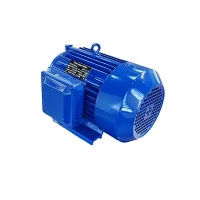
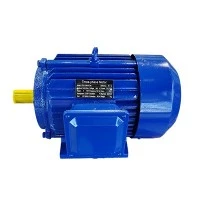
Hey there, folks! As a supplier of single AC motors, I often get asked this burning question: "Is it possible to control the speed of a single AC motor electronically?" Well, let's dive right in and find out.
First off, let's understand what a single AC motor is. A single - phase AC motor, also known as a 1 Phase AC Motor or One Phase AC Motor, is quite common in small appliances and some light industrial applications. It's powered by a single - phase alternating current, and it's a workhorse in many places. For example, you might find it in your home's fans, some small pumps, or even in certain types of power tools.
Now, when it comes to the speed of these motors, traditionally, single AC motors have a fixed speed that's determined by the frequency of the AC power supply and the number of poles in the motor. In most countries, the standard AC power frequency is either 50 Hz or 60 Hz. And once you have a motor with a certain number of poles, its synchronous speed is pretty much set. But here's the good news: thanks to modern electronics, we can indeed control the speed of a single AC motor.
One of the most common methods is using a variable frequency drive (VFD). A VFD works by changing the frequency and voltage of the AC power supplied to the motor. You see, the speed of an AC motor is directly proportional to the frequency of the power supply. By adjusting the frequency with a VFD, we can make the motor run faster or slower. It's like having a volume control for your motor's speed.
Let's say you have a 120V AC Motor running a conveyor belt in a small factory. If you need to move the products at a different pace depending on the production requirements, a VFD can come to the rescue. You can easily adjust the speed of the motor to match the workflow, whether you need it to run at a slow crawl for delicate operations or at a higher speed for mass production.


Another method is the use of a solid - state speed controller. These controllers work by chopping the incoming AC voltage in a controlled way. They use semiconductor devices like thyristors or triacs to regulate the power going to the motor. This approach is a bit simpler and more cost - effective than a VFD, especially for smaller motors. For instance, in a household fan, a solid - state speed controller can be used to offer different speed settings. You can set it to a gentle breeze on a mild day or a high - speed blast on a hot one.
However, there are some challenges when it comes to electronically controlling the speed of single AC motors. One issue is that changing the speed can also affect the motor's torque. You see, torque is the rotational force that makes the motor do work. When you slow down a motor using a VFD or a speed controller, the torque characteristics can change. In some cases, the motor might not be able to provide enough torque at lower speeds, which could lead to overheating or even stalling.
Another challenge is the cost. VFDs, in particular, can be quite expensive, especially for larger motors. And there's also the complexity of installation and programming. You need to have a good understanding of how these devices work to set them up correctly. But don't worry too much! As a single AC motor supplier, we can offer you support and guidance on choosing the right speed control solution for your motor.
Now, let's talk about the benefits. Controlling the speed of a single AC motor electronically can lead to significant energy savings. Instead of having a motor run at full speed all the time, you can adjust it to the exact speed needed for the task. This means less wasted energy, which is great for both your wallet and the environment.
It also gives you more flexibility in your operations. You can fine - tune the speed of the motor to optimize the performance of your equipment. Whether it's a pump in a water treatment plant or a mixer in a food processing facility, being able to control the speed allows you to get the best results.
In addition, electronic speed control can extend the lifespan of the motor. By avoiding constant start - stop cycles and running the motor at the appropriate speed, you reduce the wear and tear on the motor's components. This means fewer breakdowns and lower maintenance costs in the long run.
So, is it possible to control the speed of a single AC motor electronically? Absolutely! With the right technology and a bit of know - how, you can have precise control over the speed of your single AC motor.
As a reliable single AC motor supplier, we offer a wide range of motors and speed control solutions. If you're looking to take advantage of electronic speed control for your single AC motor application, we're here to help. We can provide you with the right products and expert advice to ensure that you get the best performance and value for your money.
Whether you're a small business owner looking to improve the efficiency of your equipment or a DIY enthusiast wanting to add some speed control to your home projects, feel free to reach out. We're more than happy to discuss your specific needs and find the perfect solution for you. So, don't hesitate to get in touch for a procurement discussion.
References
- Electric Machinery Fundamentals by Stephen J. Chapman
- IEEE Transactions on Industrial Electronics, various issues related to motor control.