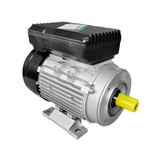
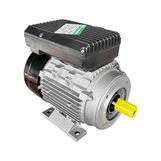
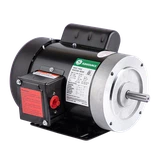
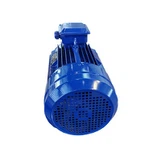
An AC induction motor is a cornerstone of modern industry, powering a vast array of equipment from small household appliances to large industrial machinery. Among its various types, the wound - rotor induction motor stands out for its unique characteristics and applications. As an AC Induction Motor supplier, I am often asked about the wound - rotor and its significance. In this blog, I will delve into what the wound - rotor is in an AC induction motor, its working principles, advantages, and applications.
What is a Wound - Rotor in an AC Induction Motor?
In an AC induction motor, the rotor is the rotating part, and it can be of two main types: squirrel - cage and wound - rotor. The wound - rotor, as the name suggests, consists of a set of insulated windings placed in the rotor slots. These windings are similar to the stator windings in construction. The ends of the rotor windings are connected to slip rings mounted on the rotor shaft. Brushes make contact with these slip rings, allowing external electrical connections to be made to the rotor windings.
In contrast, a squirrel - cage rotor has conductive bars short - circuited at both ends by end rings, resembling a squirrel cage. The simplicity of the squirrel - cage design makes it the most common type of rotor in AC induction motors. However, the wound - rotor offers distinct advantages in certain applications.
Working Principles of a Wound - Rotor Induction Motor
The basic principle of operation of an AC induction motor is based on electromagnetic induction. When an alternating current is applied to the stator windings, a rotating magnetic field is produced. This rotating magnetic field cuts across the rotor windings, inducing an electromotive force (EMF) in the rotor according to Faraday's law of electromagnetic induction.
In a wound - rotor induction motor, the induced EMF in the rotor windings causes a current to flow. The interaction between the magnetic field produced by the stator and the magnetic field produced by the rotor current creates a torque, which causes the rotor to rotate. The speed of the rotor is always less than the speed of the rotating magnetic field of the stator, a phenomenon known as slip.
The key feature of the wound - rotor motor is the ability to control the rotor circuit. By connecting external resistors to the rotor windings through the slip rings and brushes, the rotor resistance can be adjusted. Increasing the rotor resistance increases the slip at which maximum torque occurs. This allows for better control of the motor's starting torque and speed.
Advantages of Wound - Rotor Induction Motors
High Starting Torque
One of the most significant advantages of wound - rotor induction motors is their ability to provide high starting torque. When starting a heavy load, such as a large conveyor belt or a crane, a high starting torque is required to overcome the inertia of the load. By inserting external resistors into the rotor circuit during startup, the motor can produce a high starting torque while limiting the starting current. This is in contrast to squirrel - cage motors, which may draw a very high current during startup, leading to voltage drops in the power supply system.
Speed Control
Wound - rotor motors offer a degree of speed control. By varying the resistance in the rotor circuit, the speed - torque characteristics of the motor can be adjusted. This makes them suitable for applications where variable speed operation is required, such as in elevators and hoists. Although the speed control range is not as wide as that of some other types of motors, it is sufficient for many industrial applications.
Reduced Starting Current
As mentioned earlier, the ability to control the rotor resistance allows wound - rotor motors to limit the starting current. This is beneficial for both the motor and the power supply system. A high starting current can cause overheating in the motor windings and voltage fluctuations in the power grid. By reducing the starting current, the lifespan of the motor can be extended, and the stability of the power supply can be improved.
Applications of Wound - Rotor Induction Motors
Industrial Conveyors
Industrial conveyors are used to transport materials in factories and warehouses. They often need to start and stop under heavy loads. Wound - rotor induction motors are well - suited for these applications because of their high starting torque and the ability to control the acceleration and deceleration of the conveyor.
Cranes and Hoists
Cranes and hoists are used to lift and move heavy objects. They require precise control of speed and high starting torque to lift the load safely. The wound - rotor motor's ability to provide variable speed and high starting torque makes it an ideal choice for these applications.
Cement Mills
In cement mills, large grinding mills are used to crush and grind raw materials. These mills have a high inertia and require a high starting torque to start rotating. Wound - rotor induction motors can provide the necessary starting torque and also allow for some speed control during the grinding process.
Our Offerings as an AC Induction Motor Supplier
As an AC Induction Motor supplier, we offer a wide range of wound - rotor induction motors to meet the diverse needs of our customers. Our motors are designed with high - quality materials and advanced manufacturing processes to ensure reliability and performance.
We understand that different applications have different requirements. That's why we provide customized solutions for our customers. Whether you need a motor with a specific power rating, speed range, or starting torque, we can work with you to design and manufacture the right motor for your application.
In addition to wound - rotor motors, we also offer other types of AC induction motors, such as AC Induction Motor Single Phase, Single AC Motor, and AC Torque Motor. Our comprehensive product portfolio allows us to be a one - stop solution for all your AC induction motor needs.


Contact Us for Procurement and Consultation
If you are in the market for an AC induction motor, especially a wound - rotor induction motor, we invite you to contact us. Our team of experts is ready to assist you in selecting the right motor for your application. We can provide detailed technical information, performance data, and pricing quotes.
Whether you are a small business looking for a single motor or a large industrial enterprise in need of multiple motors, we have the capacity and expertise to meet your requirements. Don't hesitate to reach out to us for procurement and consultation. We look forward to working with you to find the best motor solutions for your business.
References
- Fitzgerald, A. E., Kingsley, C., & Umans, S. D. (2003). Electric Machinery. McGraw - Hill.
- Chapman, S. J. (2012). Electric Machinery Fundamentals. McGraw - Hill.
- Nasar, S. A., & Boldea, I. (1990). Electric Machines and Drives: A First Course. Prentice Hall.