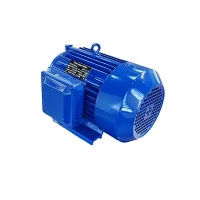
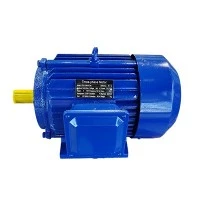
Selecting the appropriate size of a 3 phase AC motor is crucial for ensuring optimal performance and efficiency in various industrial and commercial applications. As a 3 phase AC motor supplier, I've seen firsthand the impact of choosing the right motor size. In this blog, I'll share some key factors and steps to help you make the best decision.
Understanding the Basics of 3 Phase AC Motors
Before we dive into the selection process, let's quickly go over what 3 phase AC motors are. These motors are widely used in industrial settings because they offer high efficiency, reliability, and power. They work by using three alternating currents that are out of phase with each other to create a rotating magnetic field, which in turn drives the motor's shaft.
There are different types of 3 phase AC motors, including induction motors, synchronous motors, and wound rotor motors. Each type has its own characteristics and is suitable for specific applications. For example, induction motors are the most common type and are used in a wide range of applications, from pumps and fans to conveyor belts and machine tools.
If you want to learn more about 3 phase AC motors, you can check out our 3 Phase AC Electric Motor page.
Factors to Consider When Selecting Motor Size
Power Requirements
The first and most important factor to consider is the power requirements of your application. You need to determine how much power the motor needs to deliver to perform the required task. This is usually measured in horsepower (HP) or kilowatts (kW).
To calculate the power requirements, you need to know the load that the motor will be driving. For example, if you're using the motor to drive a pump, you need to know the flow rate and pressure requirements of the pump. If it's for a conveyor belt, you need to know the weight of the materials being transported and the speed of the belt.
Once you have this information, you can use formulas or online calculators to estimate the power needed. Keep in mind that it's always a good idea to add a safety margin to account for any unexpected loads or inefficiencies.
Speed Requirements
The speed at which the motor needs to operate is another important factor. 3 phase AC motors typically have a rated speed, which is the speed at which they operate under normal conditions. This speed is usually measured in revolutions per minute (RPM).
Some applications require a constant speed, while others may require variable speed control. For example, a fan may need to operate at a constant speed, while a machine tool may require variable speed to perform different operations.
If you need variable speed control, you may need to consider using a motor with a variable frequency drive (VFD). A VFD allows you to adjust the speed of the motor by changing the frequency of the electrical supply.
Torque Requirements
Torque is the rotational force that the motor can produce. It's important to ensure that the motor has enough torque to start and run the load. There are two types of torque to consider: starting torque and running torque.
Starting torque is the torque required to start the load from a standstill. Some applications, such as crushers and mixers, require high starting torque. Running torque is the torque required to keep the load running at a constant speed.
You need to calculate the starting and running torque requirements of your application and choose a motor that can provide the necessary torque.
Duty Cycle
The duty cycle refers to how often and for how long the motor will be operating. There are different duty cycles, such as continuous duty, intermittent duty, and short - time duty.
Continuous duty motors are designed to run continuously without overheating. They're suitable for applications that require constant operation, such as pumps and fans. Intermittent duty motors are designed to run for short periods followed by periods of rest. They're used in applications like cranes and hoists. Short - time duty motors are designed to run for a short time and then cool down.
Make sure to choose a motor with a duty cycle that matches your application's requirements.
Steps to Select the Appropriate Motor Size
Step 1: Gather Information
The first step is to gather all the relevant information about your application. This includes the power, speed, torque, and duty cycle requirements, as well as any other specific requirements such as environmental conditions (temperature, humidity, etc.) and space limitations.
Step 2: Calculate the Requirements
Use the gathered information to calculate the power, speed, torque, and other requirements. As mentioned earlier, you can use formulas or online calculators to do this.
Step 3: Select the Motor Type
Based on your requirements, select the appropriate type of 3 phase AC motor. For most general - purpose applications, an induction motor is a good choice. However, if you need high precision or constant speed, a synchronous motor may be more suitable.
Step 4: Choose the Motor Size
Once you've selected the motor type, choose the motor size that meets your power, speed, torque, and duty cycle requirements. You can refer to the motor manufacturer's catalogs or consult with a technical expert.
Step 5: Consider Additional Features
In addition to the basic requirements, you may also want to consider additional features such as motor protection, efficiency ratings, and noise levels. For example, if the motor will be operating in a harsh environment, you may want to choose a motor with a high level of protection against dust and moisture.
Our Product Range
As a 3 phase AC motor supplier, we offer a wide range of motors to meet different needs. Our AC Ki Motor series is known for its high efficiency and reliability. These motors are suitable for a variety of industrial applications.
We also have a range of Industrial AC Motor that are designed to handle heavy - duty industrial loads. These motors are built to last and can withstand the rigors of continuous operation.


Conclusion
Selecting the appropriate size of a 3 phase AC motor is not a simple task, but by considering the factors mentioned above and following the steps outlined, you can make an informed decision. Remember, choosing the right motor size will not only ensure optimal performance but also save you energy and reduce maintenance costs in the long run.
If you're still unsure about which motor is right for your application, don't hesitate to contact us. We have a team of experts who can help you select the best motor for your needs. Whether you're a small business or a large industrial company, we're here to provide you with the right solution. Let's start a conversation about your motor requirements and find the perfect motor for your project.
References
- Electric Motor Handbook by Heinz - Peter Nee
- Industrial Electric Motor Handbook by Robert L. Kosowski