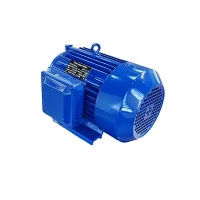
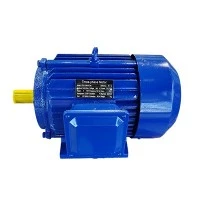
The inrush current of a 120V AC motor is a crucial concept that every user and potential purchaser should understand. As a reputable 120V AC Motor supplier, we often encounter customers with inquiries regarding inrush current. In this blog, we will delve into what inrush current is, its implications, and how it relates to our 120V AC Motor products.
Understanding Inrush Current
Inrush current, also known as startup current or surge current, refers to the high current drawn by an electrical device, such as a 120V AC motor, when it is initially turned on. This phenomenon occurs because the motor's windings act as inductors. At startup, the inductive reactance of the windings is low due to the absence of a rotating magnetic field. According to Ohm's law (I = V/R), with a relatively constant supply voltage (in this case, 120V) and low impedance at startup, the current can spike to a much higher level than the motor's normal operating current.
The inrush current can be several times, sometimes up to 10 - 15 times, the motor's rated current. For example, if a 120V AC motor has a rated current of 5 amps, its inrush current could reach 50 - 75 amps for a brief period, typically lasting from a few milliseconds to a few seconds. This high - current spike is a natural part of the motor's startup process.
Factors Affecting Inrush Current
Several factors influence the magnitude and duration of the inrush current in a 120V AC motor:
-
Motor Design: Different types of 120V AC motors, such as AC Capacitor Motor and Motor For AC, have varying inrush current characteristics. Capacitor - start motors, for instance, use a capacitor to create a phase shift in the starting winding, which can help reduce the inrush current compared to some other types of single - phase motors. The number of windings, their configuration, and the magnetic properties of the core materials also play a role. A motor with more windings or a higher quality core material may have a different inrush current profile.
-
Load at Startup: The load connected to the motor at startup significantly affects the inrush current. If the motor has to start under a heavy load, such as a compressor in an air conditioning unit or a conveyor belt with a large mass, it will require more torque to begin rotating. This increased torque demand results in a higher current draw during startup. In contrast, a lightly - loaded motor will experience a lower inrush current as it can start rotating more easily.
-
Supply Voltage: Although the nominal voltage may be 120V, fluctuations in the supply voltage can impact the inrush current. A higher - than - normal supply voltage will cause the inrush current to be even higher, as the current is directly proportional to the voltage according to Ohm's law. On the other hand, a lower - than - normal supply voltage may still result in a high inrush current if the motor struggles to overcome the initial inertia and load.
Implications of Inrush Current
The inrush current of a 120V AC motor has several implications for both the motor itself and the electrical system it is connected to:
-
Motor Wear and Tear: The high - current spikes during startup can cause additional stress on the motor's windings and other components. Over time, this repeated stress can lead to premature wear, insulation breakdown, and ultimately, motor failure. For example, the excessive heat generated by the high inrush current can degrade the insulation material around the windings, increasing the risk of short - circuits.


-
Electrical System Impact: Inrush current can also affect the electrical distribution system. It can cause voltage dips in the power supply, which may affect other equipment connected to the same circuit. These voltage dips can lead to malfunctions in sensitive electronic devices, such as computers or lighting systems. Additionally, the high current can trip circuit breakers or blow fuses, disrupting the operation of the motor and other connected equipment.
Managing Inrush Current
As a 120V AC Motor supplier, we understand the importance of managing inrush current. Here are some common methods to reduce the inrush current:
-
Soft - Start Devices: Soft - start devices gradually increase the voltage supplied to the motor during startup, thereby limiting the inrush current. These devices use solid - state components to control the voltage ramp - up, allowing the motor to start smoothly and reducing the stress on both the motor and the electrical system.
-
Star - Delta Starting: For three - phase motors, star - delta starting is a common method. In the star connection at startup, the motor windings receive a reduced voltage, which in turn reduces the inrush current. Once the motor reaches a certain speed, the connection is switched to the delta connection for normal operation.
-
Capacitor Selection: In the case of capacitor - start motors, proper capacitor selection is crucial. An appropriately sized capacitor can optimize the phase shift in the starting winding, reducing the inrush current while still providing sufficient starting torque.
Our 120V AC Motor Offerings
At our company, we take great pride in offering high - quality 120V AC Motor products. Our motors are designed with advanced technologies to minimize inrush current and ensure reliable performance. For example, our AC Capacitor Motor models use precisely - sized capacitors to optimize the starting process and reduce the initial current spike.
Our Motor For AC series is engineered to handle various loads efficiently. Whether you need a motor for a small household appliance or a larger industrial application, we have the right solution for you. We also provide support and guidance on inrush current management, helping you select the most suitable motor and starting method for your specific needs.
Conclusion
Understanding the inrush current of a 120V AC motor is essential for proper motor selection, installation, and maintenance. As a leading 120V AC Motor supplier, we are committed to providing our customers with detailed information and high - quality products that minimize the impact of inrush current. If you are in the market for a 120V AC motor, we invite you to reach out to us for further discussion and to explore our range of products. We look forward to the opportunity to assist you with your motor requirements and to discuss how our motors can meet your specific needs.
References
- Fitzgerald, A. E., Kingsley, C., & Umans, S. D. (2003). Electric Machinery. McGraw - Hill.
- Chapman, S. J. (2012). Electric Machinery Fundamentals. McGraw - Hill.