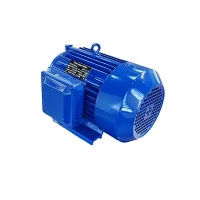
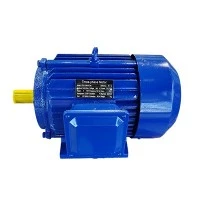
Hey there! As a supplier of 3 phase AC motors, I've had my fair share of dealing with customers who are either new to these motors or looking to upgrade their existing setups. One question that pops up a lot is, "What are the installation requirements of a 3 phase AC motor?" Well, let's dive right in and break it down.
Power Supply Considerations
First off, the power supply is crucial. A 3 phase AC motor runs on a three - phase electrical system. You need to make sure that the voltage, frequency, and phase sequence of your power supply match the motor's specifications. Most 3 phase AC motors in industrial settings operate at standard voltages like 208V, 230V, 460V, or 575V, and a frequency of 50Hz or 60Hz.
If the voltage is too low, the motor might not start properly or could run at a reduced speed, which can lead to overheating. On the other hand, if the voltage is too high, it can cause excessive current flow, damaging the motor windings. And don't forget about the phase sequence. Reversing the phase sequence will make the motor run in the opposite direction. You can use a phase sequence indicator to check this.
We offer a great range of 3 Phase AC Electric Motor that are designed to work efficiently with different power supply configurations. So, if you're unsure about your power supply, our team can help you pick the right motor.


Mounting and Alignment
The way you mount the 3 phase AC motor is super important. It needs to be mounted on a flat, rigid surface that can support its weight and absorb the vibrations generated during operation. You can use bolts or brackets to secure the motor firmly in place.
Alignment is also key. If the motor is not aligned correctly with the driven equipment, it can cause excessive wear and tear on the bearings, couplings, and shafts. This can lead to premature failure of the motor and the driven equipment. You can use laser alignment tools to ensure that the motor and the driven equipment are perfectly aligned.
We have some top - notch AC Squirrel Cage Induction Motor that are easy to mount and align. Our motors come with detailed installation instructions to make the process as smooth as possible.
Cooling and Ventilation
3 phase AC motors generate heat during operation, and proper cooling is essential to prevent overheating. Most motors are equipped with built - in cooling fans that draw air over the motor windings to dissipate the heat.
You need to make sure that there is enough space around the motor for proper ventilation. Don't install the motor in a confined space or block the ventilation openings. If the motor is installed in a hot environment, you might need to consider additional cooling methods, such as installing a separate cooling fan or using a heat exchanger.
Our AC Ki Motor is designed with efficient cooling systems to ensure reliable operation even in challenging environments.
Wiring and Connections
Wiring the 3 phase AC motor correctly is a must. You need to use the right size and type of wires to handle the current load. The wires should be properly insulated to prevent electrical shocks and short circuits.
When making the connections, follow the wiring diagram provided by the motor manufacturer. Make sure that all the connections are tight and secure. Loose connections can cause arcing, which can damage the motor and pose a safety hazard.
It's also a good idea to install a motor protection device, such as a circuit breaker or a thermal overload relay. These devices can automatically cut off the power supply if the motor draws too much current or overheats.
Grounding
Grounding the 3 phase AC motor is an important safety measure. It helps to protect the motor and the operators from electrical shocks. You need to connect the motor frame to a proper grounding system. This can be a grounding rod driven into the ground or a grounding busbar in an electrical panel.
Lubrication
If your 3 phase AC motor has bearings, proper lubrication is necessary to reduce friction and wear. Use the lubricant recommended by the motor manufacturer. Over - lubrication can be just as bad as under - lubrication, so follow the guidelines for the correct amount and frequency of lubrication.
Testing and Commissioning
Once you've installed the 3 phase AC motor, it's time to test it. Before you start the motor, double - check all the connections, alignment, and grounding. Then, perform a visual inspection to make sure that there are no loose parts or debris in the motor.
Start the motor slowly and observe its operation. Check for any abnormal noises, vibrations, or overheating. Measure the current and voltage to make sure that they are within the normal range. If everything looks good, you can gradually increase the load on the motor and continue to monitor its performance.
Maintenance
Regular maintenance is key to keeping your 3 phase AC motor running smoothly. This includes checking the motor's performance, inspecting the wiring and connections, lubricating the bearings, and cleaning the motor. By following a proper maintenance schedule, you can extend the life of your motor and prevent costly breakdowns.
In conclusion, installing a 3 phase AC motor requires careful attention to detail. From power supply considerations to testing and commissioning, every step is important. As a 3 phase AC motor supplier, we're here to help you every step of the way. Whether you need advice on choosing the right motor or assistance with installation and maintenance, our team of experts is ready to assist you.
If you're interested in purchasing a 3 phase AC motor or have any questions about the installation requirements, feel free to reach out to us. We're always happy to have a chat and help you find the best solution for your needs. Let's work together to get your motor up and running efficiently!
References
- Electrical Installation Guide for 3 Phase AC Motors, Industry Standards Publication
- Motor Manufacturer's Manuals for 3 Phase AC Motors