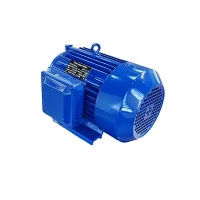
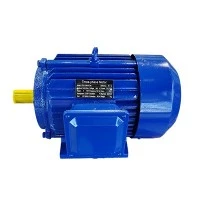
Hey there! As a supplier of Small NEMA Motors, I often get asked about the IP rating of these motors. So, I thought I'd take a few minutes to break it down for you.
First off, let's talk about what NEMA motors are. NEMA, which stands for the National Electrical Manufacturers Association, has set standards for motor design, dimensions, and performance in North America. When you hear terms like NEMA Rated Motor, NEMA 48 Motor, or NEMA Premium 3 Phase Motor, you're talking about motors that meet these NEMA standards. Small NEMA motors are compact, efficient, and widely used in various applications, from small industrial machinery to home appliances.
Now, onto the IP rating. The IP rating, or Ingress Protection rating, is a system that tells you how well a motor is protected against the intrusion of solid objects and liquids. It's like a little guide that helps you figure out if a motor can handle the environment it's going to be in.
The IP rating consists of two digits. The first digit indicates the level of protection against solid objects, and the second digit shows the protection against liquids.
Let's start with the first digit, which ranges from 0 to 6:


- 0: No protection against solid objects. This means that any size of solid object can get into the motor, and it's not really suitable for most real - world applications.
- 1: Protects against solid objects larger than 50mm. Think of something like a hand accidentally brushing against the motor.
- 2: Protects against solid objects larger than 12mm. This could be a finger or a small tool.
- 3: Protects against solid objects larger than 2.5mm. This includes small wires or thin rods.
- 4: Protects against solid objects larger than 1mm. Small insects or thin metal shavings are kept out.
- 5: Dust - protected. It allows only a limited amount of dust to enter, which is usually not enough to cause a problem for the motor's operation.
- 6: Dust - tight. No dust can enter the motor at all. This is great for environments where there's a lot of dust, like a woodworking shop or a mining site.
The second digit, which ranges from 0 to 8, deals with liquid protection:
- 0: No protection against liquids. The motor can't handle any kind of liquid splash or spray.
- 1: Protects against vertically falling drops of water, like condensation.
- 2: Protects against vertically falling drops of water when the motor is tilted up to 15 degrees from the vertical position.
- 3: Protects against spraying water at an angle up to 60 degrees from the vertical. This is useful in areas where there might be a bit of water spray, like near a sink or a sprinkler system.
- 4: Protects against splashing water from any direction. You can use the motor in an area where there's some water splashing, but not full - on submersion.
- 5: Protects against water jets. A motor with this rating can handle water being sprayed at it from a nozzle, which is handy in industrial cleaning areas.
- 6: Protects against powerful water jets. It can withstand high - pressure water sprays, like those used in heavy - duty cleaning.
- 7: Protects against temporary submersion in water. The motor can be submerged in water up to a certain depth for a limited time without being damaged.
- 8: Protects against continuous submersion in water under specified conditions. This is for motors that need to be underwater all the time, like in a water pump.
So, why does the IP rating matter for Small NEMA Motors? Well, it all comes down to the environment where the motor will be used. If you're using a motor in a clean, dry office environment, you might not need a high - end IP rating. A motor with an IP20 rating could be sufficient, as it just needs to be protected from fingers accidentally touching it and some light dust.
On the other hand, if you're using the motor in a wet or dirty industrial environment, you'll want a higher IP rating. For example, in a food processing plant where there's a lot of water and steam, an IP67 rated motor would be a good choice. It's dust - tight and can handle temporary submersion, which is perfect for the cleaning and operating conditions in such a place.
As a Small NEMA Motor supplier, I've seen all sorts of applications. I've had customers who needed motors for small home automation projects, and they were fine with a motor that had an IP32 rating. It protected against small tools and a bit of water splash from accidental spills. Then, there are the industrial clients who need motors for harsh environments, and they always go for motors with high IP ratings like IP55 or IP66.
When you're choosing a Small NEMA Motor, it's important to think about the IP rating carefully. You don't want to over - spec and pay for a higher IP rating than you actually need, but you also don't want to under - spec and end up with a motor that fails because it can't handle the environment.
If you're still not sure which IP rating is right for your application, don't worry. That's what I'm here for. I've got years of experience in the industry, and I can help you pick the perfect Small NEMA Motor with the right IP rating for your specific needs.
Whether you're working on a small DIY project or a large - scale industrial operation, having the right motor with the appropriate IP rating can make a huge difference in the performance and longevity of your equipment.
So, if you're in the market for a Small NEMA Motor, get in touch with me. We can have a chat about your requirements, and I'll help you find the best motor for your situation. Let's make sure your project runs smoothly with a reliable and well - protected motor.
References
- National Electrical Manufacturers Association (NEMA) standards documentation
- International Electrotechnical Commission (IEC) guidelines on IP ratings