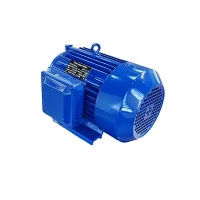
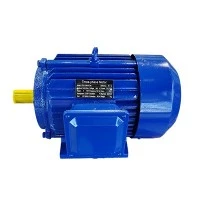
Hey there! As a supplier of 3 Phase 110V Motors, I've gotten a ton of questions about the power output of these motors at different loads. So, I thought I'd write this blog to break it all down for you.
First off, let's quickly go over what a 3 Phase 110V Motor is. A three - phase motor is a type of AC motor that uses three alternating currents to create a rotating magnetic field. This design makes it more efficient and powerful compared to single - phase motors. And the 110V refers to the voltage at which the motor operates.
Now, when it comes to power output, it's not a one - size - fits - all situation. The power output of a 3 Phase 110V Motor varies depending on the load it's carrying. A load is basically the amount of work the motor has to do. It could be anything from driving a small conveyor belt in a factory to powering a pump in a water treatment plant.
No - Load Condition
At no - load, the motor is running but not doing any significant work. Picture a motor just spinning freely without being connected to any machinery. In this state, the power output is quite low. The motor mainly uses power to overcome internal losses like friction in the bearings and electrical losses in the windings.


The power consumed at no - load is mostly reactive power. Reactive power is the power that the motor uses to create and maintain the magnetic field. It doesn't actually do any useful work, but it's necessary for the motor to function. The real power output, which is the power that can be used to do work, is close to zero at no - load.
Light Load
When the motor is under a light load, it starts to do a bit of work. Let's say it's driving a small fan. The power output increases, but not by a huge amount. The motor still has to deal with those internal losses, but now it's also using some power to turn the fan blades.
The efficiency of the motor at light load is usually not very high. This is because the internal losses make up a relatively large proportion of the total power consumed. As the load increases from no - load to light load, the power factor (a measure of how effectively the motor uses electrical power) also starts to improve, but it's still not at its best.
Medium Load
As the load on the motor increases to a medium level, things start to get interesting. The motor is now doing a significant amount of work, like powering a medium - sized compressor. At this point, the power output increases substantially.
The efficiency of the motor reaches a peak at medium load. This is because the internal losses are now a smaller proportion of the total power consumed. The power factor also improves further, getting closer to 1. A power factor of 1 means that the motor is using electrical power very efficiently.
Heavy Load
When the motor is under a heavy load, like driving a large industrial mixer, the power output is at its maximum. The motor has to work hard to overcome the resistance of the load. However, as the load gets too heavy, the motor starts to experience problems.
The current drawn by the motor increases significantly. This can cause the motor to overheat, which can damage the insulation of the windings and reduce the motor's lifespan. The power factor may also start to decrease again at very heavy loads because the motor has to draw more reactive power to maintain the magnetic field.
Calculating Power Output
The power output of a 3 Phase 110V Motor can be calculated using the following formula:
[P=\sqrt{3}\times V\times I\times PF]
Where:
- (P) is the power output in watts
- (V) is the line voltage (in this case, 110V)
- (I) is the line current
- (PF) is the power factor
To measure the line current and power factor, you'll need some specialized equipment like a multimeter and a power analyzer.
Why Does It Matter?
Understanding the power output of a 3 Phase 110V Motor at different loads is crucial for several reasons. For one, it helps you choose the right motor for your application. If you pick a motor that's too small for the load, it will overheat and break down quickly. On the other hand, if you choose a motor that's too large, you'll be wasting energy.
It also helps with energy management. By knowing how the motor performs at different loads, you can optimize the operation of your machinery to reduce energy consumption and save money on electricity bills.
Our 3 Phase 110V Motors
As a supplier of Industrial AC Motor, Three Phase AC Motor, and AC Three Phase Induction Motor, we offer a wide range of 3 Phase 110V Motors. Our motors are designed to be efficient, reliable, and durable.
We understand that every application is different, so we work closely with our customers to help them choose the right motor for their needs. Whether you need a motor for a small DIY project or a large industrial application, we've got you covered.
Conclusion
So, there you have it – a breakdown of the power output of a 3 Phase 110V Motor at different loads. From no - load to heavy load, the power output changes significantly, and understanding these changes is key to getting the most out of your motor.
If you're in the market for a 3 Phase 110V Motor, or if you have any questions about power output or motor selection, don't hesitate to reach out. We're here to help you find the perfect motor for your application and ensure that it runs smoothly and efficiently.
References
- Electric Machinery Fundamentals by Stephen Chapman
- Industrial Motor Handbook by Arnold E. Bailey