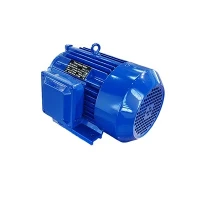
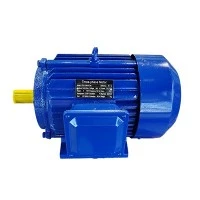
Hey there! As a Nema motor supplier, I often get asked about what the torque of Nema motors is. So, I thought I'd sit down and write this blog to clear things up for all you curious folks out there.
First off, let's understand what torque is. In simple terms, torque is the rotational force that causes an object to rotate around an axis. Think of it like when you're trying to open a stubborn jar lid. The force you apply to turn the lid is similar to torque in a motor. It's what gets things moving and keeps them going in a circular motion.
Now, Nema motors are a popular choice in many industries, and that's because they come in a wide range of sizes and configurations, each with its own torque characteristics. Nema stands for the National Electrical Manufacturers Association, and they've set the standards for these motors, including things like frame size, mounting dimensions, and performance metrics.
One of the key factors that affect the torque of a Nema motor is its design and construction. Different types of Nema motors, such as NEMA 48 Motor, NEMA Premium 3 Phase Motor, and NEMA 56C Motor, have different torque capabilities based on their internal components and how they're built.
For example, the NEMA 48 Motor is known for its relatively high torque output. This motor is often used in applications where a lot of force is needed to start and run a load. It has a robust design that allows it to handle heavy-duty tasks. Whether it's powering a conveyor belt in a factory or driving a large fan, the NEMA 48 Motor can deliver the torque required to get the job done.
On the other hand, the NEMA Premium 3 Phase Motor is designed for efficiency and reliability. It offers a good balance between torque and energy consumption. These motors are commonly used in industrial settings where continuous operation is required. The three-phase design provides a smooth and consistent power supply, which helps in maintaining a stable torque output. This makes them ideal for applications like pumps, compressors, and machine tools.
The NEMA 56C Motor, with its unique mounting configuration, is also a popular choice. It has a specific torque profile that makes it suitable for certain types of equipment. The "C" in its name refers to a particular type of flange mount, which allows for easy installation in various setups. This motor can provide enough torque to drive small to medium-sized loads, making it versatile for different applications.
There are also different types of torque that we need to consider when talking about Nema motors. The first one is starting torque, which is the torque required to start the motor and get the load moving from a standstill. This is crucial because some loads can be very heavy and require a significant amount of force to overcome inertia. A motor with a high starting torque can quickly get the load up to speed without stalling.
Then there's running torque, which is the torque needed to keep the motor and the load running at a constant speed. This is usually lower than the starting torque because once the load is moving, it requires less force to maintain its motion. The running torque is important for ensuring smooth and efficient operation of the equipment.
Another type of torque is breakdown torque, which is the maximum torque that the motor can develop without stalling. This is a critical parameter, especially in applications where the load may suddenly increase or encounter a temporary resistance. A motor with a high breakdown torque can handle these situations without shutting down.
The torque of a Nema motor is also affected by factors like the motor's speed. Generally, as the speed of the motor increases, the torque decreases. This relationship is described by the motor's torque-speed curve. Different Nema motors have different torque-speed curves, which are designed to meet the requirements of specific applications.
For instance, some applications may require a motor to have a high torque at low speeds, while others may need a more constant torque over a wide range of speeds. By understanding the torque-speed curve of a Nema motor, you can choose the right motor for your specific needs.
When it comes to choosing the right Nema motor for your application, it's important to consider the torque requirements carefully. You need to know the starting torque, running torque, and breakdown torque needed for your load. This information can usually be obtained from the equipment manufacturer or by doing some calculations based on the load characteristics.
As a Nema motor supplier, I've seen many customers make the mistake of choosing a motor with the wrong torque rating. This can lead to problems like motor overheating, reduced efficiency, and even premature failure. That's why it's always a good idea to consult with an expert if you're not sure which motor is right for you.
We offer a wide range of Nema motors, and our team of experts can help you select the motor with the appropriate torque for your application. Whether you need a high-torque motor for a heavy-duty task or a more efficient motor for continuous operation, we've got you covered.
If you're in the market for a Nema motor and want to discuss your specific requirements, don't hesitate to reach out. We're here to help you find the perfect motor that meets your torque needs and fits your budget. Contact us today to start the conversation and let's work together to get your project up and running smoothly.


References
- "Electric Motors and Drives: Fundamentals, Types, and Applications" by Austin Hughes and Bill Drury
- National Electrical Manufacturers Association (NEMA) standards documentation