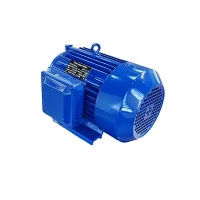
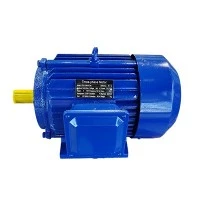
Hey there! As a supplier of AC Motori motors, I'm super stoked to dive into the topic of the torque - speed characteristic of these motors. It's a crucial aspect that can make or break your industrial operations, and I'm here to break it down in a way that's easy to understand.
Let's start with the basics. Torque is basically the rotational force that an AC motor can generate. It's what gets things moving and keeps them going. Speed, on the other hand, is how fast the motor's shaft is spinning. The relationship between these two factors is what we call the torque - speed characteristic.
In an AC motor, the torque - speed characteristic is a curve that shows how the torque output of the motor changes as the speed of the motor varies. This curve is super important because it helps us understand how the motor will perform under different operating conditions.
The Torque - Speed Curve
The torque - speed curve of an AC motor typically has three main regions: the starting region, the running region, and the breakdown region.
Starting Region
When you first start an AC motor, it needs to overcome the inertia of the load it's connected to. This requires a high amount of torque, which is why the starting torque of an AC motor is usually much higher than its rated torque. In the starting region of the torque - speed curve, the torque is at its maximum, and the speed is close to zero.
Running Region
Once the motor has overcome the inertia of the load and reached its rated speed, it enters the running region. In this region, the torque output of the motor is relatively constant, and the speed is stable. This is the most efficient operating region for the motor, and it's where you want it to spend most of its time.
Breakdown Region
If the load on the motor increases beyond its rated capacity, the motor will enter the breakdown region. In this region, the torque output of the motor starts to decrease rapidly, and the speed drops. If the load is not reduced, the motor will eventually stall.


Factors Affecting the Torque - Speed Characteristic
There are several factors that can affect the torque - speed characteristic of an AC motor. Some of the most important factors include:
Motor Design
The design of the motor, including the number of poles, the winding configuration, and the type of rotor, can have a significant impact on the torque - speed characteristic. For example, a motor with more poles will typically have a lower speed but a higher torque output.
Load Characteristics
The type of load that the motor is connected to can also affect the torque - speed characteristic. For example, a load that requires a high starting torque, such as a conveyor belt or a compressor, will need a motor with a high starting torque.
Power Supply
The voltage and frequency of the power supply can also affect the torque - speed characteristic of the motor. A change in voltage or frequency can cause the motor to operate at a different speed and torque output.
Why the Torque - Speed Characteristic Matters
Understanding the torque - speed characteristic of an AC motor is crucial for several reasons. First, it helps you select the right motor for your application. By knowing the torque and speed requirements of your load, you can choose a motor that can provide the necessary performance.
Second, it helps you optimize the operation of your motor. By operating the motor in the most efficient region of the torque - speed curve, you can reduce energy consumption and extend the lifespan of the motor.
Finally, it helps you troubleshoot problems with your motor. If you notice that the motor is not performing as expected, you can use the torque - speed characteristic to identify the problem and take corrective action.
Our AC Motori Motors
At our company, we offer a wide range of AC Motori motors that are designed to meet the needs of various industrial applications. Our motors are known for their high efficiency, reliability, and performance.
We have a variety of 3 Phase AC Induction Motor options available, which are ideal for applications that require a high starting torque and a wide speed range. Our Industrial AC Motor series is designed for heavy-duty industrial applications, providing reliable and efficient operation. And our AC Ki Motor is a great choice for applications that require a compact and lightweight motor.
If you're in the market for an AC motor, we'd love to help you find the right one for your needs. Our team of experts can provide you with detailed information about our products and help you select the motor that's best suited for your application.
Contact Us for Procurement
If you're interested in learning more about our AC Motori motors or have any questions about the torque - speed characteristic, don't hesitate to get in touch. We're here to assist you with all your motor procurement needs. Whether you're a small business or a large industrial operation, we can provide you with the right motor solution at a competitive price.
References
- Electric Machinery Fundamentals, Stephen J. Chapman
- Power Electronics: Converters, Applications, and Design, Ned Mohan, Tore M. Undeland, and William P. Robbins