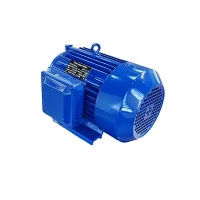
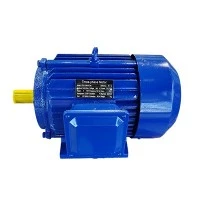
Hey there! As a supplier of NEMA 48 motors, I often get asked about the torque - speed curve of these motors. So, I thought I'd take some time to break it down for you in this blog post.
First off, let's talk a bit about NEMA motors in general. NEMA, which stands for the National Electrical Manufacturers Association, sets the standards for electric motors in North America. Their standards ensure that motors are interchangeable and perform up to a certain quality level. If you're interested in learning more about NEMA motors, you can check out this NEMA Electric Motor page.
Now, back to the NEMA 48 motor. The torque - speed curve of a NEMA 48 motor is a graphical representation of how the motor's torque output changes as its speed varies. This curve is super important because it helps us understand how the motor will perform under different operating conditions.
Understanding Torque and Speed
Before we dive into the curve itself, let's quickly go over what torque and speed mean in the context of an electric motor.
Torque is basically the rotational force that the motor can produce. It's what allows the motor to start, stop, and move loads. Think of it like the strength of the motor. The higher the torque, the more force the motor can apply to turn a shaft or move an object.
Speed, on the other hand, refers to how fast the motor's shaft rotates. It's usually measured in revolutions per minute (RPM). The speed of a motor determines how quickly it can complete a task.
The Torque - Speed Curve of a NEMA 48 Motor
The torque - speed curve of a NEMA 48 motor typically has a few distinct regions:


Starting Torque
When you first turn on a NEMA 48 motor, it needs to overcome the inertia of the load it's connected to. This is where the starting torque comes in. The starting torque is the torque that the motor can produce at zero speed. It's usually higher than the motor's rated torque to ensure that the motor can start the load smoothly.
Pull - Up Torque
As the motor starts to accelerate, the torque required to keep the load moving changes. The pull - up torque is the minimum torque that the motor can produce as it accelerates from zero speed to its breakdown torque point. It's important to make sure that the pull - up torque is high enough to prevent the motor from stalling during acceleration.
Breakdown Torque
The breakdown torque is the maximum torque that the motor can produce before it starts to lose speed rapidly. If the load on the motor exceeds the breakdown torque, the motor will stall. This is a critical point on the torque - speed curve because it determines the maximum load that the motor can handle.
Rated Torque
The rated torque is the torque that the motor is designed to produce continuously at its rated speed. This is the operating point where the motor is most efficient and reliable. Running the motor at or near its rated torque for extended periods will help ensure a long lifespan and optimal performance.
Full - Load Speed
The full - load speed is the speed at which the motor operates when it's producing its rated torque. It's slightly lower than the motor's synchronous speed due to losses in the motor.
Why the Torque - Speed Curve Matters
The torque - speed curve of a NEMA 48 motor is crucial for several reasons:
Load Matching
By understanding the torque - speed curve, you can choose the right motor for your specific load requirements. If you have a heavy load that requires a lot of starting torque, you'll need a motor with a high starting torque on its curve. On the other hand, if your load doesn't require much starting torque but needs to run at a constant speed, you can focus on the motor's rated torque and full - load speed.
System Efficiency
Running a motor at the right operating point on the torque - speed curve can improve the overall efficiency of your system. When a motor is operating at or near its rated torque, it uses less energy and generates less heat, which can save you money on energy costs and reduce wear and tear on the motor.
Motor Protection
Knowing the breakdown torque of the motor can help you protect it from overloading. If you can ensure that the load on the motor never exceeds the breakdown torque, you can prevent the motor from stalling and potentially damaging itself.
Comparing with Other NEMA Motors
It's also interesting to compare the torque - speed curve of a NEMA 48 motor with other NEMA motors, like the NEMA 56C Motor. The NEMA 56C motor has a different physical size and may have different torque - speed characteristics. Generally, larger motors tend to have higher torque capabilities, but this also depends on the specific design and application of the motor.
Another type of NEMA motor is the NEMA Premium 3 Phase Motor. These motors are designed to be more energy - efficient and may have different torque - speed curves compared to standard NEMA motors. They often have a flatter torque - speed curve, which means that they can maintain a more consistent torque output over a wider range of speeds.
How We Can Help
As a supplier of NEMA 48 motors, we have a deep understanding of the torque - speed curves of these motors. We can help you choose the right motor for your application based on your specific load requirements. Whether you need a motor with high starting torque for a heavy load or a motor with a consistent torque output for a precision application, we've got you covered.
If you're interested in learning more about our NEMA 48 motors or need help selecting the right motor for your project, don't hesitate to reach out. We're always happy to have a chat and discuss your needs. We can provide you with detailed technical information, including the torque - speed curves of our motors, to help you make an informed decision.
Conclusion
In conclusion, the torque - speed curve of a NEMA 48 motor is a vital tool for understanding how the motor will perform under different operating conditions. By knowing the starting torque, pull - up torque, breakdown torque, rated torque, and full - load speed, you can choose the right motor for your load, improve system efficiency, and protect the motor from overloading.
If you have any questions or are ready to start a project with a NEMA 48 motor, feel free to contact us. We're here to make sure you get the best motor for your needs.
References
- National Electrical Manufacturers Association (NEMA) standards documentation
- Electric motor textbooks and technical manuals