Hey there! As a supplier of AC motor capacitors, I often get asked about how these little components work. So, I thought I'd take a few minutes to break it down for you in a way that's easy to understand.
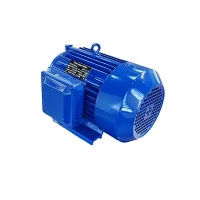
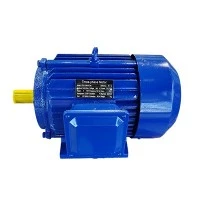
Let's start with the basics. An AC motor capacitor is a device that stores and releases electrical energy. It's like a small battery that helps the motor start and run more efficiently. Capacitors are used in a variety of AC motors, including 120V AC Motor, Universal Motor Single Phase, and AC Induction Motor Single Phase.
How Does an AC Motor Start?
Before we dive into how the capacitor works, let's first understand how an AC motor starts. In a single-phase AC motor, the magnetic field produced by the stator (the stationary part of the motor) is not rotating on its own. For the motor to start, we need to create a rotating magnetic field.
In a split-phase motor, which is a common type of single-phase AC motor, there are two windings in the stator: the main winding and the auxiliary winding. The main winding has a low resistance and high inductance, while the auxiliary winding has a high resistance and low inductance. When the motor is connected to the power supply, the current in the auxiliary winding leads the current in the main winding. This phase difference creates a rotating magnetic field, which causes the rotor (the rotating part of the motor) to start turning.
However, the phase difference created by the split-phase method is relatively small, and the starting torque (the force that makes the motor start rotating) is not very high. This is where the capacitor comes in.
The Role of the Capacitor in Starting
A capacitor-start motor uses a capacitor in series with the auxiliary winding. The capacitor creates a larger phase difference between the currents in the main and auxiliary windings. This larger phase difference results in a stronger rotating magnetic field and a higher starting torque.
When the motor is first turned on, the capacitor is charged. As the capacitor charges and discharges, it changes the current flow in the auxiliary winding. This change in current creates a phase shift that is much greater than what can be achieved by the split-phase method alone.
Once the motor reaches a certain speed (usually about 75% of its rated speed), a centrifugal switch disconnects the capacitor and the auxiliary winding from the circuit. This is because the motor no longer needs the extra starting torque, and running the auxiliary winding continuously would waste energy and generate heat.
The Capacitor in Running
Some single-phase AC motors, called capacitor-run motors, use a capacitor not only for starting but also for running. In a capacitor-run motor, the capacitor remains in the circuit even after the motor has started.


The capacitor in a capacitor-run motor helps to improve the power factor of the motor. The power factor is a measure of how effectively the motor uses electrical power. A low power factor means that the motor is drawing more current than it needs to do the same amount of work, which is inefficient.
By using a capacitor, the phase angle between the voltage and current in the motor is adjusted. This reduces the reactive power (the power that is stored and released in the magnetic and electric fields of the motor) and increases the real power (the power that is actually used to do work). As a result, the motor runs more efficiently, and there is less stress on the electrical system.
Types of Capacitors Used in AC Motors
There are two main types of capacitors used in AC motors: electrolytic capacitors and oil-filled capacitors.
Electrolytic capacitors are commonly used in capacitor-start motors. They have a high capacitance value, which is suitable for creating a large phase shift for starting. However, electrolytic capacitors are polarized, which means they can only be connected in one direction. They also have a relatively short lifespan and can dry out over time.
Oil-filled capacitors are used in capacitor-run motors. They are non - polarized and have a long lifespan. Oil-filled capacitors can handle continuous operation and are more reliable for improving the power factor during the motor's running.
Choosing the Right Capacitor
When choosing a capacitor for an AC motor, it's important to consider several factors. The capacitance value of the capacitor is crucial. If the capacitance is too low, the starting torque may be insufficient, and the motor may not start properly. If the capacitance is too high, it can cause overheating and damage to the motor.
The voltage rating of the capacitor is also important. The capacitor must be able to withstand the voltage applied to it in the motor circuit. Using a capacitor with a lower voltage rating than required can lead to capacitor failure.
Maintenance and Replacement
Capacitors can fail over time due to factors such as age, overheating, and voltage spikes. Signs of a faulty capacitor include the motor not starting, the motor running slowly or with a lot of vibration, or the motor making unusual noises.
If you suspect that a capacitor in an AC motor is faulty, it's important to replace it with a capacitor of the same capacitance and voltage rating. As a supplier of AC motor capacitors, I can help you find the right capacitor for your motor.
Conclusion
AC motor capacitors play a crucial role in the starting and running of single-phase AC motors. They help to create a rotating magnetic field for starting, improve the starting torque, and enhance the power factor during running. Whether you're dealing with a 120V AC Motor, a Universal Motor Single Phase, or an AC Induction Motor Single Phase, choosing the right capacitor is essential for optimal motor performance.
If you're in the market for high-quality AC motor capacitors or need advice on which capacitor is right for your application, don't hesitate to get in touch. We're here to help you keep your motors running smoothly.
References
- Chapman, S. J. (2012). Electric Machinery Fundamentals. McGraw-Hill Education.
- Fitzgerald, A. E., Kingsley, C., & Umans, S. D. (2003). Electric Machinery. McGraw-Hill.