Hey there! I'm working with a top-notch AC motor supplier, and today I wanna dive deep into how regenerative braking works in an AC motor. It's a super cool technology that's changing the game in the world of motors, and I'm stoked to share all the deets with you.
First off, let's talk about what regenerative braking is. In simple terms, it's a way to turn the kinetic energy of a moving vehicle or machine back into electrical energy. Instead of just wasting that energy as heat through traditional friction brakes, regenerative braking captures it and stores it for later use. This not only makes the system more efficient but also helps to extend the lifespan of the brakes.
Now, let's get into the nitty-gritty of how it works in an AC motor. An AC motor consists of a stator and a rotor. The stator is the stationary part that contains the coils of wire, and the rotor is the rotating part. When the motor is running, an alternating current is sent through the stator coils, creating a rotating magnetic field. This magnetic field then interacts with the rotor, causing it to spin.
When it's time to slow down or stop the motor, instead of just applying the brakes, the motor is switched into a generator mode. In this mode, the spinning rotor now acts as the source of the magnetic field, and the stator coils become the conductors. As the rotor continues to spin, it induces an electric current in the stator coils. This current is then fed back into the electrical system, where it can be stored in a battery or used to power other components.
One of the key advantages of regenerative braking in an AC motor is its efficiency. Since the energy that would otherwise be wasted is being captured and reused, it significantly reduces the overall energy consumption of the system. This is especially important in applications where energy efficiency is a top priority, such as electric vehicles and industrial machinery.
Another benefit is the reduced wear and tear on the braking system. Traditional friction brakes rely on physical contact between the brake pads and the rotors to slow down the vehicle or machine. Over time, this can cause the brake pads to wear out, and the rotors to become damaged. With regenerative braking, the majority of the braking force is provided by the motor itself, which means that the friction brakes are used less frequently. This not only extends the lifespan of the brakes but also reduces the maintenance costs associated with them.
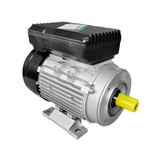
Now, let's take a look at some of the different types of AC motors that can use regenerative braking. One popular option is the Single AC Motor. These motors are commonly used in small appliances and light industrial applications. They are relatively simple in design and are easy to control, making them a great choice for applications where regenerative braking is required.
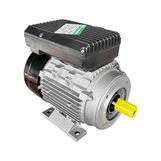
Another type is the AC CapACitor Motor. These motors use a capacitor to create a phase shift in the electrical current, which helps to improve the motor's starting torque and efficiency. They are often used in applications where a high starting torque is required, such as air compressors and refrigeration units.
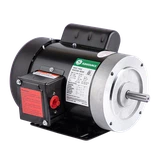
Finally, there's the AC Single Phase Induction Motor. These motors are the most commonly used type of AC motor and are found in a wide range of applications, from household appliances to industrial machinery. They are known for their reliability, durability, and low cost.
In conclusion, regenerative braking in an AC motor is a game-changing technology that offers numerous benefits in terms of energy efficiency, reduced maintenance costs, and improved performance. Whether you're in the market for a new motor for your electric vehicle or looking to upgrade the braking system in your industrial machinery, regenerative braking is definitely worth considering.


If you're interested in learning more about our range of AC motors or have any questions about regenerative braking, please don't hesitate to get in touch. We'd be more than happy to discuss your specific requirements and help you find the perfect solution for your needs.
References
- "Electric Motor Handbook" by Paul C. Krause, Oleg Wasynczuk, and Scott D. Sudhoff
- "Power Electronics: Converters, Applications, and Design" by Ned Mohan, Tore M. Undeland, and William P. Robbins
- "Modern Electric, Hybrid Electric, and Fuel Cell Vehicles: Fundamentals, Theory, and Design" by Yimin Gao