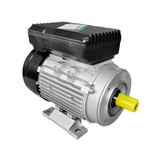
As a seasoned supplier of AC Induction Motors, I've witnessed firsthand the fascinating interplay between the magnetic field and the rotor within these remarkable machines. In this blog post, I'll delve into the intricate details of how this interaction occurs, shedding light on the fundamental principles that drive the operation of AC induction motors.
The Basics of AC Induction Motors
Before we explore the interaction between the magnetic field and the rotor, let's briefly review the basic components of an AC induction motor. An AC induction motor consists of two main parts: the stator and the rotor. The stator is the stationary part of the motor, which contains a set of windings that are connected to an AC power source. When an AC current flows through these windings, it creates a rotating magnetic field.
The rotor, on the other hand, is the rotating part of the motor. It is typically made of a laminated core with conductive bars or coils embedded in it. The rotor is not directly connected to the power source; instead, it is induced to rotate by the rotating magnetic field produced by the stator.
The Creation of the Rotating Magnetic Field
The key to understanding how the magnetic field interacts with the rotor in an AC induction motor lies in the creation of the rotating magnetic field. When an AC current flows through the stator windings, it produces a magnetic field that alternates in direction and magnitude. By arranging the stator windings in a specific configuration, we can create a magnetic field that rotates around the stator.
In a three-phase AC induction motor, for example, the stator windings are arranged in three separate phases, each displaced by 120 degrees from the others. When a three-phase AC current is applied to these windings, it creates a rotating magnetic field that rotates at a synchronous speed determined by the frequency of the AC power source and the number of poles in the motor.
The Induction of Current in the Rotor
Once the rotating magnetic field is created, it interacts with the rotor to induce a current in the rotor conductors. According to Faraday's law of electromagnetic induction, a changing magnetic field induces an electromotive force (EMF) in a conductor. In the case of an AC induction motor, the rotating magnetic field produced by the stator cuts across the rotor conductors, inducing an EMF in them.
This induced EMF causes a current to flow in the rotor conductors. The direction of the induced current is determined by Lenz's law, which states that the induced current will flow in a direction that opposes the change in the magnetic field that produced it. As a result, the induced current in the rotor creates its own magnetic field, which interacts with the rotating magnetic field of the stator.
The Production of Torque
The interaction between the magnetic field of the stator and the magnetic field of the rotor produces a torque that causes the rotor to rotate. According to the principle of electromagnetic force, a current-carrying conductor placed in a magnetic field experiences a force. In the case of an AC induction motor, the current-carrying rotor conductors are placed in the rotating magnetic field of the stator, and they experience a force that causes them to rotate.
The magnitude of the torque produced by the motor depends on several factors, including the strength of the magnetic field, the magnitude of the current in the rotor conductors, and the angle between the magnetic fields of the stator and the rotor. By adjusting these factors, we can control the speed and torque of the motor.
The Slip of the Rotor
One important concept to understand in the operation of an AC induction motor is the slip of the rotor. The slip is defined as the difference between the synchronous speed of the rotating magnetic field and the actual speed of the rotor. In an ideal situation, the rotor would rotate at the same speed as the rotating magnetic field, and the slip would be zero. However, in reality, the rotor always rotates at a slightly lower speed than the rotating magnetic field, resulting in a non-zero slip.
The slip is necessary for the operation of the motor because it allows the rotating magnetic field to continuously cut across the rotor conductors, inducing a current in them and producing torque. Without the slip, there would be no relative motion between the magnetic field and the rotor conductors, and no torque would be produced.
The Role of the Rotor Design
The design of the rotor plays a crucial role in the performance of an AC induction motor. There are two main types of rotors used in AC induction motors: the squirrel cage rotor and the wound rotor.
The squirrel cage rotor is the most common type of rotor used in AC induction motors. It consists of a laminated core with conductive bars or coils embedded in it. The conductive bars are short-circuited at both ends by end rings, forming a closed loop. When the rotating magnetic field of the stator cuts across the rotor conductors, it induces a current in them, which creates a magnetic field that interacts with the stator magnetic field to produce torque.
The wound rotor, on the other hand, consists of a laminated core with a set of windings that are connected to slip rings. The slip rings allow external resistors to be connected to the rotor windings, which can be used to control the speed and torque of the motor. By adjusting the resistance in the rotor circuit, we can change the slip of the rotor and, therefore, the speed and torque of the motor.
The Importance of the Magnetic Field in AC Induction Motors
The magnetic field is the driving force behind the operation of an AC induction motor. Without the rotating magnetic field produced by the stator, there would be no induction of current in the rotor, and no torque would be produced. The strength and characteristics of the magnetic field determine the performance of the motor, including its speed, torque, and efficiency.
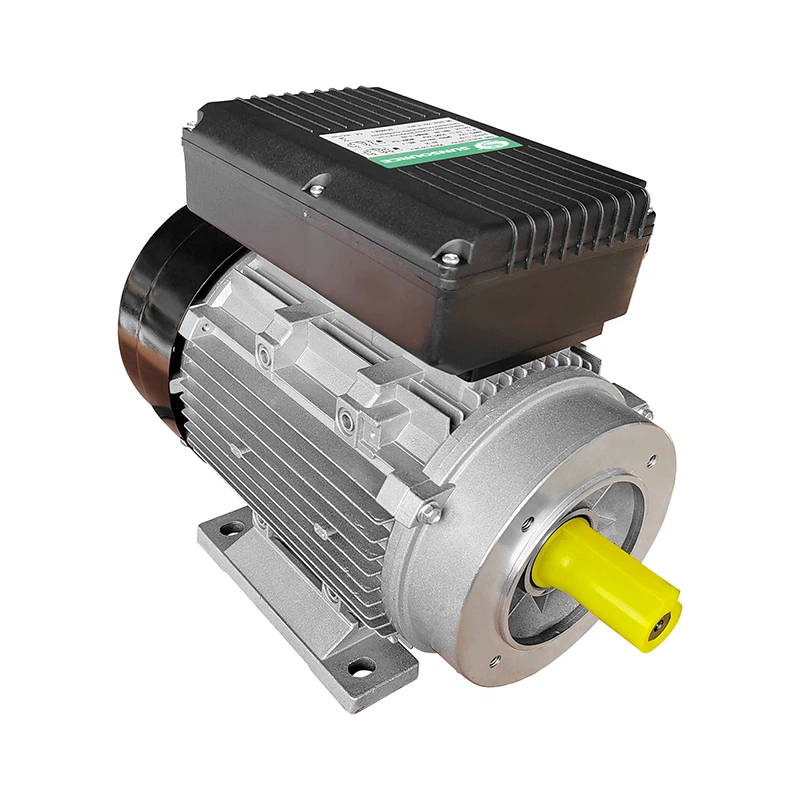
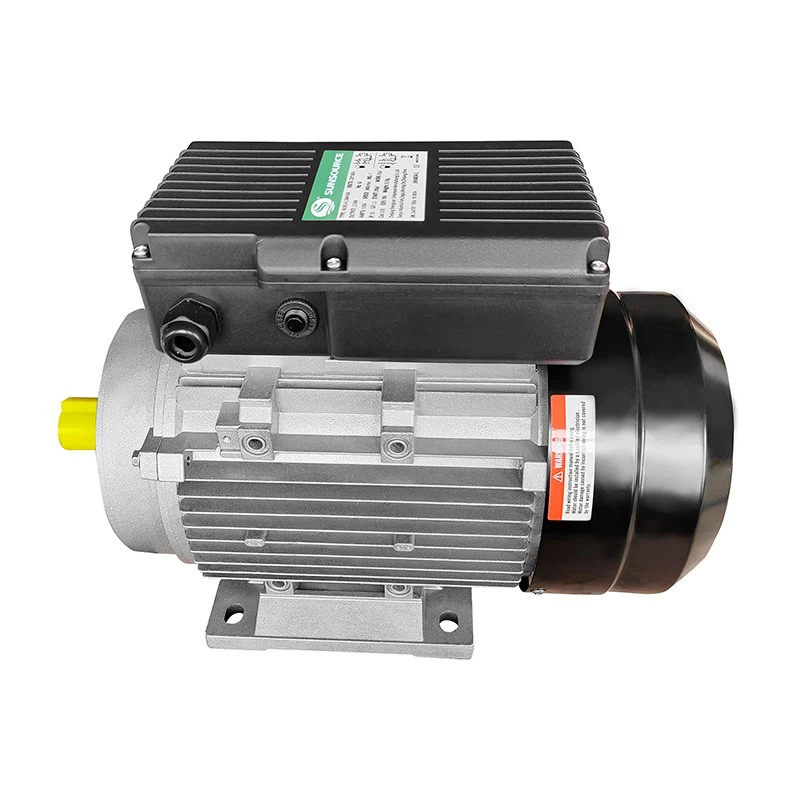
As a supplier of AC Induction Motors, we understand the importance of the magnetic field in the operation of these motors. That's why we use high-quality materials and advanced manufacturing techniques to ensure that our motors produce a strong and stable magnetic field. By optimizing the design of the stator and rotor, we can maximize the efficiency and performance of our motors, providing our customers with reliable and cost-effective solutions for their industrial applications.
Conclusion
In conclusion, the interaction between the magnetic field and the rotor in an AC induction motor is a complex and fascinating process that involves the principles of electromagnetic induction and force. By creating a rotating magnetic field in the stator and inducing a current in the rotor conductors, we can produce a torque that causes the rotor to rotate. The slip of the rotor is necessary for the operation of the motor, and the design of the rotor plays a crucial role in its performance.
As a supplier of AC Induction Motors, we are committed to providing our customers with high-quality products that are designed to meet their specific needs. Whether you're looking for a AC Induction Motor, AC CapACitor Motor, or 1 Phase AC Motor, we have the expertise and experience to help you find the right solution for your application.
If you're interested in learning more about our AC Induction Motors or would like to discuss your specific requirements, please don't hesitate to contact us. We look forward to the opportunity to work with you and help you achieve your goals.
References
- Fitzgerald, A. E., Kingsley, C., & Umans, S. D. (2003). Electric Machinery (6th ed.). McGraw-Hill.
- Chapman, S. J. (2012). Electric Machinery Fundamentals (5th ed.). McGraw-Hill.
- Krause, P. C., Wasynczuk, O., & Sudhoff, S. D. (2013). Analysis of Electric Machinery and Drive Systems (3rd ed.). Wiley.