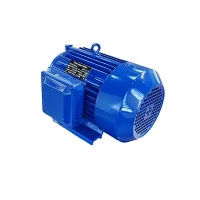
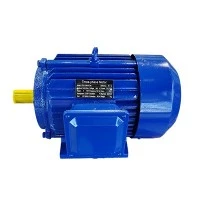
As a supplier of AC Capacitor Motors, I often receive inquiries from customers about how to calculate the power consumption of these motors. Understanding the power consumption of an AC Capacitor Motor is crucial for various reasons, such as energy efficiency assessment, cost estimation, and system design. In this blog post, I will guide you through the process of calculating the power consumption of an AC Capacitor Motor, providing you with the necessary knowledge to make informed decisions.
Understanding the Basics of AC Capacitor Motors
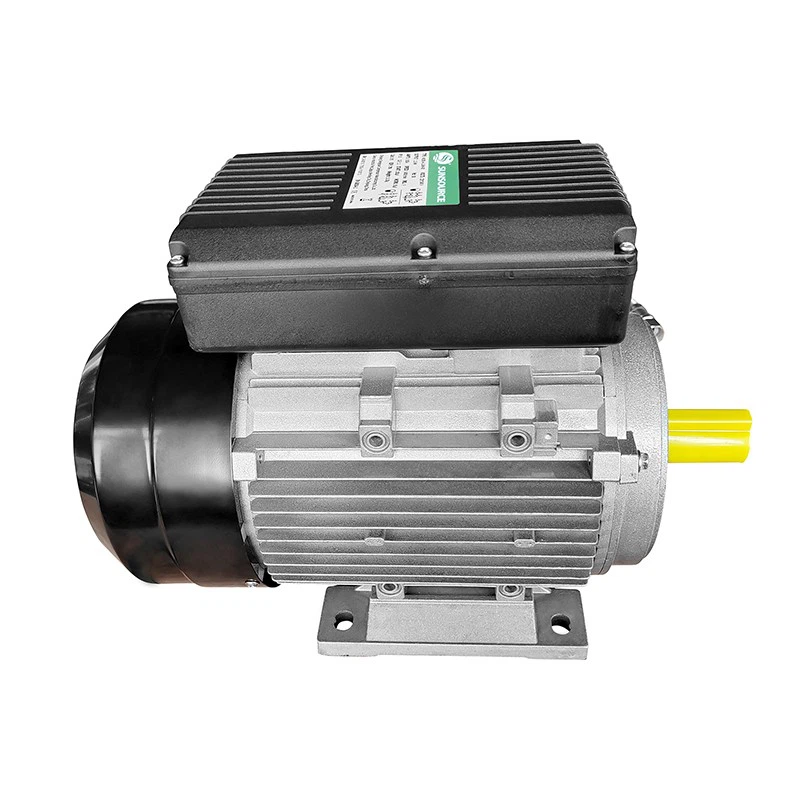
Before we dive into the calculation of power consumption, let's briefly understand what an AC Capacitor Motor is. An AC Capacitor Motor is a type of single-phase induction motor that uses a capacitor to create a phase shift in the stator winding, which helps in starting and running the motor. These motors are commonly used in various applications, including fans, pumps, compressors, and small appliances.
The power consumption of an AC Capacitor Motor depends on several factors, including the motor's rated power, efficiency, load, and operating conditions. To calculate the power consumption accurately, we need to consider these factors and use the appropriate formulas.
Calculating the Power Consumption of an AC Capacitor Motor
The power consumption of an AC Capacitor Motor can be calculated using the following formula:
[P = \frac{V \times I \times PF}{\eta}]
Where:
- (P) is the power consumption in watts (W)
- (V) is the voltage applied to the motor in volts (V)
- (I) is the current drawn by the motor in amperes (A)
- (PF) is the power factor of the motor (a dimensionless value between 0 and 1)
- (\eta) is the efficiency of the motor (a dimensionless value between 0 and 1)
Let's break down each component of the formula and discuss how to obtain the necessary values.
Voltage ((V))
The voltage applied to the motor is usually specified on the motor's nameplate. In most cases, AC Capacitor Motors are designed to operate at a specific voltage, such as 110V, 220V, or 230V. Make sure to use the correct voltage value in the calculation.
Current ((I))
The current drawn by the motor can be measured using an ammeter. Alternatively, you can refer to the motor's nameplate, which may provide the rated current value. Keep in mind that the actual current drawn by the motor may vary depending on the load and operating conditions.
Power Factor ((PF))
The power factor of an AC Capacitor Motor represents the ratio of the real power (in watts) to the apparent power (in volt-amperes). It is a measure of how efficiently the motor uses electrical energy. The power factor of an AC Capacitor Motor typically ranges from 0.6 to 0.9, depending on the motor's design and load. You can find the power factor value on the motor's nameplate or in the motor's technical specifications.
Efficiency ((\eta))
The efficiency of an AC Capacitor Motor is the ratio of the output power (mechanical power) to the input power (electrical power). It represents how effectively the motor converts electrical energy into mechanical energy. The efficiency of an AC Capacitor Motor typically ranges from 70% to 90%, depending on the motor's size, design, and load. You can find the efficiency value on the motor's nameplate or in the motor's technical specifications.

Example Calculation
Let's assume we have an AC Capacitor Motor with the following specifications:
- Rated voltage ((V)): 220V
- Rated current ((I)): 2A
- Power factor ((PF)): 0.8
- Efficiency ((\eta)): 0.85
Using the formula (P = \frac{V \times I \times PF}{\eta}), we can calculate the power consumption of the motor as follows:
[P = \frac{220V \times 2A \times 0.8}{0.85} \approx 414.12W]
Therefore, the power consumption of the AC Capacitor Motor is approximately 414.12 watts.
Factors Affecting Power Consumption
In addition to the factors mentioned above, several other factors can affect the power consumption of an AC Capacitor Motor. These factors include:
Load
The load on the motor has a significant impact on its power consumption. As the load increases, the motor needs to draw more current to maintain its speed and torque, resulting in higher power consumption. Conversely, when the load is reduced, the motor's power consumption decreases.
Operating Conditions
The operating conditions, such as temperature, humidity, and altitude, can also affect the power consumption of an AC Capacitor Motor. High temperatures can increase the resistance of the motor's windings, resulting in higher power consumption. Similarly, high humidity and altitude can affect the motor's performance and efficiency, leading to increased power consumption.
Motor Design
The design of the motor, including its size, number of poles, and winding configuration, can also affect its power consumption. Generally, larger motors with more poles tend to have higher power consumption than smaller motors with fewer poles.
Tips for Reducing Power Consumption
If you are looking to reduce the power consumption of your AC Capacitor Motor, here are some tips to consider:
Choose the Right Motor
Selecting the right motor for your application is crucial for minimizing power consumption. Make sure to choose a motor with the appropriate size, power rating, and efficiency for your specific needs.
Optimize the Load
Try to optimize the load on the motor to reduce its power consumption. This can be achieved by using the motor at its rated load or by adjusting the load to match the motor's capabilities.
Maintain the Motor
Regular maintenance of the motor can help ensure its optimal performance and efficiency, which can reduce power consumption. This includes cleaning the motor, lubricating the bearings, and checking the electrical connections.
Use Energy-Efficient Components
Using energy-efficient components, such as high-efficiency capacitors and motors, can help reduce the power consumption of your system. These components are designed to use less energy while providing the same level of performance.
Conclusion
Calculating the power consumption of an AC Capacitor Motor is an important step in assessing its energy efficiency and cost-effectiveness. By understanding the basic principles and using the appropriate formulas, you can accurately calculate the power consumption of your motor and make informed decisions about its operation and maintenance.
As a supplier of AC CapACitor Motor, Motor For AC, and Single AC Motor, we are committed to providing our customers with high-quality motors that are energy-efficient and reliable. If you have any questions or need assistance with calculating the power consumption of your motor, please feel free to contact us. We would be happy to help you find the right motor for your application and provide you with the necessary support and guidance.
References
- Electric Machinery Fundamentals, Stephen J. Chapman
- Electrical Engineering Handbook, Richard C. Dorf