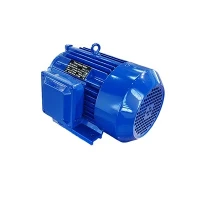
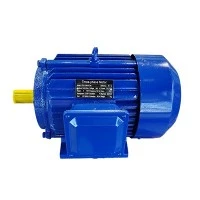
As a supplier of AC motors, I've seen firsthand the widespread adoption of Variable Frequency Drives (VFDs) in conjunction with AC motors. VFDs are indeed remarkable devices that offer numerous advantages, such as energy savings, precise speed control, and reduced mechanical stress on the motor. However, it's important for our customers to be fully informed about the potential disadvantages of using a VFD with an AC motor. In this blog post, I'll delve into some of these drawbacks to help you make a more educated decision when considering the use of VFDs in your applications.
1. Initial Cost
One of the most significant disadvantages of using a VFD with an AC motor is the initial cost. VFDs are relatively expensive compared to traditional motor starters or controllers. The price of a VFD can vary depending on its power rating, features, and brand, but in general, you can expect to pay a premium for this technology. For small to medium-sized businesses or projects with tight budgets, this additional cost can be a major deterrent.


When you factor in the cost of installation, which may require specialized electrical work and additional wiring, the total cost of implementing a VFD can become quite substantial. In some cases, the cost of the VFD and installation can exceed the cost of the AC motor itself. This high upfront investment may not be justifiable for applications where the benefits of speed control or energy savings are not significant enough to offset the initial expense.
2. Complexity of Installation and Setup
Installing and setting up a VFD is not a straightforward process. It requires a certain level of technical expertise and knowledge of electrical systems. Unlike traditional motor starters, which are relatively simple to install and configure, VFDs have a multitude of parameters that need to be adjusted to ensure proper operation.
These parameters include motor rated voltage, current, frequency, and speed, as well as various control settings such as acceleration and deceleration times, torque limit, and speed reference. Incorrect parameter settings can lead to poor motor performance, increased energy consumption, or even damage to the motor or the VFD itself.
Moreover, VFDs often require additional protective devices, such as line reactors and filters, to mitigate the effects of harmonic distortion and electromagnetic interference (EMI). These additional components add to the complexity of the installation and increase the overall cost.
3. Harmonic Distortion
VFDs operate by converting the incoming AC power into DC power and then back into AC power at a variable frequency. This process can introduce harmonic distortion into the electrical system. Harmonics are unwanted frequencies that can cause a variety of problems, including overheating of transformers, motors, and other electrical equipment, reduced power quality, and interference with other sensitive electronic devices.
Harmonic distortion can also lead to increased energy losses in the electrical system, as the additional harmonic currents cause additional heating in the conductors and equipment. This not only increases energy consumption but can also reduce the lifespan of the electrical components.
To mitigate the effects of harmonic distortion, additional filtering equipment may be required, such as line reactors, harmonic filters, or active harmonic correction devices. These filters can be expensive and add to the overall cost and complexity of the VFD system.
4. Electromagnetic Interference (EMI)
In addition to harmonic distortion, VFDs can also generate electromagnetic interference (EMI). EMI is the radiation of electromagnetic energy that can interfere with the operation of other electronic devices in the vicinity. This interference can cause malfunctions in sensitive equipment such as computers, communication systems, and control panels.
EMI can be particularly problematic in industrial environments where there are many electronic devices operating in close proximity. To reduce EMI, VFDs are typically equipped with shielding and filtering components. However, these measures may not always be sufficient, and additional shielding or filtering may be required to meet the electromagnetic compatibility (EMC) standards.
5. Motor Insulation Stress
The high-frequency switching operation of VFDs can subject the motor insulation to increased stress. The rapid voltage changes and high peak voltages generated by the VFD can cause partial discharges within the motor insulation, which can lead to insulation breakdown over time.
This insulation stress can reduce the lifespan of the motor and increase the risk of motor failure. To withstand the additional stress, motors used with VFDs may require special insulation systems, which can increase the cost of the motor.
6. Limited Motor Speed Range
While VFDs offer the ability to control the speed of an AC motor over a wide range, there are limitations to the achievable speed range. At very low speeds, the motor may experience reduced torque and efficiency, as the motor's magnetic field becomes less stable. This can result in poor performance and increased energy consumption.
At very high speeds, the motor may be subject to mechanical stress and vibration, which can also reduce its lifespan. Additionally, the VFD itself may have limitations on the maximum output frequency, which can restrict the maximum speed of the motor.
7. Maintenance and Repair
VFDs are complex electronic devices that require regular maintenance and may be prone to failures. Unlike traditional motor starters, which are relatively simple and have few components that can fail, VFDs have a large number of electronic components, such as capacitors, transistors, and printed circuit boards, that can degrade over time.
Maintenance of VFDs typically involves periodic inspections, cleaning, and component replacement. In the event of a failure, troubleshooting and repair can be challenging and may require specialized diagnostic equipment and technical expertise. This can result in longer downtime and higher repair costs compared to traditional motor starters.
Conclusion
While VFDs offer many benefits when used with AC motors, such as energy savings and precise speed control, they also have several disadvantages that need to be considered. These include high initial cost, complexity of installation and setup, harmonic distortion, electromagnetic interference, motor insulation stress, limited motor speed range, and maintenance and repair issues.
As a supplier of AC motors, we understand that every application is unique, and the decision to use a VFD should be based on a careful evaluation of the specific requirements and constraints of your project. If you're considering using a VFD with an AC motor, we encourage you to consult with our technical experts to discuss the potential advantages and disadvantages and to determine the best solution for your needs.
If you're interested in learning more about our Universal Motor Single Phase, AC Induction Motor Single Phase, or One Phase AC Motor, please don't hesitate to contact us. We're here to help you make the right choice for your motor and drive needs. Whether you're looking for a cost-effective solution or a high-performance system, we have the expertise and products to meet your requirements.
References
- “Variable Frequency Drives: Principles and Applications” by Thomas H. Rider
- “Electric Motor Handbook” by Teruo Matsui
- IEEE Standard 519-2014, “Recommended Practices and Requirements for Harmonic Control in Electrical Power Systems”