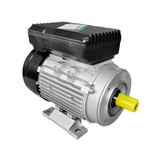
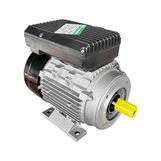
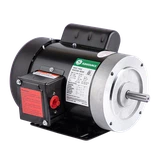
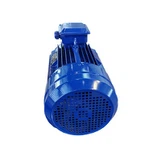
As a supplier of NEMA AC Motors, I understand the critical importance of electrical protection for these motors. NEMA, or the National Electrical Manufacturers Association, has established standards that govern the design, performance, and safety of electrical equipment, including AC motors. In this blog post, I will delve into the electrical protection requirements for NEMA AC Motors, exploring why they are essential and how they contribute to the reliable operation of these motors.
Understanding NEMA AC Motors
Before we dive into the protection requirements, let's briefly understand what NEMA AC Motors are. NEMA AC Motor refers to alternating current motors that comply with the standards set by the National Electrical Manufacturers Association. These motors are widely used in various industrial and commercial applications due to their efficiency, reliability, and standardized design. NEMA has defined specific frame sizes, horsepower ratings, and performance characteristics for these motors, ensuring interchangeability and compatibility across different manufacturers.
The Importance of Electrical Protection
Electrical protection for NEMA AC Motors is crucial for several reasons. Firstly, it helps prevent damage to the motor itself. Motors are expensive pieces of equipment, and any damage can result in significant repair or replacement costs. Electrical faults such as overcurrent, overvoltage, and undervoltage can cause overheating, insulation breakdown, and mechanical damage to the motor windings and other components. By implementing proper protection measures, we can minimize the risk of such damage and extend the lifespan of the motor.
Secondly, electrical protection enhances the safety of the personnel operating the equipment. Faulty motors can pose a serious safety hazard, including electrical shocks, fires, and explosions. Protection devices such as circuit breakers and fuses can quickly interrupt the electrical supply in case of a fault, preventing these dangerous situations from occurring.
Finally, electrical protection ensures the reliable operation of the entire system. Motors are often critical components in industrial processes, and any downtime can lead to production losses. By protecting the motors from electrical faults, we can maintain the continuity of operations and avoid costly disruptions.
Overcurrent Protection
Overcurrent protection is one of the most fundamental requirements for NEMA AC Motors. An overcurrent condition occurs when the current flowing through the motor exceeds its rated value. This can be caused by various factors, such as a short circuit, a mechanical overload, or a fault in the motor windings.
To protect against overcurrent, NEMA recommends the use of fuses or circuit breakers. Fuses are simple and inexpensive devices that consist of a thin wire or strip of metal that melts when the current exceeds a certain value, thereby interrupting the circuit. Circuit breakers, on the other hand, are more sophisticated devices that can automatically trip when an overcurrent condition is detected. They can be reset after the fault has been cleared, allowing the motor to be restarted.
The selection of the appropriate overcurrent protection device depends on several factors, including the motor's rated current, the type of load, and the application. NEMA provides guidelines for sizing fuses and circuit breakers based on the motor's full-load current rating (FLC). In general, the overcurrent protection device should be sized to trip at a current slightly higher than the motor's FLC to allow for normal starting currents.
Overvoltage and Undervoltage Protection
Overvoltage and undervoltage conditions can also have a detrimental effect on NEMA AC Motors. An overvoltage condition occurs when the voltage supplied to the motor exceeds its rated value, while an undervoltage condition occurs when the voltage is below the rated value.


Overvoltage can cause excessive heating of the motor windings, insulation breakdown, and premature failure of the motor. Undervoltage, on the other hand, can cause the motor to draw more current than normal, leading to overheating and reduced efficiency.
To protect against overvoltage and undervoltage, voltage monitoring devices can be used. These devices continuously monitor the voltage supplied to the motor and can automatically disconnect the motor if the voltage goes outside the acceptable range. Some voltage monitoring devices can also provide alarms to alert the operator of the potential problem.
Ground Fault Protection
Ground fault protection is another important requirement for NEMA AC Motors. A ground fault occurs when an electrical current flows from the motor's windings to the ground through an unintended path. This can be caused by insulation breakdown, a damaged cable, or a fault in the electrical system.
Ground faults can pose a serious safety hazard, as they can cause electrical shocks and fires. To protect against ground faults, NEMA recommends the use of ground fault circuit interrupters (GFCIs) or residual current devices (RCDs). These devices monitor the current flowing through the motor and can quickly interrupt the circuit if a ground fault is detected.
Thermal Protection
Thermal protection is essential for preventing overheating of NEMA AC Motors. Overheating can cause insulation breakdown, mechanical damage, and reduced efficiency of the motor. It can be caused by various factors, such as overcurrent, overvoltage, poor ventilation, or a mechanical overload.
To protect against overheating, thermal protection devices such as thermal overload relays or temperature sensors can be used. Thermal overload relays are designed to trip when the motor's temperature exceeds a certain limit. They work by sensing the temperature of the motor windings or the ambient temperature and can be adjusted to suit the specific requirements of the motor. Temperature sensors, on the other hand, can provide continuous temperature monitoring and can be used to trigger an alarm or shut down the motor if the temperature reaches a dangerous level.
Short Circuit Protection
Short circuit protection is required to protect the motor and the electrical system from the high currents that can occur during a short circuit. A short circuit occurs when there is a direct connection between two conductors with different voltages, resulting in a very low resistance path for the current to flow.
Short circuit protection devices such as fuses and circuit breakers are designed to quickly interrupt the electrical supply in case of a short circuit. They are typically rated to handle high short circuit currents and can operate within a fraction of a second to prevent damage to the motor and other components.
Coordination of Protection Devices
In addition to selecting the appropriate protection devices, it is also important to ensure that they are coordinated properly. Coordination refers to the ability of the protection devices to operate in a sequence that minimizes the impact of a fault on the system.
For example, in a system with multiple motors, the overcurrent protection devices should be coordinated so that the device closest to the fault trips first, while the upstream devices remain intact. This allows for selective tripping, which means that only the faulty motor is disconnected from the supply, while the other motors continue to operate.
Conclusion
In conclusion, electrical protection is a critical requirement for NEMA AC Motors. By implementing proper protection measures such as overcurrent protection, overvoltage and undervoltage protection, ground fault protection, thermal protection, and short circuit protection, we can ensure the safety, reliability, and longevity of these motors. As a supplier of NEMA Rated Motor and NEMA Electric Motor, we are committed to providing high-quality motors that meet all the necessary electrical protection requirements.
If you are in the market for NEMA AC Motors or need more information about electrical protection, please feel free to contact us. Our team of experts is ready to assist you in selecting the right motors and protection devices for your specific application. We look forward to the opportunity to work with you and help you achieve your goals.
References
- National Electrical Manufacturers Association (NEMA). "Standards for Motors and Generators."
- Electrical Safety Foundation International (ESFI). "Electrical Safety for Industrial Motors."
- IEEE Standards Association. "IEEE Standards for Electric Power Systems and Equipment."