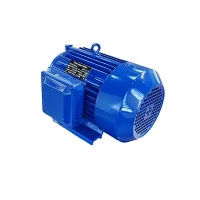
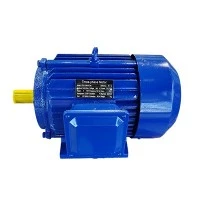
Hey there! As a supplier of NEMA rated motors, I often get asked about the power supply requirements for these motors. So, I thought I'd take a moment to break it down for you in a simple and easy-to-understand way.


First off, let's talk about what NEMA is. NEMA stands for the National Electrical Manufacturers Association. They've set up a bunch of standards for motors in North America, which helps make sure that motors are reliable and work well together with other electrical equipment. When we say a motor is NEMA rated, it means it meets these standards.
Now, the power supply requirements for NEMA rated motors can vary depending on a few factors. One of the main things is the type of motor. There are single-phase and three-phase motors, and they have different power needs.
Single-Phase Motors
Single-phase motors are commonly used in smaller applications, like household appliances, small pumps, and some light industrial equipment. They're pretty straightforward when it comes to power supply.
Most single-phase NEMA rated motors run on standard household voltage, which is usually 120V or 240V in the United States. The frequency is typically 60 Hz. These motors are designed to work with the power that comes right out of your wall socket, so they're easy to install and use in many situations.
However, it's important to note that the power requirements can vary based on the motor's horsepower (HP). A small 1/4 HP single-phase motor might not draw as much power as a 1 HP motor. You need to make sure that your power supply can handle the motor's current draw. If the power supply can't provide enough current, the motor might not run properly or could even overheat.
Three-Phase Motors
Three-phase motors are used in larger industrial applications, like big pumps, compressors, and conveyor systems. They're more efficient and powerful than single-phase motors, but they also have different power supply requirements.
Three-phase power is a bit more complex than single-phase. It consists of three alternating currents that are out of phase with each other. In the United States, three-phase power is usually available in voltages like 208V, 230V, or 480V, and the frequency is 60 Hz.
The advantage of three-phase power is that it provides a more constant and balanced power supply, which is great for running large motors. It also allows motors to start more smoothly and run more efficiently. But you need to have the right infrastructure in place to supply three-phase power. This might involve having a three-phase electrical panel and the right wiring.
Voltage Tolerance
Another important aspect of power supply requirements is voltage tolerance. NEMA rated motors are designed to operate within a certain voltage range. For example, a motor might be rated to operate at 230V, but it can handle voltages between 220V and 240V.
If the voltage is too low, the motor might not have enough power to run at its full capacity. It could draw more current, which can lead to overheating and damage to the motor. On the other hand, if the voltage is too high, it can also cause problems, like insulation breakdown and premature failure of the motor.
So, it's crucial to make sure that the power supply voltage stays within the motor's specified tolerance range. You might need to use voltage regulators or other equipment to maintain a stable voltage if your power supply is prone to fluctuations.
Frequency
Frequency is another factor to consider. In North America, the standard frequency is 60 Hz. Most NEMA rated motors are designed to run at this frequency. However, in other parts of the world, the standard frequency might be 50 Hz.
If you try to run a 60 Hz motor on a 50 Hz power supply, the motor will run slower and might not be able to produce its rated power. Conversely, running a 50 Hz motor on a 60 Hz power supply can cause the motor to run too fast, which can lead to overheating and other issues.
So, when you're choosing a NEMA rated motor, make sure it's compatible with the frequency of your power supply.
Specific NEMA Motor Types
Let's take a look at some specific types of NEMA rated motors and their power supply requirements.
- NEMA 48 Motor: These motors are often used in small to medium-sized applications. They can be either single-phase or three-phase, depending on the specific model. The power supply requirements will follow the general rules we discussed earlier, based on whether it's a single-phase or three-phase motor.
- NEMA Premium Efficient Motor: These motors are designed to be more energy-efficient. They can be single-phase or three-phase, and they're available in a range of horsepower ratings. The power supply requirements are similar to other NEMA rated motors, but because they're more efficient, they might draw less current for the same amount of power output.
- NEMA Premium 3 Phase Motor: As the name suggests, these are three-phase motors. They're built to meet high efficiency standards and are commonly used in industrial applications. They require a three-phase power supply with the appropriate voltage and frequency, as discussed earlier.
Power Factor
Power factor is an important concept when it comes to power supply requirements. It's a measure of how effectively a motor uses the electrical power it's supplied with. A motor with a low power factor draws more current from the power supply than a motor with a high power factor, even if they're producing the same amount of mechanical power.
Most NEMA rated motors have a power factor specified in their datasheets. If your motor has a low power factor, you might need to install power factor correction equipment to improve the efficiency of your electrical system and reduce your energy costs.
Conclusion
So, there you have it - the power supply requirements for NEMA rated motors can be a bit complex, but understanding the basics is crucial for proper motor selection and operation. Whether you're using a single-phase motor for a small application or a three-phase motor for an industrial setup, make sure you have the right power supply in terms of voltage, frequency, and current capacity.
If you're in the market for NEMA rated motors and need help figuring out the power supply requirements for your specific application, don't hesitate to reach out. We're here to assist you in choosing the right motor and making sure it works seamlessly with your power supply. Let's start a conversation about your motor needs and find the perfect solution for you.
References
- National Electrical Manufacturers Association (NEMA) Standards Publications
- Motor Manufacturer Datasheets