Hey there! As a supplier of motors for AC, I often get asked about the starting current of an AC motor. It's a pretty important topic, especially if you're in the market for an AC motor or need to understand how these things work. So, let's dive right in and break down what the starting current of an AC motor is all about.
What Exactly is Starting Current?
When you first turn on an AC motor, it needs a big jolt of electricity to get going. This initial burst of electrical current is what we call the starting current. Think of it like when you're trying to push a heavy car that's parked. You need to use a lot of force at the beginning to get it moving, but once it's rolling, you don't need as much force to keep it going. That's kind of how it is with an AC motor.
The starting current is usually much higher than the normal operating current of the motor. In fact, it can be anywhere from 5 to 8 times higher, depending on the type of motor and its design. This high current is necessary because the motor has to overcome the inertia of its stationary parts and start rotating.
Why is Starting Current So High?
There are a few reasons why the starting current of an AC motor is so high. First off, when the motor is not running, there's no back EMF (electromotive force). Back EMF is a voltage that's generated in the motor's windings when it's rotating. It acts against the applied voltage, reducing the current flowing through the motor. But when the motor is just starting up, there's no rotation, so there's no back EMF to limit the current.
Another reason is the magnetic field in the motor. When you first apply power, the magnetic field in the motor needs to build up quickly. This requires a large amount of current to flow through the windings. Once the magnetic field is established and the motor starts rotating, the current levels off to a more normal operating level.
Types of AC Motors and Their Starting Currents
There are different types of AC motors, and each type has its own characteristics when it comes to starting current. Let's take a look at a few common types:
AC Single Phase Induction Motor
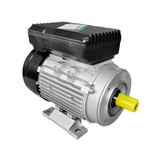
An AC Single Phase Induction Motor is one of the most widely used types of AC motors. These motors typically have a relatively high starting current because they rely on a starting winding to create a rotating magnetic field. The starting winding is designed to provide the extra torque needed to get the motor going. However, this also means that it draws a lot of current during startup.
Single AC Motor
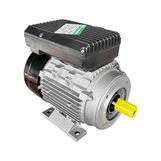
A Single AC Motor can refer to a single-phase or a single-speed motor. Single-phase motors, as we mentioned earlier, have a high starting current due to the lack of a rotating magnetic field at startup. Single-speed motors, on the other hand, are designed to operate at a fixed speed. Their starting current can vary depending on the motor's design and the load it's driving.
AC Induction Motor
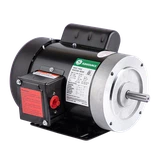
AC Induction Motors are known for their simplicity and reliability. They work by inducing a current in the rotor through electromagnetic induction. These motors also have a high starting current because, like other AC motors, they need to overcome inertia and build up the magnetic field at startup.
The Impact of High Starting Current
The high starting current of an AC motor can have a few implications. For one, it can cause a voltage drop in the electrical system. This can affect other equipment connected to the same circuit, leading to flickering lights or even damage to sensitive electronics.
It can also put a strain on the motor itself. The high current can cause the motor windings to heat up, which can reduce the motor's lifespan if it happens too frequently. Additionally, the electrical supply system needs to be able to handle the high starting current without tripping circuit breakers or blowing fuses.


Ways to Reduce Starting Current
There are several methods to reduce the starting current of an AC motor. One common method is to use a soft starter. A soft starter gradually increases the voltage applied to the motor, which reduces the initial current surge. This not only protects the motor and the electrical system but also extends the motor's lifespan.
Another option is to use a variable frequency drive (VFD). A VFD can control the speed and torque of the motor by varying the frequency and voltage of the electrical supply. By starting the motor at a low frequency and gradually increasing it, the starting current can be significantly reduced.
Choosing the Right AC Motor for Your Needs
As a supplier of motors for AC, I know how important it is to choose the right motor for your specific application. When selecting an AC motor, you need to consider factors such as the starting current, the load requirements, and the operating environment.
If you have a high-inertia load, you may need a motor with a higher starting torque and a way to manage the starting current. On the other hand, if you're looking for a motor for a light-duty application, you may be able to get away with a motor with a lower starting current.
Get in Touch for Your AC Motor Needs
If you're in the market for an AC motor or have any questions about starting current or other motor-related topics, don't hesitate to reach out. We have a wide range of AC Single Phase Induction Motors, Single AC Motors, and AC Induction Motors to meet your needs. Our team of experts can help you choose the right motor and provide you with all the information you need to make an informed decision.
References
- Fitzgerald, A. E., Kingsley, C., & Umans, S. D. (2003). Electric Machinery. McGraw-Hill.
- Chapman, S. J. (2012). Electric Machinery Fundamentals. McGraw-Hill.