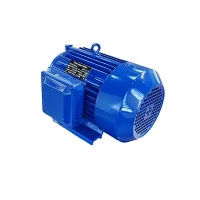
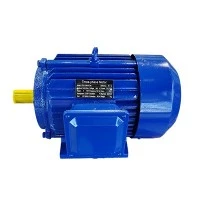
Hey there! As a supplier of NEMA AC Motors, I often get asked about the voltage requirements for these motors. In this blog post, I'll break down everything you need to know about the voltage needs of NEMA AC Motors.
First off, let's talk a bit about what NEMA is. NEMA stands for the National Electrical Manufacturers Association. It's an organization that sets standards for electrical equipment in North America. When it comes to motors, NEMA has established a bunch of standards that cover things like dimensions, performance, and yes, voltage requirements.
NEMA AC Motors come in a wide range of sizes and types, from Small NEMA Motor used in light - duty applications to large industrial - grade NEMA AC Motor and NEMA Electric Motor that power heavy machinery. And each type has its own specific voltage requirements.
Common Voltage Ratings
The most common voltage ratings for NEMA AC Motors in North America are 115V, 208V, 230V, 460V, and 575V. These voltages are widely available in commercial and industrial settings, which makes it convenient for using NEMA motors.
- 115V: This is a relatively low - voltage option. It's often used for small motors, like those found in household appliances or small power tools. The advantage of using 115V is that it's easily accessible in most homes. But the downside is that it can't deliver as much power as higher - voltage options. So, if you need a motor to do heavy - lifting, 115V might not be enough.
- 208V: This voltage is commonly found in commercial buildings, especially those with three - phase power systems. It's a step up from 115V in terms of power delivery. Many medium - sized NEMA AC Motors are designed to run on 208V. For example, some HVAC systems in commercial buildings use motors with this voltage rating.
- 230V: Another common voltage for NEMA motors. It's similar to 208V but provides a bit more power. You'll often see 230V motors in industrial and commercial applications where a bit more oomph is needed. It can be used for single - phase or three - phase motors, depending on the design.
- 460V: This is a high - voltage option and is very common in industrial settings. Motors running on 460V can deliver a significant amount of power, making them suitable for heavy - duty applications like large pumps, compressors, and conveyor systems.
- 575V: This is an even higher - voltage rating, typically used for very large and powerful NEMA motors. It's less common than the other voltages but is essential for some industrial processes that require a huge amount of power.
Factors Affecting Voltage Requirements
Several factors can influence the voltage requirements of a NEMA AC Motor.
Motor Size and Power
Bigger motors generally need higher voltages to operate efficiently. A small Small NEMA Motor might be able to run on 115V, but a large industrial NEMA Electric Motor will require 460V or even 575V. The power rating of the motor, usually measured in horsepower (HP), is a key indicator of its voltage needs. As the HP increases, so does the likelihood that a higher voltage will be required.
Application Type
The type of application the motor is used for also matters. For example, a motor used in a constant - speed application, like a fan, might have different voltage requirements compared to a motor used in a variable - speed application, like a conveyor belt that needs to adjust its speed. Variable - speed applications often require more sophisticated motor control systems, which can be affected by the voltage.
Efficiency and Performance
Using the correct voltage is crucial for the efficiency and performance of the motor. If the voltage is too low, the motor might not be able to start properly or might run at a reduced speed. It can also overheat, which can shorten the motor's lifespan. On the other hand, if the voltage is too high, it can cause excessive current flow, which can damage the motor windings and other components.
Single - Phase vs. Three - Phase Motors
NEMA AC Motors can be either single - phase or three - phase.


Single - Phase Motors
Single - phase motors are typically used for smaller applications. They usually run on 115V or 230V. These motors are simpler in design and are more commonly found in household and small - business applications. However, they generally have lower power capabilities compared to three - phase motors.
Three - Phase Motors
Three - phase motors are more efficient and can deliver more power. They are commonly used in industrial settings. Three - phase motors can run on 208V, 230V, 460V, or 575V. The advantage of three - phase power is that it provides a more constant and balanced power supply, which results in smoother operation and better performance for the motor.
Voltage Tolerance
It's important to note that NEMA AC Motors have a certain voltage tolerance. This means that the motor can operate within a range of voltages around its rated voltage. For example, a motor rated for 230V might be able to operate within a range of, say, 220V - 240V without significant issues. But it's always best to operate the motor as close to its rated voltage as possible to ensure optimal performance and longevity.
Determining the Right Voltage for Your Application
When choosing a NEMA AC Motor for your application, you need to consider the following steps:
- Understand the power requirements: Figure out how much power the motor needs to deliver. This will depend on the load the motor will be driving, such as the size of a pump or the weight of a conveyor load.
- Check the available power supply: Look at the voltage available at your location. If you're in a home, 115V or 230V might be the only options. In an industrial setting, you'll likely have access to higher - voltage three - phase power.
- Consult the motor manufacturer: If you're still unsure, reach out to the motor manufacturer. They can provide you with detailed information about the voltage requirements of their motors and help you choose the right one for your application.
Why Choose Our NEMA AC Motors
As a supplier of NEMA AC Motors, we offer a wide range of motors with different voltage ratings to meet your specific needs. Our motors are built to NEMA standards, which means they are reliable, efficient, and perform well. We have a team of experts who can help you select the right motor and ensure that it operates at the correct voltage.
Whether you need a small Small NEMA Motor for a light - duty application or a large NEMA Electric Motor for an industrial project, we've got you covered.
Contact Us for Procurement
If you're interested in purchasing NEMA AC Motors, we'd love to hear from you. We can help you with all aspects of the procurement process, from selecting the right motor to providing after - sales support. Just reach out to us, and we'll work with you to find the best solution for your application.
References
- National Electrical Manufacturers Association (NEMA) Standards Publications
- Electrical Engineering textbooks on AC motor operation and design
- Manufacturer's documentation for NEMA AC Motors