Hey there! As a supplier of single AC motors, I often get asked about the speed control methods for these motors. In this blog post, I'm gonna break down the different ways you can control the speed of a single AC motor, so you can make the best choice for your specific needs.
Why Speed Control Matters
Before we dive into the methods, let's quickly talk about why speed control is important. In many applications, you might not always need the motor to run at full speed. For instance, in a ventilation system, you may want to adjust the fan speed based on the air quality or temperature. In a conveyor belt system, you might need to change the speed to match the production rate. By having control over the motor speed, you can improve efficiency, reduce energy consumption, and extend the motor's lifespan.
Different Speed Control Methods
1. Voltage Control
One of the simplest ways to control the speed of a single AC motor is by adjusting the voltage. When you decrease the voltage supplied to the motor, the magnetic field strength inside the motor decreases. This, in turn, reduces the torque produced by the motor, and as a result, the speed drops.
However, there are some limitations to this method. A single AC motor is designed to operate within a certain voltage range. If you lower the voltage too much, the motor may not be able to start or may overheat due to the increased current draw. Also, the speed regulation with voltage control is not very precise, especially under varying loads.
2. Frequency Control
Frequency control is a more advanced and precise method of speed control. The speed of an AC motor is directly proportional to the frequency of the power supply. By changing the frequency, you can easily adjust the motor speed.
To implement frequency control, you need a variable frequency drive (VFD). A VFD takes the incoming AC power, converts it to DC, and then converts it back to AC at the desired frequency. This allows you to have fine control over the motor speed, and it can also improve the motor's efficiency and performance.
The advantage of frequency control is that it provides a wide range of speed adjustment and excellent speed regulation, even under varying loads. However, VFDs can be quite expensive, and they require some technical knowledge to install and operate.
3. Pole Changing
Another way to control the speed of a single AC motor is by changing the number of poles in the motor. The synchronous speed of an AC motor is determined by the formula:
[n_s=\frac{120f}{p}]
where (n_s) is the synchronous speed in revolutions per minute (RPM), (f) is the frequency of the power supply in Hertz (Hz), and (p) is the number of poles.
By changing the number of poles, you can change the synchronous speed of the motor. For example, a motor with 4 poles running on a 60 Hz power supply has a synchronous speed of 1800 RPM ((\frac{120\times60}{4})). If you change the motor to have 6 poles, the synchronous speed drops to 1200 RPM ((\frac{120\times60}{6})).
Pole changing can be achieved by using a special winding arrangement in the motor. This method provides discrete speed steps, and it is relatively simple and cost-effective. However, it is not suitable for applications that require continuous speed adjustment.
4. Gearboxes and Belt Drives
Gearboxes and belt drives are mechanical methods of speed control. A gearbox uses a set of gears to change the speed and torque between the motor and the load. By selecting the appropriate gear ratio, you can increase or decrease the speed of the output shaft.
Belt drives work in a similar way. They use a belt to transfer power from the motor to the load. By changing the diameter of the pulleys, you can change the speed ratio between the motor and the load.
The advantage of gearboxes and belt drives is that they are relatively simple and inexpensive. However, they have some drawbacks. They can introduce additional mechanical losses, which can reduce the overall efficiency of the system. Also, they require regular maintenance, such as lubrication and belt replacement.
Choosing the Right Speed Control Method
So, how do you choose the right speed control method for your single AC motor? Well, it depends on several factors, such as the application requirements, the cost, and the level of precision needed.
If you need a simple and inexpensive solution for a low-power application with relatively constant load, voltage control or mechanical methods like gearboxes and belt drives may be sufficient.
For applications that require precise speed control and a wide range of speed adjustment, frequency control using a VFD is the best choice. However, if cost is a major concern, you may need to consider other options.
If you only need a few discrete speed steps, pole changing can be a good option. It provides a cost-effective way to change the motor speed without the need for complex electronics.
Our Single AC Motor Products
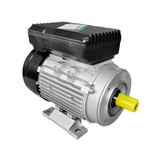
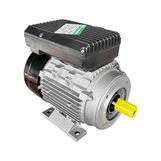
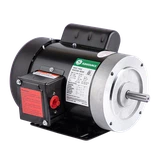
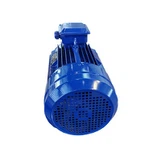
As a supplier of single AC motors, we offer a wide range of products to meet your needs. Whether you need a Small Single Phase AC Motor, a 1 Phase AC Motor, or a 120V AC Motor, we've got you covered.
Our motors are designed to be reliable, efficient, and easy to use. We also provide technical support to help you choose the right motor and speed control method for your application.
Contact Us for Procurement
If you're interested in our single AC motors or have any questions about speed control methods, don't hesitate to reach out to us. We're here to help you find the best solution for your needs. Whether you're a small business or a large industrial company, we can provide you with high-quality products and excellent service.


References
- Electric Machinery Fundamentals, Stephen J. Chapman
- Power Electronics: Converters, Applications, and Design, Mohan Ned, Undeland Tore M., and Robbins William P.