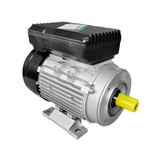
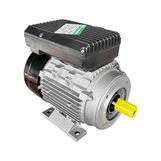
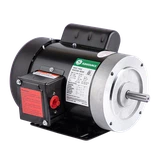
Hey there! I'm a supplier of Small NEMA Motors, and today I want to dive into a topic that's crucial for many of our customers: What is the altitude limit for Small NEMA Motors?
First off, let's briefly explain what Small NEMA Motors are. The National Electrical Manufacturers Association (NEMA) sets standards for electric motors in North America. Small NEMA Motors, as the name suggests, are motors that adhere to NEMA standards and are relatively small in size. You can check out more about them on this page: Small NEMA Motor.
Now, let's get to the main question - the altitude limit. Altitude plays a significant role in the performance of Small NEMA Motors. As the altitude increases, the air density decreases. This reduction in air density affects the motor's ability to dissipate heat. You see, motors generate heat during operation, and they rely on the surrounding air to carry that heat away. With less dense air at higher altitudes, the cooling efficiency drops.
Most Small NEMA Motors are designed and rated for operation at altitudes up to 1000 meters (about 3280 feet) above sea level. At this altitude, the air density is close to the standard conditions under which the motors are tested and rated. The motor can operate within its normal temperature limits, and its performance remains relatively stable.
However, when you start going above 1000 meters, things start to change. For every 300 meters (about 1000 feet) increase in altitude above 1000 meters, the motor's power output needs to be derated. Derating means reducing the motor's rated power to ensure that it doesn't overheat. The exact derating factor can vary depending on the motor's design and construction, but a common rule of thumb is to derate the motor by about 1% for every 300 meters above 1000 meters.
Let's take an example. Suppose you have a Small NEMA Motor with a rated power of 1 horsepower (HP) at sea level. If you plan to use this motor at an altitude of 2500 meters (about 8200 feet), which is 1500 meters above the 1000 - meter baseline, you would need to derate the motor by approximately 5% (since 1500 / 300 = 5). So, the effective power output of the motor at 2500 meters would be around 0.95 HP.
There are also some other factors to consider when operating Small NEMA Motors at high altitudes. The lower air density can also affect the motor's insulation system. The insulation materials are designed to withstand certain electrical stresses, and the reduced air density can change the electrical breakdown characteristics. This means that the motor may be more susceptible to electrical failures at high altitudes.
Another aspect is the impact on the motor's bearings. The lubrication in the bearings relies on the surrounding air to some extent. At high altitudes, the thinner air can cause the lubricant to dry out faster, leading to increased friction and wear on the bearings. This can shorten the motor's lifespan if not properly addressed.
Now, if you're in a situation where you need to use a Small NEMA Motor at a high altitude, there are a few solutions. One option is to choose a motor with a higher power rating than what you actually need at sea - level conditions. This way, even after derating, the motor can still provide the required power at the high - altitude location.
You can also consider using additional cooling methods. For example, you could install a forced - air cooling system, such as a fan, to improve the heat dissipation. This can help counteract the reduced cooling effect of the thin air at high altitudes.
Let's talk a bit about a specific type of Small NEMA Motor - the NEMA 56C Motor. This motor is a popular choice in many applications due to its compact size and reliable performance. Just like other Small NEMA Motors, the NEMA 56C Motor has an altitude limit of 1000 meters for its standard rating. If you need to use it at a higher altitude, you'll need to follow the derating guidelines I mentioned earlier.
In general, all NEMA Electric Motors follow similar altitude - related rules. Whether you're using a small motor for a household appliance or a larger one for an industrial application, understanding the altitude limit is crucial for ensuring the motor's proper operation and longevity.
As a supplier of Small NEMA Motors, I know that every application is unique. That's why we're here to help you make the right choice. If you're planning to use a Small NEMA Motor at a high - altitude location, don't hesitate to reach out to us. We can provide you with detailed information about derating, suitable motor models, and any additional accessories you might need.
Whether you're in a mountainous region, a high - altitude industrial site, or any other location where altitude is a factor, we've got the expertise to ensure that your Small NEMA Motor performs at its best. So, if you're in the market for a Small NEMA Motor and have questions about altitude limits or any other aspect, just get in touch. We're ready to have a chat and help you find the perfect motor for your needs.


References:
- General knowledge of NEMA motor standards and altitude effects on electric motors.
- Technical documentation from motor manufacturers regarding altitude derating.