Hey there! As a supplier of Alternating Motors, I often get asked about how these motors are cooled. It's a crucial aspect of motor performance and longevity, so I'm here to break it down for you in plain English.
Let's start with the basics. Alternating Motors, also known as AC motors, are used in a wide range of applications, from industrial machinery to household appliances. These motors convert electrical energy into mechanical energy through the interaction of magnetic fields. But during this process, they generate heat, and if not properly managed, this heat can cause damage to the motor components and reduce its efficiency.
So, what are the cooling methods for Alternating Motors? Well, there are several common techniques, and I'll walk you through each one.
Natural Cooling
The simplest cooling method is natural cooling, also known as self - cooling. In this method, the motor dissipates heat through its surface to the surrounding air. The motor is designed with fins on its outer casing to increase the surface area for better heat transfer. As the air around the motor moves naturally, it carries away the heat.
This method is suitable for small - sized motors with low power ratings. For example, the motors used in some small fans or light - duty household appliances often rely on natural cooling. However, it has its limitations. If the motor operates continuously at high loads or in a hot environment, natural cooling may not be sufficient to keep the motor at a safe temperature.
Forced Air Cooling
When natural cooling isn't enough, forced air cooling comes into play. This method involves using a fan to blow air over the motor. The fan can be either integral to the motor (built - in) or an external unit.
In an integral fan - cooled motor, the fan is usually mounted on the motor shaft. As the motor rotates, the fan spins and forces air to flow over the motor's surface and through the ventilation ducts. This increases the rate of heat transfer and helps keep the motor cool.
External fans can also be used, especially in larger industrial motors. These fans can be more powerful and can direct the airflow more precisely to the areas of the motor that generate the most heat. Forced air cooling is widely used in medium - to high - power motors in industrial settings, such as those used in conveyor systems or pumps.
Liquid Cooling
For very high - power motors or motors operating in extreme conditions, liquid cooling is a more effective option. In liquid - cooled motors, a coolant (usually water or a water - glycol mixture) circulates through channels or jackets in the motor. The coolant absorbs the heat from the motor and then transfers it to a heat exchanger, where it is dissipated to the surrounding environment.


Liquid cooling offers several advantages. It can provide more efficient heat transfer compared to air cooling, which allows the motor to operate at higher power densities. It also reduces the noise level compared to forced air cooling, as there is no large fan generating noise. However, liquid - cooling systems are more complex and expensive to install and maintain. They require a pump to circulate the coolant, a heat exchanger, and a system to monitor the coolant level and temperature.
Water - Jacket Cooling
A specific type of liquid cooling is water - jacket cooling. In this method, a water - filled jacket surrounds the motor's stator. The water absorbs the heat generated by the stator and then flows out of the jacket to a heat exchanger.
Water - jacket cooling is commonly used in large - scale industrial motors, such as those used in power generation plants or heavy - duty manufacturing equipment. It can effectively keep the motor temperature under control even during long - term, high - load operations.
Oil Cooling
Oil cooling is another option, especially for motors in some specialized applications. In oil - cooled motors, oil is used as the coolant. The oil has good lubricating properties in addition to its cooling capabilities. It can circulate through the motor, absorbing heat and also lubricating the moving parts.
Oil - cooled motors are often used in high - speed or high - torque applications where both cooling and lubrication are critical. For example, some motors in automotive transmissions or high - performance machine tools may use oil cooling.
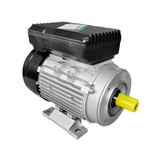
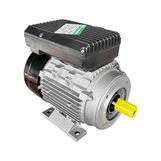
Now, let's talk about some of the products we offer as an Alternating Motor supplier. We have a great range of motors, including the AC Ki Motor. This motor is designed with efficient cooling in mind, whether it's using forced air cooling or other appropriate methods depending on the specific model.
Our Dual Shaft AC Motor also comes with reliable cooling systems. The dual - shaft design allows for different applications, and the cooling methods ensure that the motor can operate smoothly under various conditions.
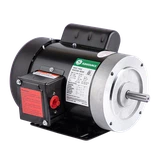
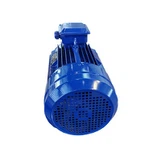
And don't forget our AC Squirrel Cage Induction Motor. These motors are widely used in industrial applications, and we've optimized their cooling to provide long - term performance and reliability.
If you're in the market for Alternating Motors, it's important to consider the cooling method based on your specific application requirements. Factors such as power rating, operating environment, and duty cycle all play a role in determining the most suitable cooling method.
We're here to help you make the right choice. Whether you need a motor for a small - scale project or a large - scale industrial application, we can provide you with the right Alternating Motor with the appropriate cooling system. If you have any questions or want to discuss your motor needs, feel free to reach out. We're always happy to have a chat and help you find the best solution for your business.
References
- "Electric Motors and Drives: Fundamentals, Types and Applications" by Austin Hughes and Bill Drury.
- "Motor and Drive Technology" by Andrew K. Blaschke.