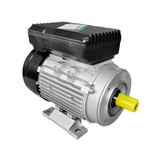
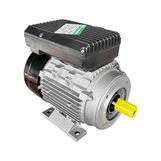
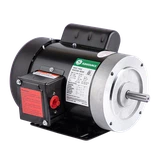
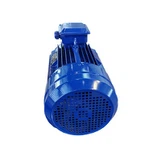
Efficiency improvement in AC series motors is a crucial aspect for both manufacturers and end - users. As a supplier of AC series motors, I understand the significance of enhancing the efficiency of these motors, not only to meet the increasing demand for energy - saving solutions but also to improve the overall performance and reliability of the products. In this blog, I will explore various efficiency improvement methods for AC series motors.
Understanding the Basics of AC Series Motors
Before delving into the efficiency improvement methods, it's essential to understand how AC series motors work. An AC series motor is a type of electric motor where the field winding is connected in series with the armature winding. This configuration allows the motor to operate on both AC and DC power sources. When an AC voltage is applied, the current flowing through the field and armature windings creates a magnetic field that interacts with each other, resulting in the rotation of the motor shaft.
The efficiency of an AC series motor is defined as the ratio of the output power to the input power. Mathematically, it can be expressed as:
[ \eta=\frac{P_{out}}{P_{in}}\times100% ]
where (\eta) is the efficiency, (P_{out}) is the output power (mechanical power), and (P_{in}) is the input power (electrical power).
Efficiency Improvement Methods
1. Optimizing the Magnetic Circuit
The magnetic circuit of an AC series motor plays a vital role in its efficiency. By using high - quality magnetic materials, such as low - loss electrical steels, the magnetic losses in the motor can be significantly reduced. These materials have low hysteresis and eddy - current losses, which means less energy is wasted in the form of heat during the magnetization and demagnetization processes.
Another way to optimize the magnetic circuit is to design the motor with an appropriate air - gap length. A smaller air - gap can increase the magnetic flux density, which in turn improves the motor's torque - producing capability. However, a very small air - gap can also lead to mechanical problems, such as increased friction and the risk of the rotor rubbing against the stator. Therefore, a careful balance must be struck when determining the air - gap length.
2. Reducing Copper Losses
Copper losses occur in the motor's windings due to the resistance of the copper conductors. These losses can be reduced by increasing the cross - sectional area of the windings. A larger cross - sectional area means lower resistance, and according to Ohm's law ((P = I^{2}R)), less power is dissipated as heat.
In addition, using high - conductivity copper can also help reduce copper losses. High - purity copper has a lower resistivity than standard copper, which allows for more efficient current flow through the windings.
3. Improving the Cooling System
Efficient cooling is essential for maintaining the motor's efficiency. As the motor operates, it generates heat due to various losses, such as copper losses and iron losses. If this heat is not dissipated effectively, the temperature of the motor will rise, which can lead to increased resistance in the windings and reduced magnetic performance.
There are several cooling methods available for AC series motors, including natural convection, forced air cooling, and liquid cooling. Forced air cooling, where a fan is used to blow air over the motor, is a common and effective method. Liquid cooling, on the other hand, can provide even better cooling performance, especially for high - power motors. By maintaining a lower operating temperature, the motor can operate more efficiently and have a longer lifespan.
4. Using Advanced Control Techniques
Advanced control techniques can also be employed to improve the efficiency of AC series motors. For example, variable frequency drives (VFDs) can be used to control the speed of the motor according to the load requirements. By adjusting the frequency and voltage supplied to the motor, the VFD can ensure that the motor operates at its most efficient point.
In addition, sensorless control algorithms can be used to estimate the motor's speed and position without the need for physical sensors. This not only reduces the cost and complexity of the motor system but also improves the reliability and efficiency of the motor.


Case Studies and Real - World Applications
Let's take a look at some real - world applications where these efficiency improvement methods have been implemented. In industrial applications, Industrial AC Motor are often used in conveyor systems, pumps, and fans. By optimizing the magnetic circuit, reducing copper losses, and using advanced control techniques, the efficiency of these motors can be significantly improved. This leads to lower energy consumption and reduced operating costs for the industrial users.
In the transportation sector, Three Phase AC Motor are used in electric vehicles and trains. The efficiency improvement methods mentioned above can help extend the range of electric vehicles and reduce the energy consumption of trains, making them more environmentally friendly and cost - effective.
For applications that require high - torque and high - speed operation, AC Three Phase Induction Motor are commonly used. By improving the cooling system and using advanced control techniques, these motors can operate more efficiently under demanding conditions.
The Importance of Efficiency Improvement
Efficiency improvement in AC series motors has several benefits. From an environmental perspective, more efficient motors consume less energy, which reduces the overall carbon footprint. This is in line with the global trend towards sustainable development and energy conservation.
From an economic perspective, improved efficiency means lower operating costs for the end - users. By reducing energy consumption, businesses can save a significant amount of money on their electricity bills. In addition, more efficient motors often have a longer lifespan, which reduces the need for frequent replacements and maintenance.
Contact for Purchase and Consultation
If you are interested in improving the efficiency of your AC series motor systems or are looking for high - efficiency AC series motors, I encourage you to reach out to me. As a professional supplier of AC series motors, I have the expertise and experience to provide you with the best solutions tailored to your specific needs. Whether you are in the industrial, transportation, or any other sector, I can help you find the most suitable motors and efficiency improvement methods.
References
- Chapman, S. J. (2012). Electric Machinery Fundamentals. McGraw - Hill Education.
- Fitzgerald, A. E., Kingsley, C., Jr., & Umans, S. D. (2003). Electric Machinery. McGraw - Hill.
- Krause, P. C., Wasynczuk, O., & Sudhoff, S. D. (2013). Analysis of Electric Machinery and Drive Systems. Wiley.