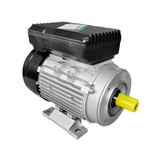
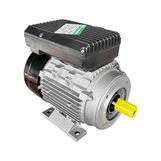
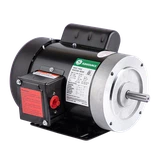
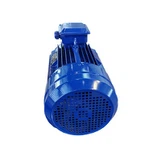
Hey there! As a supplier of AC current motors, I often get asked about all sorts of technical stuff related to these motors. One question that comes up quite a bit is, "What is the harmonic distortion in an AC current motor?" Well, let's dig into this topic and break it down in a way that's easy to understand.
First off, let's talk about what AC current motors are all about. AC motors are widely used in various industries because they're efficient, reliable, and can handle different loads. We've got different types of AC motors, like the AC Squirrel Cage Induction Motor, Industrial AC Motor, and 3 Phase AC Electric Motor. Each type has its own unique features and applications, but they all operate on the principle of alternating current.
Now, back to harmonic distortion. In a perfect world, the voltage and current in an AC circuit would be pure sine waves. A sine wave has a smooth, regular shape that repeats itself over time. But in the real world, things aren't always that simple. When we introduce non - linear loads into an AC circuit, like some electronic devices or variable frequency drives, they can cause the current and voltage waveforms to deviate from the ideal sine wave shape. This deviation is what we call harmonic distortion.


Harmonics are basically frequencies that are integer multiples of the fundamental frequency. In most power systems, the fundamental frequency is 50 Hz or 60 Hz, depending on the country. So, the second harmonic would be 100 Hz or 120 Hz, the third harmonic would be 150 Hz or 180 Hz, and so on. These harmonics can be present in both the voltage and current waveforms.
Let's take a look at why harmonic distortion is a big deal in AC current motors. For starters, it can lead to increased heating in the motor. When harmonics are present, the motor has to work harder to overcome the additional electrical stresses. This extra work generates more heat, which can reduce the motor's efficiency and lifespan. Over time, excessive heating can cause damage to the motor's insulation, leading to short circuits and motor failures.
Another problem with harmonic distortion is that it can cause torque pulsations. Torque is what makes the motor shaft turn, and in a well - functioning motor, the torque should be relatively constant. But when harmonics are present, the torque can fluctuate, causing the motor to vibrate. These vibrations can not only be annoying but can also lead to mechanical wear and tear on the motor and its connected equipment.
Harmonic distortion can also have an impact on the power quality of the entire electrical system. It can cause voltage fluctuations, which can affect other equipment connected to the same power supply. For example, lights might flicker, and sensitive electronic devices could malfunction.
So, how do we measure harmonic distortion? One common way is to use the Total Harmonic Distortion (THD) metric. THD is expressed as a percentage and gives us an overall idea of how much the waveform deviates from the ideal sine wave. A lower THD value means less harmonic distortion and a better - quality waveform.
Now, as a supplier of AC current motors, we take harmonic distortion very seriously. We know that our customers rely on our motors to operate smoothly and efficiently. That's why we've implemented several measures to minimize harmonic distortion in our products.
One of the things we do is use high - quality components in our motors. By using better - designed windings and more efficient magnetic materials, we can reduce the amount of harmonics generated during operation. We also offer motors with built - in filters and power factor correction devices. These components help to clean up the electrical waveforms and reduce the impact of harmonics.
In addition, we provide our customers with detailed technical specifications and advice on how to install and operate our motors to minimize harmonic distortion. We understand that every application is different, so we work closely with our customers to find the best solutions for their specific needs.
If you're in the market for an AC current motor, whether it's an AC Squirrel Cage Induction Motor, Industrial AC Motor, or 3 Phase AC Electric Motor, we've got you covered. Our motors are designed to operate with minimal harmonic distortion, ensuring reliable performance and long - term durability.
We're always happy to have a chat with you about your motor requirements. Whether you need help choosing the right motor for your application or want more information about how we deal with harmonic distortion, just reach out to us. We're here to make sure you get the best - possible solution for your business.
In conclusion, harmonic distortion is an important issue in AC current motors. It can cause a range of problems, from increased heating and torque pulsations to power quality issues. But with the right design and technology, we can minimize its impact. As a supplier, we're committed to providing high - quality motors that operate efficiently and reliably, even in the presence of harmonic distortion. So, if you're looking for a reliable AC motor supplier, don't hesitate to get in touch with us. We'll work with you to find the perfect motor for your needs and ensure that it performs at its best.
References
- Electric Machinery Fundamentals, Stephen J. Chapman
- Power Quality in Power Systems and Electrical Machines, M. H. Rashid