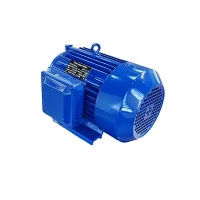
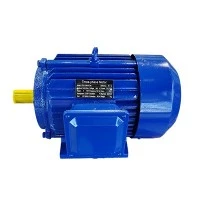
"What is the shaft diameter of Small NEMA Motors?"
As a supplier of Small NEMA Motors, I often encounter inquiries from customers about the shaft diameter of these motors. Understanding the shaft diameter is crucial as it directly impacts the motor's compatibility with various mechanical components and applications.
NEMA, which stands for the National Electrical Manufacturers Association, has established a set of standards for electric motors in North America. These standards ensure interchangeability and compatibility among different manufacturers' products. Small NEMA Motors typically fall within specific frame sizes, and each frame size has corresponding standard shaft diameters.
Common Frame Sizes and Their Shaft Diameters
The most common small NEMA frame sizes include NEMA 17, NEMA 23, and NEMA 34. Let's take a closer look at the shaft diameters associated with these frame sizes.
NEMA 17 Motors
NEMA 17 motors are widely used in applications such as 3D printers, CNC machines, and small robotics. These motors typically have a shaft diameter of around 5 mm (0.197 inches). The relatively small shaft diameter makes them suitable for applications where space is limited and the load requirements are not extremely high. The compact size and standard shaft diameter allow for easy integration with various drive mechanisms, such as pulleys and gears.
NEMA 23 Motors
NEMA 23 motors are larger and more powerful than NEMA 17 motors. They are commonly used in industrial automation, larger CNC machines, and some high - performance robotics applications. The standard shaft diameter of a NEMA 23 motor is usually 6.35 mm (0.25 inches). This larger shaft diameter can handle greater torque and power transmissions, making it ideal for applications that require more force.
NEMA 34 Motors
NEMA 34 motors are even more powerful and are typically used in heavy - duty industrial applications, such as large - scale CNC routers and industrial automation systems. These motors have a shaft diameter of around 10 mm (0.394 inches). The larger shaft diameter is necessary to transfer the high levels of torque generated by these motors safely and efficiently.
Factors Affecting Shaft Diameter Selection
When selecting a NEMA motor based on shaft diameter, several factors need to be considered.
Load Requirements
The weight and resistance of the load that the motor needs to drive are important factors. If the load is heavy or requires a large amount of torque to start or operate, a motor with a larger shaft diameter should be chosen. A larger shaft can handle the higher stress and prevent shaft failure under heavy loads.


Speed Requirements
In applications where high - speed operation is required, the shaft diameter also plays a role. A larger shaft diameter can help reduce vibration and ensure smooth operation at high speeds. This is because a larger shaft has more mass and stiffness, which helps to dampen vibrations and maintain the motor's stability.
Compatibility with Mechanical Components
The motor's shaft must be compatible with the mechanical components it will be connected to, such as couplings, gears, and pulleys. These components are designed to fit specific shaft diameters, so it is essential to choose a motor with a shaft diameter that matches the requirements of the application.
Special Considerations for Small NEMA Motors
In addition to the standard shaft diameters, some small NEMA motors may have custom shaft diameters. This can be due to specific customer requirements or unique application needs. For example, in some precision - motion applications, a non - standard shaft diameter may be used to achieve a more precise fit with the drive mechanism.
It's also important to note that the shaft diameter is not the only factor that determines a motor's performance. Other factors, such as the motor's torque, speed, and power rating, also need to be considered when selecting a motor for a particular application.
NEMA 48 Motors and Their Shaft Diameters
NEMA 48 Motor is another type of NEMA motor that is larger than the previously mentioned small NEMA motors. NEMA 48 motors are often used in more demanding industrial applications. The shaft diameter of a NEMA 48 motor is typically larger than the smaller frame sizes, usually around 19.05 mm (0.75 inches). This larger shaft diameter allows for the transmission of higher levels of power and torque, making it suitable for heavy - duty applications.
NEMA Electric Motors and AC Motors
When discussing NEMA motors, it's important to mention NEMA Electric Motor and NEMA AC Motor. NEMA electric motors come in both AC and DC types. AC motors are more commonly used in industrial applications due to their simplicity, reliability, and the abundance of AC power sources. The shaft diameter standards apply to both NEMA AC motors and NEMA DC motors, regardless of the power source.
Importance of Accurate Shaft Diameter
Using a motor with the correct shaft diameter is crucial for the proper functioning of the overall system. An incorrect shaft diameter can lead to problems such as poor alignment, excessive wear on the motor and connected components, and reduced efficiency. In some cases, it can even cause mechanical failure, which can result in costly downtime and repairs.
Conclusion
In summary, the shaft diameter of small NEMA motors varies depending on the frame size. Common small NEMA frame sizes like NEMA 17, NEMA 23, and NEMA 34 have standard shaft diameters that are suitable for different applications based on load, speed, and compatibility requirements. NEMA 48 Motor, on the other hand, has a larger shaft diameter for heavy - duty applications. Whether you are using NEMA Electric Motor or NEMA AC Motor, understanding the shaft diameter is essential for a successful installation.
If you are in the market for small NEMA motors and need assistance in selecting the right motor with the appropriate shaft diameter for your application, we are here to help. Our team of experts can provide you with detailed information and guidance to ensure that you make the best choice for your specific needs. Contact us for a consultation and let's discuss how our small NEMA motors can meet your requirements.
References
- National Electrical Manufacturers Association (NEMA) standards documentation
- Technical manuals of various small NEMA motor manufacturers