Hey there! As a supplier of AC motor capacitors, I often get asked about the standard specifications of these little but crucial components. So, I thought I'd sit down and write this blog to break it all down for you.
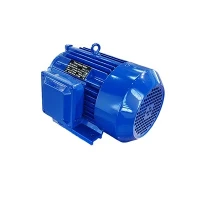
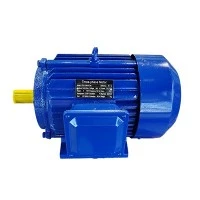
First off, let's understand what an AC motor capacitor does. In simple terms, it helps the motor start and run more efficiently. You see, AC motors, especially AC Induction Motor and Small Single Phase AC Motor, need a bit of a push to get going. That's where the capacitor comes in. It stores electrical energy and releases it at the right time to give the motor that initial boost.


Now, onto the standard specifications. One of the most important specs is capacitance. Capacitance is measured in microfarads (μF). It determines how much electrical charge the capacitor can store. Different motors require different capacitance values. For instance, a small single-phase motor might need a capacitor with a capacitance of around 10 - 50 μF, while larger motors could require values in the hundreds of μF. If you use a capacitor with the wrong capacitance, the motor might not start properly, or it could overheat and burn out.
Another key specification is voltage rating. This is measured in volts (V). The voltage rating of a capacitor indicates the maximum voltage it can handle without breaking down. You've got to make sure the voltage rating of the capacitor you choose is equal to or higher than the voltage of the motor. If the voltage rating is too low, the capacitor could fail, and that's a recipe for motor problems. Most AC motor capacitors have voltage ratings ranging from 250V to 440V, but it really depends on the motor's requirements.
Then there's the type of capacitor. There are two main types used in AC motors: start capacitors and run capacitors. Start capacitors are designed to provide a high initial torque to start the motor. They're usually only in the circuit for a short time, just long enough to get the motor up to speed. Once the motor is running, the start capacitor is disconnected. Run capacitors, on the other hand, stay in the circuit all the time. They help improve the motor's efficiency and power factor while it's running.
The tolerance of the capacitor is also an important factor. Tolerance refers to the allowable deviation from the specified capacitance value. For example, a capacitor with a capacitance of 20 μF and a tolerance of ±5% could actually have a capacitance anywhere between 19 μF and 21 μF. A lower tolerance means the capacitor's actual capacitance is closer to the specified value. In most cases, a tolerance of ±5% to ±10% is acceptable, but for some high-precision motors, you might need a capacitor with a tighter tolerance.
Let's talk about temperature rating. Capacitors generate heat when they're in use, and they need to be able to withstand a certain amount of heat without losing their performance. The temperature rating indicates the maximum temperature at which the capacitor can operate safely. Most AC motor capacitors have temperature ratings of around 85°C to 105°C. If the motor operates in a high-temperature environment, you'll need a capacitor with a higher temperature rating.
Size and physical dimensions can also matter, especially if you're working with a motor that has limited space. Capacitors come in various shapes and sizes, so you need to choose one that will fit properly in the motor's housing.
Now, you might be wondering how to choose the right capacitor for your AC motor. Well, the first step is to check the motor's nameplate. The nameplate usually lists the required capacitance and voltage values. If you can't find the information on the nameplate, you can consult the motor's manual or contact the manufacturer. You can also bring the old capacitor to a supplier like me, and we can help you find a suitable replacement.
As a supplier of AC motor capacitors, I've seen firsthand the importance of getting the right specifications. We've got a wide range of capacitors in stock, with different capacitance values, voltage ratings, and types. Whether you're looking for a capacitor for a AC Induction Motor Single Phase or a larger industrial motor, we can help you find the perfect fit.
If you're in the market for AC motor capacitors, don't hesitate to reach out. We're here to answer your questions, help you choose the right product, and ensure you get the best performance from your motors. Whether you're a DIY enthusiast working on a small project or a professional in the industrial sector, we've got the expertise and the products to meet your needs.
In conclusion, understanding the standard specifications of an AC motor capacitor is crucial for the proper operation and longevity of your motor. By paying attention to capacitance, voltage rating, type, tolerance, temperature rating, and size, you can make an informed decision when choosing a capacitor. And if you need any help along the way, just give us a shout. We're ready to assist you with all your AC motor capacitor needs.
References
- "Electric Motors and Control Systems" by Stephen L. Herman
- Various motor manufacturer manuals and technical documents