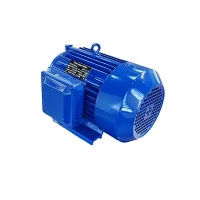
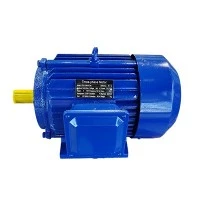
Hey there! As a supplier of AC Ki Motors, I often get asked about the starting current of these motors. So, I thought I'd take a moment to break it down for you.
Let's start with the basics. The starting current of an AC motor is the amount of current that the motor draws when it's first turned on. This is usually higher than the current it draws during normal operation. Why is that? Well, when you start an AC motor, it has to overcome the inertia of the load it's connected to. That means it needs a big burst of power to get things moving.
Think about it like this: when you're trying to push a heavy cart that's standing still, you need to put in a lot of effort to get it rolling. Once it's moving, you don't need to push as hard. It's the same with an AC motor. When it's starting up, it needs a high current to overcome the initial resistance and get the load spinning.
Now, for AC Ki Motors specifically, the starting current can vary depending on a few factors. One of the main factors is the type of motor. We offer a range of different AC motors, like the Industrial AC Motor, AC Three Phase Induction Motor, and Dual Shaft AC Motor. Each of these motors has its own unique characteristics, which can affect the starting current.
For example, an induction motor typically has a higher starting current compared to some other types of motors. This is because when the motor starts, the rotor is stationary, and the magnetic field in the stator has to induce a current in the rotor to get it moving. This process requires a relatively large amount of current.
The size of the motor also plays a role. Generally, larger motors will have a higher starting current than smaller ones. This is because they have more mass to move and more electrical components that need to be energized.


Another factor is the load connected to the motor. If the motor is driving a heavy load, like a large industrial machine, it will need more power to start it up. So, the starting current will be higher compared to when it's driving a lighter load.
Now, you might be wondering why the starting current is such a big deal. Well, a high starting current can have a few implications. First of all, it can cause a voltage drop in the electrical system. This means that the voltage available to other equipment in the system might decrease when the motor starts. If the voltage drop is too large, it can affect the performance of other devices connected to the same electrical supply.
Secondly, a high starting current can put stress on the motor itself. The windings in the motor have to handle this large amount of current, which can generate heat. If the starting current is too high or if the motor is started too frequently, it can lead to premature wear and tear on the motor, reducing its lifespan.
So, what can be done to manage the starting current? There are a few methods. One common method is to use a soft starter. A soft starter gradually increases the voltage applied to the motor during startup, which reduces the starting current. This not only protects the motor but also minimizes the impact on the electrical system.
Another option is to use a variable frequency drive (VFD). A VFD allows you to control the speed and torque of the motor by adjusting the frequency and voltage of the electrical supply. By ramping up the frequency gradually during startup, you can also reduce the starting current.
As a supplier of AC Ki Motors, we understand the importance of managing the starting current. That's why we offer a variety of solutions to help our customers optimize the performance of their motors. Whether you need a motor with a specific starting current requirement or you're looking for a way to reduce the starting current of an existing motor, we've got you covered.
If you're in the market for an AC motor and you're concerned about the starting current, we're here to help. Our team of experts can work with you to understand your specific needs and recommend the right motor and starting solution for your application. We have a wide range of high - quality AC Ki Motors available, and we're confident that we can find the perfect fit for your project.
So, if you're interested in learning more about our AC Ki Motors or have any questions about starting current, don't hesitate to reach out. We're always happy to have a chat and help you make the best decision for your business. Let's work together to ensure that your motors run smoothly and efficiently from the moment they start up.
References
- Electrical Machinery Fundamentals by Stephen J. Chapman
- Electric Motors and Drives: Fundamentals, Types, and Applications by Austin Hughes and Bill Drury