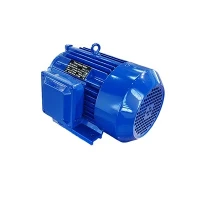
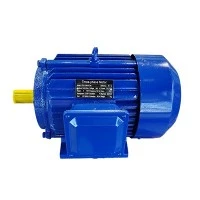
Hey there! As a supplier of AC Ki Motors, I often get asked about the temperature rise of these motors during operation. It's a crucial topic, as understanding the temperature rise can help you ensure the efficient and safe use of the motors. So, let's dive right in and explore this issue.
First off, what causes the temperature rise in an AC Ki Motor? Well, there are several factors at play. One of the main reasons is the electrical losses that occur within the motor. When an electric current flows through the motor's windings, there's resistance in the wires. According to Joule's law, this resistance causes power to be dissipated as heat. The formula for this is (P = I^{2}R), where (P) is the power dissipated as heat, (I) is the current flowing through the wire, and (R) is the resistance of the wire. So, the higher the current and the resistance, the more heat is generated.
Another factor is the mechanical losses. These losses happen due to friction in the bearings and other moving parts of the motor. As the motor rotates, the parts rub against each other, and this friction converts mechanical energy into heat. Also, there are magnetic losses in the motor's core. When the magnetic field in the core changes, it induces eddy currents, which also generate heat.
Now, let's talk about why the temperature rise matters. If the temperature of the motor gets too high, it can have some serious consequences. For one, it can reduce the motor's efficiency. As the temperature rises, the resistance of the windings increases, which means more power is wasted as heat, and less is converted into useful mechanical energy. This not only costs you more in terms of electricity bills but also reduces the overall performance of the motor.
High temperatures can also damage the motor's insulation. The insulation is what keeps the electrical current flowing through the windings and prevents short - circuits. But if the temperature gets too high, the insulation can break down over time. Once the insulation fails, it can lead to short - circuits, which can cause the motor to stop working or even pose a safety hazard.
So, how can you measure the temperature rise of an AC Ki Motor? There are a few ways. One common method is to use a thermometer. You can place a thermometer on the surface of the motor, usually on the housing. However, this only gives you the surface temperature, which may not be the same as the temperature inside the motor where the critical components are.
A more accurate way is to use thermal sensors. These sensors can be placed inside the motor, near the windings or other critical parts. They can provide real - time temperature data, which can be used to monitor the motor's condition. Some modern motors even come with built - in thermal protection systems that can automatically shut off the motor if the temperature exceeds a certain limit.
Now, let's take a look at how different types of AC motors compare in terms of temperature rise. For example, an AC Squirrel Cage Induction Motor is a popular type of AC motor. These motors are known for their simplicity and reliability. They generally have a relatively stable temperature rise during normal operation. The squirrel - cage design helps to distribute the magnetic field evenly, which reduces the magnetic losses and thus the heat generation.
On the other hand, a 3 Phase AC Induction Motor is widely used in industrial applications. These motors can handle higher loads, but they also tend to generate more heat due to the higher currents and power they deal with. However, with proper design and cooling systems, the temperature rise can be kept under control.
If you're working in an environment where the motor may be exposed to water or moisture, a Waterproof AC Motor might be a good choice. These motors are designed to be more resistant to the elements, but they still need to manage the temperature rise effectively. The waterproofing can sometimes make it a bit more challenging to dissipate heat, so they often come with enhanced cooling features.
To keep the temperature rise of an AC Ki Motor within a safe range, there are several things you can do. First, make sure the motor is properly sized for the application. If you use a motor that's too small for the load, it will have to work harder, which will generate more heat. Second, ensure good ventilation around the motor. Adequate airflow can help carry away the heat. You can also use cooling fans or heat sinks to improve the cooling efficiency.
Regular maintenance is also crucial. Keep the motor clean, and lubricate the bearings regularly. This can reduce the mechanical losses and prevent overheating. And don't forget to check the electrical connections. Loose or corroded connections can increase the resistance and cause more heat to be generated.
In conclusion, understanding the temperature rise of an AC Ki Motor is essential for its proper operation and longevity. By being aware of the factors that cause the temperature rise, the consequences of high temperatures, and the ways to measure and control it, you can ensure that your motor runs smoothly and efficiently.
If you're in the market for a high - quality AC Ki Motor or have any questions about temperature rise and motor performance, I'd love to have a chat with you. Whether you need a AC Squirrel Cage Induction Motor, a 3 Phase AC Induction Motor, or a Waterproof AC Motor, I'm here to help. Let's start a conversation about your specific needs and find the perfect motor for you.


References
- "Electric Motors and Drives: Fundamentals, Types and Applications" by Austin Hughes
- "Motor Engineering Handbook" by various authors