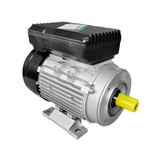
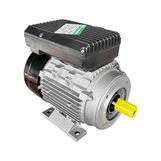
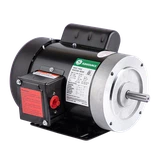
Hey there! As a supplier of AC capacitor motors, I often get asked a bunch of questions from customers. One question that pops up quite a bit is, "Can an AC capacitor motor be used in a vertical installation?" Well, let's dig into this topic and find out.
First off, let's understand what an AC capacitor motor is. An AC capacitor motor is a type of single - phase motor. These motors use a capacitor to create a phase shift in the current, which helps the motor start and run more efficiently. They're used in all sorts of applications, from small household appliances to industrial equipment. You can check out our Small Single Phase AC Motor and Single AC Motor options on our website for more details.
Now, let's talk about vertical installation. In a vertical installation, the motor is mounted upright, with the shaft pointing either up or down. This is different from a horizontal installation, where the shaft is parallel to the ground. There are a few factors to consider when deciding if an AC capacitor motor can be used in a vertical installation.


Lubrication
One of the main concerns with vertical installation is lubrication. In a horizontal motor, the oil or grease used for lubrication naturally settles and spreads evenly over the moving parts. But in a vertical motor, gravity can cause the lubricant to drain away from the bearings. This can lead to increased friction, wear, and tear on the bearings, which can shorten the motor's lifespan.
However, many modern AC capacitor motors are designed with features to address this issue. Some motors have special bearing seals that help keep the lubricant in place. Others use a different type of lubricant that is more viscous and less likely to drain. If you're looking for a motor for a vertical installation, make sure to choose one that is specifically designed for this purpose. We have some great 120V AC Motor options that are suitable for vertical installations.
Cooling
Another important factor is cooling. Motors generate heat when they run, and proper cooling is essential to prevent overheating. In a horizontal installation, heat rises and can be dissipated more easily through the motor's housing. But in a vertical installation, the airflow around the motor can be different. If the motor is installed in a tight space or if there is not enough ventilation, the heat can build up and cause damage to the motor.
To ensure proper cooling in a vertical installation, it's important to consider the motor's ventilation requirements. Some motors have built - in fans or cooling fins to help dissipate heat. You may also need to provide additional ventilation, such as a fan or an air duct, to keep the motor cool. Make sure to follow the manufacturer's recommendations for cooling when installing the motor vertically.
Shaft Loading
The shaft of a motor experiences different types of loads depending on the installation. In a vertical installation, the weight of the load on the shaft can be a significant factor. If the load is too heavy or if it is not properly balanced, it can put extra stress on the shaft and bearings. This can lead to premature failure of the motor.
Before installing an AC capacitor motor vertically, you need to calculate the shaft load and make sure it is within the motor's rated capacity. You may also need to use a coupling or other mechanical device to ensure that the load is properly transferred to the motor shaft.
Advantages of Vertical Installation
Despite the challenges, there are also some advantages to using an AC capacitor motor in a vertical installation. For example, in some applications, a vertical installation can save space. It can also be more convenient for certain types of equipment, such as pumps or conveyors, where the vertical orientation is more suitable for the operation.
Testing and Certification
When considering a vertical installation, it's a good idea to look for motors that have been tested and certified for this type of use. Many manufacturers perform tests to ensure that their motors can operate safely and efficiently in vertical installations. Look for motors that have certifications such as UL, CE, or other relevant industry standards.
Conclusion
So, can an AC capacitor motor be used in a vertical installation? The answer is yes, but it depends on several factors. You need to consider lubrication, cooling, shaft loading, and other aspects to ensure that the motor will operate properly and have a long lifespan. As a supplier, we offer a wide range of AC capacitor motors that are suitable for both horizontal and vertical installations.
If you're thinking about using an AC capacitor motor in a vertical installation for your project, we're here to help. Our team of experts can provide you with the right advice and guidance on choosing the best motor for your needs. We can also assist you with installation and maintenance to ensure that your motor runs smoothly.
Don't hesitate to reach out to us if you have any questions or if you're ready to start the procurement process. We're eager to have a chat with you and discuss how our motors can fit into your project. Let's work together to find the perfect solution for your AC capacitor motor needs.
References
- "Electric Motors and Drives: Fundamentals, Types, and Applications" by Austin Hughes and Bill Drury.
- Manufacturer's manuals for AC capacitor motors.