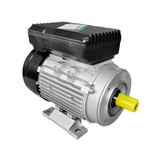
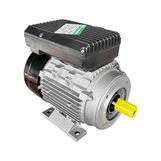
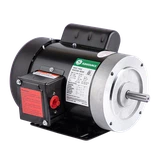
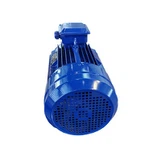
AC motors are a cornerstone of modern industrial and commercial operations, powering everything from simple household appliances to complex manufacturing machinery. As a trusted AC Motori supplier, I often encounter inquiries about the frequency range of these motors. Understanding this range is crucial for optimizing motor performance, ensuring energy efficiency, and extending the motor's lifespan. In this blog post, I'll delve into the frequency range of AC Motori motors, exploring its significance, influencing factors, and practical implications.


The Basics of AC Motor Frequency
To understand the frequency range of AC motors, we first need to grasp the concept of frequency in an electrical context. Frequency refers to the number of cycles per second that an alternating current (AC) completes. It is measured in Hertz (Hz). In most parts of the world, the standard power grid frequency is either 50 Hz or 60 Hz. These frequencies are determined by the rotational speed of the generators in power plants and are fundamental to the operation of AC motors.
The frequency of the AC power supply directly affects the speed of an AC motor. The relationship between frequency, number of poles, and motor speed is given by the following formula:
[N = \frac{120f}{P}]
Where:
- (N) is the synchronous speed of the motor in revolutions per minute (RPM)
- (f) is the frequency of the power supply in Hz
- (P) is the number of poles in the motor
From this formula, we can see that the speed of an AC motor is directly proportional to the frequency of the power supply. As the frequency increases, the motor speed also increases, and vice versa.
Frequency Range of AC Motori Motors
AC Motori motors are designed to operate within a specific frequency range. This range can vary depending on the type of motor, its application, and the manufacturer's specifications. Generally, most standard AC motors are designed to operate at the standard power grid frequencies of 50 Hz or 60 Hz. However, with the advent of variable frequency drives (VFDs), AC motors can now operate over a much wider frequency range.
For instance, some AC Motori motors can operate at frequencies as low as 0 Hz (stopped) and as high as 400 Hz or more when used with a VFD. This wide frequency range allows for precise control of motor speed, torque, and acceleration, making these motors suitable for a variety of applications.
Factors Influencing the Frequency Range
Several factors influence the frequency range of AC Motori motors. These include:
Motor Design
The design of the motor, including the number of poles, winding configuration, and core material, can affect its frequency range. Motors with a higher number of poles tend to have a lower synchronous speed and may be more suitable for low-frequency applications. On the other hand, motors with a lower number of poles can achieve higher speeds and are better suited for high-frequency operation.
Insulation System
The insulation system of the motor is another critical factor. High frequencies can generate more heat and electrical stress on the insulation. Therefore, motors designed for high-frequency operation require a more robust insulation system to prevent insulation breakdown and ensure long-term reliability.
Cooling System
As the frequency increases, the motor's power loss and heat generation also increase. A proper cooling system is essential to dissipate this heat and maintain the motor's temperature within safe limits. Motors operating at high frequencies may require more efficient cooling methods, such as forced air cooling or liquid cooling.
Application Requirements
The specific requirements of the application also play a significant role in determining the frequency range. For example, applications that require precise speed control, such as conveyor belts, pumps, and fans, may benefit from a wider frequency range. On the other hand, applications that operate at a constant speed, such as some industrial mixers, may only require the motor to operate at the standard power grid frequency.
Practical Implications of the Frequency Range
The frequency range of AC Motori motors has several practical implications for users. These include:
Speed Control
One of the most significant advantages of a wide frequency range is the ability to control the motor speed precisely. By adjusting the frequency of the power supply using a VFD, users can vary the motor speed to meet the specific requirements of the application. This not only improves the efficiency of the system but also reduces energy consumption and wear and tear on the motor.
Torque Control
In addition to speed control, the frequency range also affects the motor's torque output. At low frequencies, the motor can produce high torque, making it suitable for applications that require high starting torque, such as crushers and mills. At high frequencies, the motor can achieve high speeds, but the torque may decrease. Therefore, it is essential to select a motor with a frequency range that can provide the required torque and speed for the application.
Compatibility with Power Supply
When selecting an AC Motori motor, it is crucial to ensure that its frequency range is compatible with the available power supply. In regions where the standard power grid frequency is 50 Hz, motors designed for 60 Hz operation may not work correctly or may experience reduced performance. Similarly, using a motor with a frequency range that is too narrow for the application may limit its functionality and efficiency.
Types of AC Motori Motors and Their Frequency Ranges
There are several types of AC Motori motors, each with its own frequency range and characteristics. Some of the most common types include:
Three Phase AC Motor
Three-phase AC motors are widely used in industrial applications due to their high efficiency, reliability, and power output. These motors are typically designed to operate at the standard power grid frequencies of 50 Hz or 60 Hz. However, when used with a VFD, they can operate over a wider frequency range, from 0 Hz to several hundred Hz.
3 Phase AC Induction Motor
Three-phase AC induction motors are the most common type of AC motor. They are known for their simplicity, robustness, and low cost. Like three-phase AC motors, they can operate at the standard power grid frequencies and can be controlled over a wider frequency range using a VFD.
Waterproof AC Motor
Waterproof AC motors are designed for use in wet or harsh environments. They are typically built with a sealed enclosure to prevent water and moisture from entering the motor. These motors can operate at the standard power grid frequencies and may also be compatible with VFDs for variable speed control.
Conclusion
In conclusion, the frequency range of AC Motori motors is a critical parameter that affects their performance, efficiency, and compatibility with different applications. As a supplier of AC Motori motors, I understand the importance of selecting the right motor with the appropriate frequency range for your specific needs. Whether you require a motor for a simple household appliance or a complex industrial process, I can provide you with high-quality AC Motori motors that offer reliable performance and precise control.
If you are interested in learning more about our AC Motori motors or would like to discuss your specific requirements, please feel free to contact me. I am always happy to assist you in finding the perfect motor solution for your application.
References
- Fitzgerald, A. E., Kingsley, C., Jr., & Umans, S. D. (2003). Electric Machinery (6th ed.). McGraw-Hill.
- Chapman, S. J. (2012). Electric Machinery Fundamentals (5th ed.). McGraw-Hill.