Hey there! As a NEMA motor supplier, I often get asked if NEMA motors can be used in hazardous environments. It's a really important question, especially for industries where safety is a top priority. So, let's dive right in and explore this topic.
First off, what are NEMA motors? NEMA stands for the National Electrical Manufacturers Association. They've set standards for motor design, dimensions, and performance in North America. These standards ensure that motors are interchangeable and meet certain quality and safety benchmarks. You can check out more about NEMA Rated Motor on our website.
Now, when it comes to hazardous environments, things get a bit more complicated. Hazardous environments are places where there's a risk of fire, explosion, or other dangerous situations due to the presence of flammable gases, vapors, dust, or fibers. Industries like oil and gas, chemical manufacturing, mining, and food processing often have areas that fall into this category.


The short answer is that it depends. Not all NEMA motors are suitable for hazardous environments, but there are NEMA motors specifically designed to meet the requirements of these risky areas. These motors are built with extra safety features to prevent them from becoming an ignition source.
Let's talk about the different types of hazardous environments and how NEMA motors can fit in. There are two main types of hazardous areas: Class I and Class II.
Class I environments are those where flammable gases or vapors are present. These can be further divided into Divisions 1 and 2. Division 1 means that the flammable substances are likely to be present under normal operating conditions, while Division 2 means that they're only likely to be present under abnormal conditions.
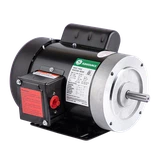
For Class I, Division 1 environments, you need motors that are explosion-proof. These motors are constructed in a way that if an explosion occurs inside the motor, it won't be able to ignite the surrounding flammable atmosphere. They have special enclosures and seals to contain any sparks or flames. Our NEMA 56C Motor has some options that can be adapted for such environments.
Class II environments involve combustible dust. Similar to Class I, it's divided into Divisions 1 and 2. Motors for Class II environments need to prevent the accumulation of dust on their surfaces and also prevent any internal sparks from igniting the dust. There are NEMA motors with dust-ignition-proof enclosures that are suitable for these areas.
Another factor to consider is temperature. In hazardous environments, the temperature of the motor's surface can be critical. If it gets too hot, it could potentially ignite the surrounding substances. NEMA motors designed for hazardous environments are rated for specific temperature classes to ensure they operate within safe limits.
One great option for energy - efficient operation in less - hazardous areas is the NEMA Premium Efficient Motor. While it might not be suitable for the most extreme hazardous conditions out of the box, in some less - severe Class II, Division 2 situations where energy efficiency is a concern, it could be a viable choice with proper evaluation and possible modifications.
So, how do you know if a NEMA motor is right for your hazardous environment? Well, it's crucial to work with a knowledgeable supplier (like us!). We can help you assess your specific environment, understand the applicable standards and regulations, and select the most appropriate motor.
It's also important to note that just because a motor is designed for a hazardous environment doesn't mean it can be installed and used without following proper procedures. Regular maintenance and inspections are essential to ensure that the motor continues to operate safely over time.
If you're unsure about the classification of your environment, there are professionals who can conduct a hazardous area classification survey. They'll look at factors like the type of substances present, the frequency of their presence, and the ventilation in the area. Based on their findings, you can make an informed decision about the motor you need.
In summary, while not all NEMA motors can be used in hazardous environments, there are definitely options available. Whether it's an explosion - proof motor for a Class I area or a dust - ignition - proof motor for a Class II area, we've got the expertise and products to meet your needs.
If you're in the market for a NEMA motor for a hazardous environment, don't hesitate to reach out. We're here to help you make the right choice and ensure that your operations are safe and efficient. Contact us today to start the conversation about your motor requirements.
References:
- National Electrical Manufacturers Association standards
- Safety regulations for hazardous environments in relevant industries