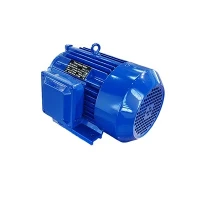
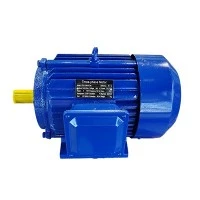
The insulation class of an AC Torque Motor plays a pivotal role in determining its performance. As a leading supplier of AC Torque Motors, I have witnessed firsthand how different insulation classes can impact various aspects of motor operation. In this blog, I will delve into the relationship between insulation class and the performance of an AC Torque Motor, exploring the key factors and considerations.
Understanding Insulation Classes
Insulation classes are defined by international standards and are used to categorize the maximum allowable temperature that the insulation material in a motor can withstand. The most common insulation classes for AC motors are Class A, Class E, Class B, Class F, and Class H. Each class has a specific temperature limit, which is crucial for ensuring the long - term reliability and performance of the motor.
- Class A: This class has a maximum allowable temperature of 105°C. It is one of the older insulation classes and is typically used in applications where the operating temperature is relatively low and the motor is not subjected to high - stress conditions.
- Class E: With a maximum temperature limit of 120°C, Class E insulation offers better heat resistance than Class A. It is suitable for applications with slightly higher operating temperatures.
- Class B: Class B insulation can withstand temperatures up to 130°C. It is widely used in general - purpose AC motors due to its good balance between cost and performance.
- Class F: This class has a maximum temperature limit of 155°C. Class F insulation is commonly used in high - performance motors where the motor may operate under heavy loads or in environments with elevated temperatures.
- Class H: Class H insulation can handle temperatures up to 180°C. It is used in extreme - duty applications such as in some industrial processes where the motor is exposed to very high heat.
Impact on Motor Efficiency
The insulation class can significantly affect the efficiency of an AC Torque Motor. Higher - class insulation materials can dissipate heat more effectively. When a motor operates, it generates heat due to electrical losses (such as copper losses in the windings) and mechanical losses. If the insulation cannot handle the heat properly, the temperature of the motor will rise, which in turn increases the resistance of the copper windings. According to Ohm's law (V = IR), an increase in resistance leads to an increase in power loss (P = I²R).
For example, in a motor with Class A insulation, if the operating temperature approaches its maximum limit of 105°C, the copper windings' resistance will increase, resulting in higher power consumption and lower efficiency. On the other hand, a motor with Class F or Class H insulation can operate at higher temperatures without a significant increase in resistance, thus maintaining a higher level of efficiency. This can lead to substantial energy savings over the long term, especially in applications where the motor runs continuously.
Influence on Motor Life
The insulation class also has a direct impact on the lifespan of an AC Torque Motor. Insulation materials degrade over time when exposed to high temperatures. The rate of degradation is exponential with respect to temperature. A general rule of thumb is that for every 10°C increase in temperature above the rated temperature of the insulation class, the lifespan of the insulation is halved.
In a motor with lower - class insulation, such as Class A, if it is operated in an environment where the temperature frequently exceeds its rated limit, the insulation will degrade rapidly. This can lead to insulation breakdown, which may cause short - circuits in the motor windings and ultimately result in motor failure. In contrast, a motor with higher - class insulation, like Class H, can withstand higher temperatures for longer periods, reducing the rate of insulation degradation and extending the motor's overall lifespan.
Effect on Motor Power Density
Power density is defined as the power output of the motor per unit volume. A higher insulation class allows for a higher power density in an AC Torque Motor. Since higher - class insulation materials can tolerate more heat, the motor can be designed to have a higher current density in the windings. This means that more electrical power can be converted into mechanical power within the same physical volume of the motor.
For instance, a motor with Class F insulation can be designed to have a more compact size while delivering the same amount of power as a larger motor with Class B insulation. This is particularly beneficial in applications where space is limited, such as in some automated machinery or robotics.

Considerations for Different Applications
When selecting an AC Torque Motor, it is essential to consider the specific requirements of the application. For applications with low - stress and low - temperature environments, such as small household appliances, a motor with Class A or Class E insulation may be sufficient. These motors are usually more cost - effective, and the lower - class insulation is adequate for the relatively mild operating conditions.
However, for industrial applications such as conveyor systems, machine tools, or pumps, where the motor may operate under heavy loads and in environments with higher temperatures, a motor with Class F or Class H insulation is recommended. These higher - class insulation motors can provide better performance, longer lifespan, and higher efficiency, which can offset the initial higher cost.
Related Products
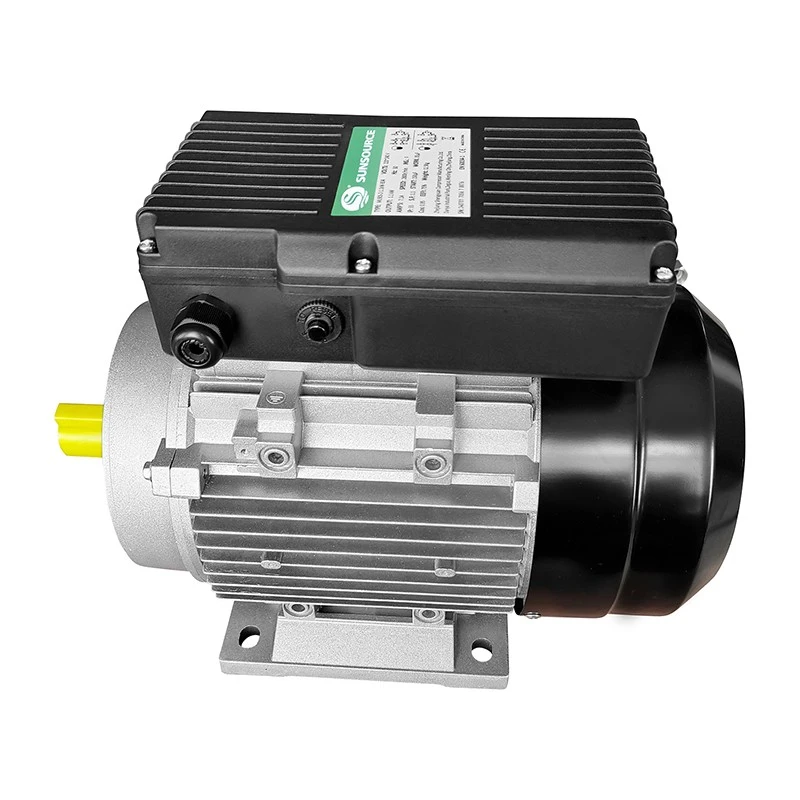
As an AC Torque Motor supplier, we also offer a range of related products such as AC Induction Motor, One Phase AC Motor, and 120V AC Motor. These products are designed to meet different customer needs and can be used in a variety of applications.
Conclusion
In conclusion, the insulation class of an AC Torque Motor is a critical factor that affects its performance in terms of efficiency, lifespan, and power density. By understanding the characteristics of different insulation classes and considering the specific requirements of the application, customers can make informed decisions when selecting an AC Torque Motor.
If you are interested in purchasing AC Torque Motors or any of our related products, please feel free to contact us for more information and to start a procurement negotiation. We are committed to providing high - quality products and excellent customer service to meet your industrial needs.
References
- Electric Machinery Fundamentals by Stephen J. Chapman
- Electrical Motor Handbook by Arnold E. Fitzgerald, Charles Kingsley Jr., and Stephen D. Umans