Hey there! I'm a supplier of AC motors, and today I'm gonna chat with you about how to measure the current of an AC motor. It might sound a bit technical, but don't worry, I'll break it down in an easy - peasy way.
Why Measure the Current of an AC Motor?
First off, you might be thinking, "Why do I even need to measure the current of an AC motor?" Well, measuring the current can tell you a whole lot about how the motor is performing. If the current is too high, it could mean there's a problem like a short - circuit, overloading, or a mechanical issue in the motor. On the other hand, if the current is too low, the motor might not be operating at its full capacity, or there could be an open - circuit somewhere.
Tools for Measuring AC Motor Current
Clamp - on Ammeters
One of the most popular tools for measuring AC motor current is the clamp - on ammeter, also known as a current clamp. It's super easy to use. All you have to do is open the clamp, place it around one of the motor's power - carrying conductors (usually one of the phase wires), and then close the clamp. The ammeter will then display the current flowing through that conductor.
The great thing about clamp - on ammeters is that you don't have to break the circuit to measure the current. This makes it a very safe and convenient option, especially when dealing with high - voltage circuits. You can find clamp - on ammeters in different ranges, so make sure you choose one that can handle the expected current of your AC motor.
In - line Ammeters
In - line ammeters are another option for measuring current. Unlike clamp - on ammeters, in - line ammeters need to be inserted directly into the circuit. This means you have to break the circuit and connect the ammeter in series with the motor.
In - line ammeters are generally more accurate than clamp - on ammeters, but they're also a bit more difficult to use. You have to be very careful when working with live circuits to avoid electric shocks.
Step - by - Step Guide to Measuring AC Motor Current
Using a Clamp - on Ammeter
- Safety First: Before you start, make sure you're wearing the appropriate safety gear, like insulated gloves and safety glasses. Also, make sure the motor is running under normal operating conditions.
- Select the Right Range: Set the clamp - on ammeter to a range that's higher than the expected current of the motor. You can always adjust the range later if needed.
- Clamp the Conductor: Open the clamp of the ammeter and place it around one of the motor's phase conductors. Make sure the conductor is centered in the clamp and that the clamp is fully closed.
- Read the Current: Once the clamp is around the conductor, the ammeter will display the current flowing through the conductor. Take note of this value.
- Check All Phases: If you're dealing with a multi - phase AC motor, repeat the process for each phase. The current in each phase should be relatively balanced. If there's a significant difference in the current between phases, it could indicate a problem with the motor or the electrical system.
Using an In - line Ammeter
- Power Off: First, turn off the power to the motor and make sure it's completely de - energized.
- Break the Circuit: Identify the point in the circuit where you want to insert the ammeter. Then, break the circuit at that point.
- Connect the Ammeter: Connect the in - line ammeter in series with the motor. This means connecting one lead of the ammeter to the power source and the other lead to the motor.
- Power On: Once the ammeter is connected, turn the power back on and let the motor run.
- Read the Current: The ammeter will now display the current flowing through the circuit. Record the value.
- Power Off and Reconnect: After you're done taking the measurement, turn off the power again and reconnect the circuit as it was before.
Factors Affecting AC Motor Current
Load
The load on the motor has a big impact on the current. When the motor is under a heavy load, it has to work harder, which means it will draw more current. For example, if you have a motor driving a conveyor belt and the conveyor is carrying a lot of heavy items, the motor will draw more current than when the conveyor is empty.


Voltage
The voltage supplied to the motor also affects the current. If the voltage is too low, the motor will have to draw more current to produce the same amount of power. On the other hand, if the voltage is too high, it can cause the motor to overheat and draw excessive current.
Motor Efficiency
The efficiency of the motor plays a role in the current draw. A more efficient motor will draw less current to produce the same amount of power compared to a less efficient motor.
Measuring Current for Different Types of AC Motors
Single AC Motor
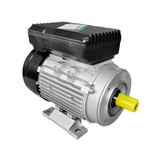
A Single AC Motor is commonly used in smaller applications. Measuring the current of a single - phase AC motor is similar to the steps I mentioned above. You can use either a clamp - on ammeter or an in - line ammeter. Just make sure to follow the proper safety procedures.
AC Single Phase Induction Motor
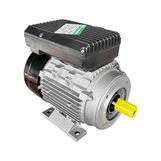
The AC Single Phase Induction Motor is a popular type of motor. When measuring its current, you might notice that the current can vary during startup. During startup, the motor draws a high inrush current, which is usually several times higher than the normal operating current. After the motor reaches its rated speed, the current will drop to its normal level.
120V AC Motor
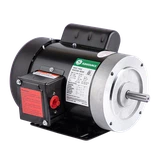
The 120V AC Motor is often used in household appliances and small tools. Measuring the current of a 120V AC motor is no different from other AC motors. Just use the appropriate tool and follow the safety guidelines.
Conclusion
Measuring the current of an AC motor is an important part of motor maintenance and troubleshooting. By using the right tools and following the proper procedures, you can get an accurate reading of the motor's current and identify any potential problems.
If you're in the market for high - quality AC motors, I'm here as your trusted supplier. I've got a wide range of motors to suit different applications and needs. Whether you need a single - phase motor for a small project or a multi - phase motor for an industrial application, I can help you find the right one. So, feel free to reach out for a purchase negotiation.
References
- Fitzgerald, A. E., Kingsley, C., & Umans, S. D. (2012). Electric Machinery. McGraw - Hill.
- Chapman, S. J. (2012). Electric Machinery Fundamentals. McGraw - Hill.