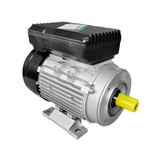
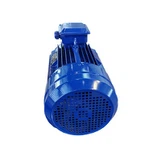
As a trusted supplier of 3 Phase 110V Motor, I often encounter inquiries about the cooling methods of these motors. Understanding the cooling mechanism is crucial for ensuring the optimal performance and longevity of the motor. In this blog, I will delve into the various cooling methods employed in 3 Phase 110V Motors, shedding light on their principles, advantages, and applications.


Why Cooling is Essential for 3 Phase 110V Motors
Before we explore the cooling methods, it's important to understand why cooling is so vital for 3 Phase 110V Motors. During operation, these motors convert electrical energy into mechanical energy. However, this process is not 100% efficient, and a significant amount of energy is lost as heat. If this heat is not dissipated effectively, it can lead to a rise in the motor's temperature, which can have several detrimental effects.
Excessive heat can cause the insulation materials in the motor to degrade over time, reducing their effectiveness and potentially leading to short circuits. It can also increase the wear and tear on the motor's components, such as bearings and windings, leading to premature failure. Moreover, high temperatures can reduce the motor's efficiency, resulting in increased energy consumption and operating costs. Therefore, proper cooling is essential to maintain the motor's performance, reliability, and lifespan.
Common Cooling Methods for 3 Phase 110V Motors
Self - Ventilated Cooling
Self - ventilated cooling, also known as TEFC (Totally Enclosed Fan Cooled), is one of the most common cooling methods for 3 Phase 110V Motors. In this system, the motor is enclosed in a housing that prevents the entry of dust, dirt, and moisture. A fan is mounted on the motor's shaft, which rotates along with the motor. As the fan spins, it draws in ambient air and blows it over the motor's exterior surface.
The principle behind this method is heat transfer by convection. The moving air carries away the heat generated by the motor, dissipating it into the surrounding environment. The advantage of self - ventilated cooling is its simplicity and cost - effectiveness. It requires no external cooling equipment, making it a popular choice for many industrial applications. However, its cooling capacity is limited by the ambient air temperature and the size of the fan. In hot environments or for high - power motors, self - ventilated cooling may not be sufficient to maintain the motor at an optimal temperature.
Forced Air Cooling
Forced air cooling is an enhanced version of self - ventilated cooling. In this method, an external fan or blower is used to supply a higher volume of air to the motor. This allows for more efficient heat dissipation, as the increased airflow can carry away heat at a faster rate.
Forced air cooling systems can be designed to direct the air flow precisely where it is needed, such as over the motor's windings or other heat - generating components. This targeted cooling approach can significantly improve the motor's thermal performance. However, forced air cooling systems are more complex and expensive than self - ventilated systems. They require additional equipment, such as fans, ducts, and controls, and also consume more energy due to the operation of the external fan.
Liquid Cooling
Liquid cooling is a highly effective cooling method for 3 Phase 110V Motors, especially for high - power applications. In a liquid cooling system, a coolant, such as water or a water - glycol mixture, is circulated through channels or jackets within the motor. The coolant absorbs the heat generated by the motor and transfers it to a heat exchanger, where it is dissipated into the surrounding environment.
The advantage of liquid cooling is its high cooling capacity. Liquids have a much higher heat capacity than air, which means they can absorb and carry away more heat per unit volume. This allows liquid - cooled motors to operate at lower temperatures, even under heavy loads. Additionally, liquid cooling systems can be more precise in controlling the motor's temperature, as the flow rate and temperature of the coolant can be adjusted. However, liquid cooling systems are more complex and expensive to install and maintain. They require a pump to circulate the coolant, a heat exchanger, and a piping system, and there is also a risk of coolant leakage, which can cause damage to the motor.
Heat Pipe Cooling
Heat pipe cooling is a relatively new and innovative cooling method for 3 Phase 110V Motors. A heat pipe is a sealed tube filled with a working fluid, such as water or ammonia. One end of the heat pipe is placed in contact with the heat - generating component of the motor, while the other end is connected to a heat sink or a cooling fin.
When the heat pipe absorbs heat from the motor, the working fluid inside the pipe evaporates. The vapor then travels to the cooler end of the pipe, where it condenses back into a liquid, releasing the heat in the process. The condensed liquid then returns to the hot end of the pipe by capillary action or gravity. Heat pipe cooling offers several advantages, including high heat transfer efficiency, compact size, and no moving parts. However, it is still a relatively expensive technology, and its application is limited by the availability of suitable heat pipes and the complexity of integration with the motor.
Applications and Considerations
The choice of cooling method for a 3 Phase 110V Motor depends on several factors, including the motor's power rating, the operating environment, and the specific application requirements.
For small - to medium - power motors operating in normal ambient conditions, self - ventilated cooling is often sufficient. These motors are commonly used in applications such as fans, pumps, and conveyor systems. For high - power motors or motors operating in hot or dusty environments, forced air cooling or liquid cooling may be required. These motors are typically used in heavy - duty industrial applications, such as machine tools, compressors, and large - scale manufacturing equipment.
When considering a cooling method, it's also important to take into account the cost, energy consumption, and maintenance requirements. Self - ventilated cooling is the most cost - effective option, but it may not be suitable for all applications. Forced air cooling and liquid cooling offer better cooling performance but come with higher upfront and operating costs. Heat pipe cooling, while offering high efficiency, is still a relatively niche technology and may not be widely available or cost - effective for all users.
Conclusion
As a supplier of 3 Phase 110V Motor, I understand the importance of choosing the right cooling method for your motor. Whether you need a Dual Shaft AC Motor for a specific application or an Alternating Current AC Motor with high - performance cooling, we can provide you with the best solutions.
Proper cooling is essential for the reliable and efficient operation of 3 Phase 110V Motors. By understanding the different cooling methods available and their respective advantages and disadvantages, you can make an informed decision that meets your specific needs. If you have any questions or need further assistance in selecting the right motor and cooling system, please do not hesitate to contact us. We are here to help you optimize your motor performance and ensure the long - term success of your applications.
References
- "Electric Motor Handbook" by Paul C. Krause, Oleg Wasynczuk, and Scott D. Sudhoff.
- "Motor Cooling Techniques" - IEEE Transactions on Industry Applications.
- Various technical documents from motor manufacturers.