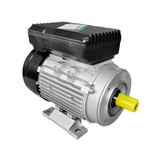
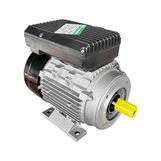
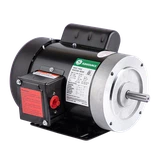
When it comes to single - phase AC motors, understanding their power ratings is crucial for both consumers and suppliers like myself. In this blog, I'll take you through the ins and outs of the power ratings of typical one - phase AC motors, and share some insights as an industry insider.
What is Power Rating?
Power rating is a fundamental specification of an electric motor. It represents the amount of mechanical power that the motor can deliver under normal operating conditions. Measured in watts (W) or horsepower (hp), the power rating gives an indication of the motor's ability to perform work. For example, a higher power - rated motor can drive heavier loads or operate more demanding equipment compared to a lower - rated one.
Factors Affecting Power Rating of Single - Phase AC Motors
Design and Construction
The physical design and construction of a single - phase AC motor play a significant role in determining its power rating. The size of the motor's stator and rotor, the number of turns in the windings, and the quality of the magnetic materials used all impact how much power the motor can handle. Motors with larger cores and more turns in the windings can generally handle higher power levels because they can generate stronger magnetic fields, which in turn produce more torque and power.
Cooling Mechanisms
Effective cooling is essential for a motor to maintain its power rating. As a motor operates, it generates heat due to electrical and mechanical losses. If this heat is not dissipated properly, the temperature of the motor will rise, which can reduce its efficiency and even damage the insulation of the windings. Single - phase AC motors typically use natural convection, forced air cooling (with a fan), or liquid cooling in some industrial applications. Motors with better cooling mechanisms can operate at higher power levels for longer periods without overheating.
Load Requirements
The intended load for which the motor is designed also influences its power rating. Different applications have different power demands. For instance, a small fan used in a household appliance may only require a motor with a power rating of a few watts, while a compressor in a refrigeration unit may need a motor with a power rating of several hundred watts or more. As a supplier, I always recommend customers to accurately assess their load requirements to choose the right - sized motor.
Typical Power Ratings of Single - Phase AC Motors
Single - phase AC motors come in a wide range of power ratings to suit various applications.
Small - Power Motors
Motors with power ratings from a few watts up to about 1/4 hp (around 186 watts) are commonly used in small household appliances such as fans, electric clocks, and some small power tools. These motors are usually designed to be compact and energy - efficient, as they are often used in applications where continuous operation is required but the load is relatively light. You can find more information about small - power Motor For AC on our website.
Medium - Power Motors
Motors with power ratings from 1/4 hp to 1 hp (around 746 watts) are used in a variety of applications, including some types of pumps, small compressors, and larger power tools. These motors are capable of handling more substantial loads than small - power motors and are often used in both residential and light - commercial settings. Our AC CapACitor Motor series offers a range of medium - power options suitable for these applications.
High - Power Motors
For industrial and heavy - duty applications, single - phase AC motors with power ratings above 1 hp can be found, although they are less common compared to three - phase motors in high - power scenarios. High - power single - phase motors are used in some specialized machinery, such as small sawmills or certain types of agricultural equipment. Our AC Induction Motor Single Phase product line includes some high - power options for such demanding applications.
Importance of Correct Power Rating Selection
Selecting the correct power rating for a single - phase AC motor is of utmost importance.
Efficiency
An appropriately sized motor operates more efficiently. If a motor is oversized for the load, it will consume more energy than necessary, leading to higher operating costs. On the other hand, an undersized motor will struggle to drive the load, which can cause it to overheat, reduce its lifespan, and may even result in premature failure.
Performance
A motor with the right power rating will provide the required torque and speed to drive the load smoothly. This ensures that the equipment operates at its optimal performance level, reducing the risk of breakdowns and improving the overall productivity of the system.


Safety
Using a motor with an incorrect power rating can pose safety risks. An overloaded motor can overheat, which may lead to electrical fires or other hazards. By choosing the correct power rating, you can ensure the safe operation of the motor and the equipment it powers.
How We Can Help as a Supplier
As a supplier of single - phase AC motors, we have a wealth of experience and expertise in helping customers select the right motor for their needs. Our team of experts can assist you in evaluating your load requirements, understanding the technical specifications of different motors, and choosing the most suitable power rating.
We offer a wide range of single - phase AC motors with various power ratings, ensuring that we can meet the diverse needs of our customers. Whether you are looking for a small motor for a household appliance or a high - power motor for an industrial application, we have the products to meet your requirements.
If you are in the process of selecting a single - phase AC motor or have any questions about power ratings, we encourage you to get in touch with us for a consultation. Our goal is to provide you with the best - suited motor solutions and ensure your satisfaction with our products.
References
- Fitzgerald, A. E., Kingsley, C., & Umans, S. D. (2003). Electric Machinery. McGraw - Hill.
- Chapman, S. J. (2012). Electric Machinery Fundamentals. McGraw - Hill.