Hey there! As a supplier of AC motor capacitors, I've been getting a lot of questions lately about the role of an AC motor capacitor in a repulsion - start induction - run motor. So, I thought I'd take the time to break it down for you all.
First off, let's talk a bit about repulsion - start induction - run motors. These motors are pretty unique. They're designed to provide high starting torque, which is super important for applications where you need to get a heavy load moving from a standstill. Think of things like compressors, pumps, and some industrial machinery.
Now, onto the star of the show - the AC motor capacitor. In a repulsion - start induction - run motor, the capacitor plays a crucial role in both the starting and running phases of the motor's operation.
Starting Phase
During the starting phase, the capacitor helps create a phase shift in the motor's winding currents. This phase shift is essential because it generates a rotating magnetic field in the motor. Without a proper rotating magnetic field, the motor wouldn't be able to start on its own. It would just sit there, humming but not actually moving.
The capacitor is connected in series with one of the motor's windings. This creates a leading current in that winding compared to the other winding. The difference in the phase of the currents in the two windings produces the rotating magnetic field that gives the motor the initial push it needs to start turning.
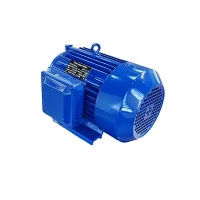
Let's say you have a Single AC Motor. A correctly sized capacitor can make all the difference in getting that motor up and running smoothly. If the capacitor is too small, the starting torque will be insufficient, and the motor might struggle to start or not start at all. On the other hand, if the capacitor is too large, it can cause excessive current flow, which can damage the motor windings or other components.
Running Phase
Once the motor has reached a certain speed (usually around 75 - 80% of its rated speed), the motor switches from the repulsion - start mode to the induction - run mode. At this point, the capacitor's role changes a bit.
In the induction - run mode, the capacitor helps improve the motor's power factor. The power factor is a measure of how efficiently the motor uses electrical power. A low power factor means that the motor is drawing more current from the electrical supply than it actually needs to do its work. This can lead to higher energy costs and inefficiencies in the electrical system.
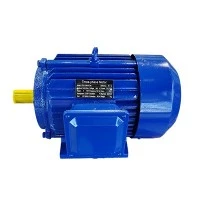
The capacitor corrects the phase difference between the voltage and current in the motor's windings, bringing the power factor closer to 1. This means that the motor uses electrical power more efficiently, reducing energy consumption and saving you money in the long run. For example, in a One Phase AC Motor, a properly functioning capacitor can significantly improve the motor's overall efficiency.
Types of Capacitors
There are two main types of capacitors used in repulsion - start induction - run motors: starting capacitors and running capacitors.
Starting capacitors are designed to provide a large amount of capacitance for a short period of time. They're used only during the starting phase of the motor. Once the motor reaches the appropriate speed, a centrifugal switch disconnects the starting capacitor from the circuit. Starting capacitors are usually electrolytic capacitors, which can store a large amount of charge quickly.
Running capacitors, on the other hand, are in the circuit all the time during the motor's operation. They have a lower capacitance value compared to starting capacitors but are designed to be more durable and handle continuous use. Running capacitors are typically made of film or paper dielectric materials.
Choosing the Right Capacitor
As a supplier, I know that choosing the right capacitor for your repulsion - start induction - run motor is crucial. You need to consider several factors, including the motor's horsepower, voltage rating, and the specific application it's being used for.
The horsepower of the motor determines the amount of starting and running torque required. A higher - horsepower motor will generally need a larger capacitor to provide the necessary torque. The voltage rating of the capacitor must match the voltage of the electrical supply to the motor. Using a capacitor with the wrong voltage rating can lead to capacitor failure or damage to the motor.
The application also plays a role. For example, a motor used in a heavy - duty industrial application might require a more robust capacitor compared to a motor used in a light - duty household appliance.
If you're using an AC Torque Motor, the requirements for the capacitor might be different. These motors are designed to provide high torque at low speeds, so the capacitor needs to be sized and selected accordingly to ensure optimal performance.
Maintenance and Troubleshooting
Like any other component in a motor, the capacitor requires some maintenance and can sometimes experience problems. Over time, the capacitor can degrade due to factors like heat, humidity, and electrical stress.
One common problem is capacitor failure. A failed capacitor can cause the motor to have a weak starting torque, run at a reduced speed, or not start at all. You can usually test a capacitor using a multimeter to check its capacitance value. If the measured capacitance is significantly different from the rated value, it's likely that the capacitor needs to be replaced.
Another issue is capacitor leakage. This can cause the motor to draw more current than normal, leading to overheating and potential damage. If you notice that the motor is running hot or the electrical bills are higher than usual, it could be a sign of a leaking capacitor.
Regularly inspecting the capacitor and replacing it when necessary can help ensure the long - term reliability and performance of your repulsion - start induction - run motor.
Conclusion
In conclusion, the AC motor capacitor is an essential component in a repulsion - start induction - run motor. It plays a vital role in both starting the motor and improving its efficiency during operation. Whether you're dealing with a Single AC Motor, a One Phase AC Motor, or an AC Torque Motor, choosing the right capacitor and maintaining it properly is key to getting the best performance out of your motor.


If you're in the market for high - quality AC motor capacitors for your repulsion - start induction - run motors, I'd love to help. We have a wide range of capacitors to suit different motor applications and requirements. Just reach out to us, and we can discuss your specific needs and find the perfect capacitor solution for you.
References
- Chapman, S. J. (2012). Electric Machinery Fundamentals. McGraw - Hill.
- Fitzgerald, A. E., Kingsley, C., & Umans, S. D. (2003). Electric Machinery. McGraw - Hill.