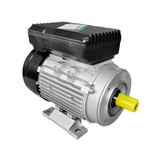
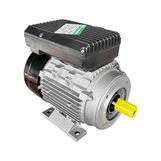
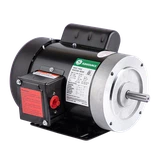
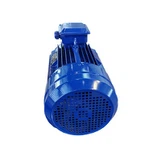
As a supplier of NEMA 48 motors, I often encounter inquiries from customers about how to measure the speed of these motors. Understanding the speed of a NEMA 48 motor is crucial for ensuring its proper operation in various applications. In this blog post, I will share some common methods for measuring the speed of a NEMA 48 motor.
Why Measure the Speed of a NEMA 48 Motor?
Before delving into the measurement methods, it's important to understand why measuring the speed of a NEMA 48 motor is necessary. The speed of a motor directly affects its performance and efficiency in different applications. For example, in conveyor systems, the motor speed determines the rate at which materials are transported. In industrial machinery, the correct motor speed is essential for maintaining product quality and production efficiency. By accurately measuring the motor speed, operators can ensure that the motor is running at the optimal speed for the specific application, which can lead to improved performance, reduced energy consumption, and extended motor lifespan.
Common Methods for Measuring Motor Speed
There are several methods available for measuring the speed of a NEMA 48 motor. Each method has its own advantages and disadvantages, and the choice of method depends on factors such as the accuracy required, the availability of equipment, and the nature of the application.
Tachometer
A tachometer is a common device used to measure the rotational speed of a motor. There are two main types of tachometers: contact and non - contact.
- Contact Tachometers: These tachometers work by physically contacting the rotating shaft of the motor. They typically have a spindle that is placed against the motor shaft, and the rotation of the shaft causes the spindle to turn. The tachometer then measures the speed of the spindle and displays the motor speed. Contact tachometers are relatively simple to use and can provide accurate measurements. However, they require direct access to the motor shaft, which may not be possible in some applications.
- Non - Contact Tachometers: Non - contact tachometers use optical or magnetic sensors to measure the motor speed without physically touching the shaft. Optical tachometers work by shining a light on a reflective strip or mark on the motor shaft. The sensor detects the reflections as the shaft rotates and calculates the speed based on the frequency of the reflections. Magnetic tachometers, on the other hand, detect the changes in magnetic fields caused by the rotation of a magnetic target on the motor shaft. Non - contact tachometers are useful in applications where access to the motor shaft is limited or where contact with the shaft could cause damage. They are also more suitable for high - speed applications.
Frequency Measurement
For AC motors, the speed of the motor is related to the frequency of the power supply and the number of poles in the motor. The synchronous speed of an AC motor can be calculated using the following formula:
[n_s=\frac{120f}{p}]
where (n_s) is the synchronous speed in revolutions per minute (RPM), (f) is the frequency of the power supply in Hertz (Hz), and (p) is the number of poles in the motor.
In practice, the actual speed of an AC motor is slightly less than the synchronous speed due to slip. Slip is the difference between the synchronous speed and the actual speed of the motor. By measuring the frequency of the power supply and knowing the number of poles in the NEMA 48 motor, you can estimate the motor speed. Frequency measurement can be done using a frequency meter, which is a relatively simple and inexpensive device. However, this method only provides an estimate of the motor speed, and it does not take into account factors such as load variations and motor inefficiencies.
Encoder
An encoder is a device that can be attached to the motor shaft to provide precise information about the position and speed of the motor. There are two main types of encoders: incremental and absolute.
- Incremental Encoders: Incremental encoders generate a series of electrical pulses as the motor shaft rotates. The number of pulses per revolution is determined by the encoder's resolution. By counting the number of pulses over a given time period, the speed of the motor can be calculated. Incremental encoders are commonly used in applications where relative position and speed information is sufficient.
- Absolute Encoders: Absolute encoders provide a unique digital code for each position of the motor shaft. This means that they can directly provide the absolute position and speed of the motor without the need for counting pulses from a known starting point. Absolute encoders are more expensive than incremental encoders but offer higher accuracy and reliability, especially in applications where precise positioning and speed control are required.
Factors Affecting Motor Speed
When measuring the speed of a NEMA 48 motor, it's important to consider the factors that can affect the motor speed.
- Load: The load on the motor has a significant impact on its speed. As the load increases, the motor speed tends to decrease due to the increased torque required to drive the load. For example, if a NEMA 48 motor is driving a heavy conveyor belt, the motor speed may drop when the belt is fully loaded compared to when it is empty.
- Power Supply: The voltage and frequency of the power supply can also affect the motor speed. In AC motors, a change in the power supply frequency will directly affect the synchronous speed of the motor. A decrease in voltage can cause the motor to draw more current and may result in a decrease in speed.
- Motor Efficiency: The efficiency of the motor can also influence its speed. Over time, factors such as wear and tear, dirt, and lubrication issues can reduce the motor's efficiency, which may lead to a decrease in speed.
Importance of Accurate Speed Measurement for NEMA 48 Motors
Accurate speed measurement is essential for the proper operation and maintenance of NEMA 48 motors.
- Performance Optimization: By measuring the motor speed accurately, operators can adjust the motor settings to ensure that it is running at the optimal speed for the specific application. This can improve the overall performance of the system and increase productivity.
- Energy Efficiency: Running a motor at the correct speed can significantly reduce energy consumption. If a motor is running too fast, it may consume more energy than necessary, while running too slow may not provide the required power. Accurate speed measurement helps in achieving the right balance for energy - efficient operation.
- Maintenance and Troubleshooting: Monitoring the motor speed over time can help in detecting potential problems early. A sudden change in motor speed may indicate issues such as bearing wear, belt slippage, or electrical problems. By identifying these issues early, maintenance can be carried out promptly, reducing downtime and repair costs.
Related NEMA Motor Products
If you are interested in other types of NEMA motors, we also offer a wide range of products. For more information on NEMA AC Motor, NEMA 56C Motor, and NEMA Premium 3 Phase Motor, please visit our website.
Contact for Purchase and Consultation
If you have any questions about measuring the speed of NEMA 48 motors or are interested in purchasing our NEMA 48 motors, please feel free to contact us. Our team of experts is ready to provide you with detailed information and assistance. We can help you choose the right motor for your application and guide you through the process of measuring and controlling the motor speed.


References
- "Electric Motors and Drives: Fundamentals, Types and Applications" by Austin Hughes and Bill Drury.
- "Motor and Drive Troubleshooting: Practical Techniques for Improving Reliability and Efficiency" by Robert N. Eisenberg.